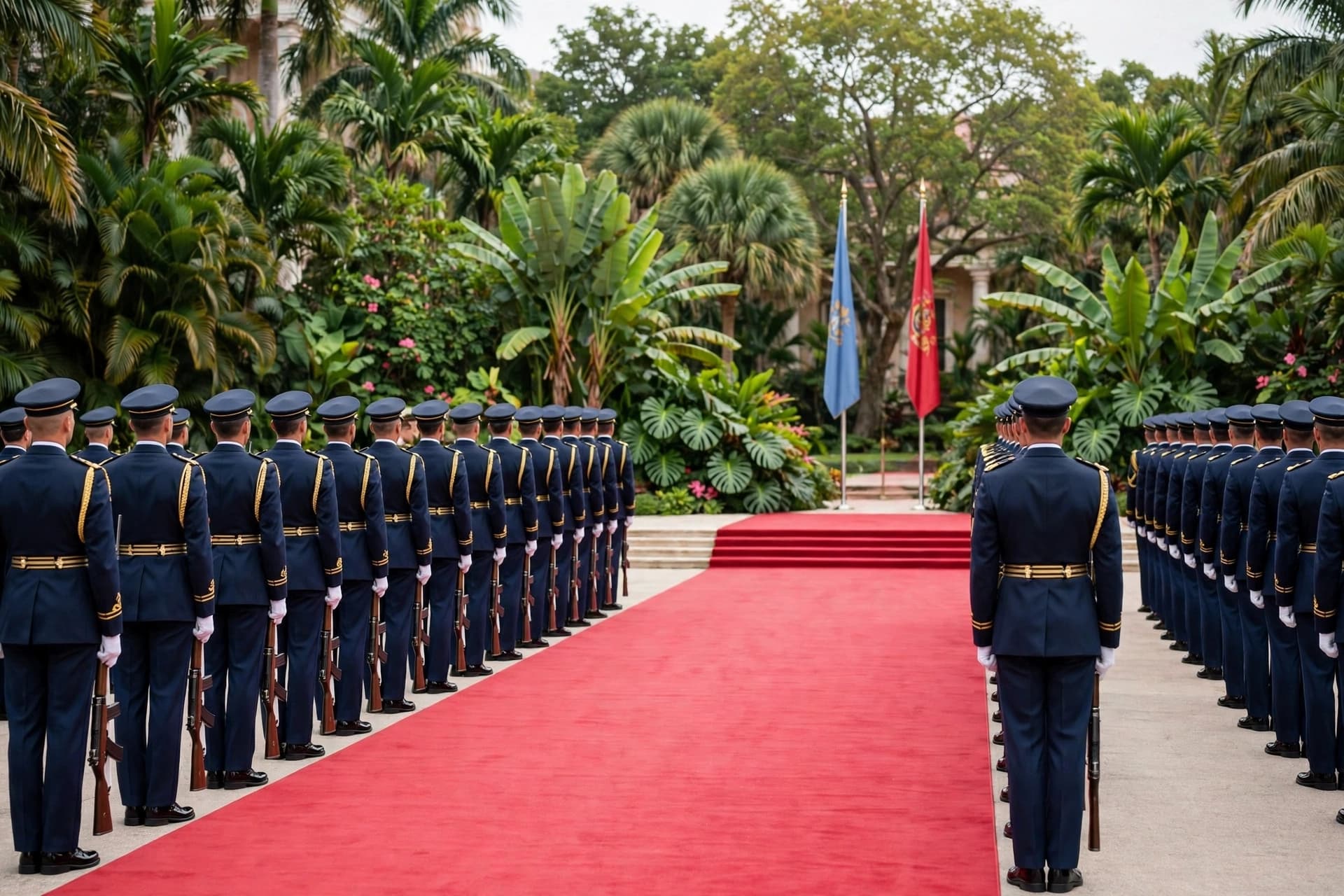
There is a particular delicacy required when a monarch visits a nation that was once a colony, a balancing act between celebration and acknowledgment, between the warmth of a welcome and the weight of history. King Charles III arrived in Guyana on Thursday, the second stop of a nine-day Caribbean tour, after a visit to the Bahamas that Buckingham Palace described as a "strong diplomatic success" . The language was careful, as palace language always is, but it reflected something real: the tour has so far managed to navigate the thorny question of slavery without either ignoring it or being consumed by it.
In the Bahamas, Charles spent just over two days meeting young boxers and charity workers, the military and politicians, and surprising crowds by joining a Junkanoo carnival parade through the streets of Nassau . Within hours of arriving, he acknowledged the "great suffering of the past" and confirmed that the Commonwealth Heads of Government Meeting, which he will open next week in Antigua and Barbuda, would discuss the legacy of slavery . The acknowledgment was not an apology—the palace has made clear that no apology will be issued, following government advice—but it was more than silence.
The context for the tour is a renewed push from Caribbean nations for Britain to apologize for its role in the slave trade and to consider reparations. Guyana's President Mohamed Irfaan Ali said in an interview before the visit that while Charles had "rightfully" recognized slavery as the "darkest days in human history," an apology should be his next step. "You exploited the region. You destroyed lives. You created underdevelopment," Ali said . The words are sharp, and they reflect a sentiment that is not confined to Guyana. Government officials in the Bahamas and Antigua and Barbuda have signaled interest in becoming republics, and the question of the monarchy's future in the region is not abstract.
In Guyana, Charles's program reflects both the country's natural heritage and its leadership on environmental issues. He will visit the Commonwealth War Graves, attend engagements connected to biodiversity and conservation, meet with the National Toshaos Council to recognize the contribution of Indigenous communities, and visit Georgetown's Seawall, a significant landmark for residents . The focus on environment and Indigenous communities is deliberate, a way of engaging with the country's present and future rather than only its colonial past.
A Buckingham Palace spokesperson described the Bahamas visit as "both a sensitive balancing act and a strong diplomatic success," noting that the King was "deeply grateful" for the warmth of the welcome and that the "great wall of cheers" would "echo long in his memory" . The phrasing is polished, but it captures something genuine: the visit was designed to celebrate the modern partnership between the UK and the Bahamas while acknowledging the injustices of the past "in a respectful way" .
For Charles, the tour is a test of a role he has held for less than a decade, one that requires him to represent a history he did not create while speaking for a future he cannot fully control. The cheers and the placards—a small number of protesters held signs reading "pay us what you owe us" —are both part of the reception. The monarchy's relationship with the Caribbean is changing, and the King's visit is an attempt to shape that change rather than simply be shaped by it.
Guyana gained independence from the UK in 1966, and this visit marks the 60th anniversary of bilateral relations . It is a former colony with more than 100,000 enslaved people at the time the trade was abolished , and its president has been explicit about what he wants from the visit. Whether the King can offer anything beyond acknowledgment is a question that will follow him through Georgetown and on to Antigua. The diplomatic success of the Bahamas is behind him. The harder conversations may still be ahead.
Image note: The images in this article were created with artificial intelligence and do not depict the actual individuals or events described.
Sources: London Evening Standard, The Royal Family, Al Jazeera, The Independent, LBC, Estado de Minas
Published by Banx Network. This article is part of the Banx decentralized media programme, powered by the BXE token on the XRP Ledger.