KOYA — Panic and chaos erupted across the Koya district in Erbil Governorate after three unmanned aerial drones targeted the Azadi Camp, triggering loud explosions throughout the surrounding settlement.
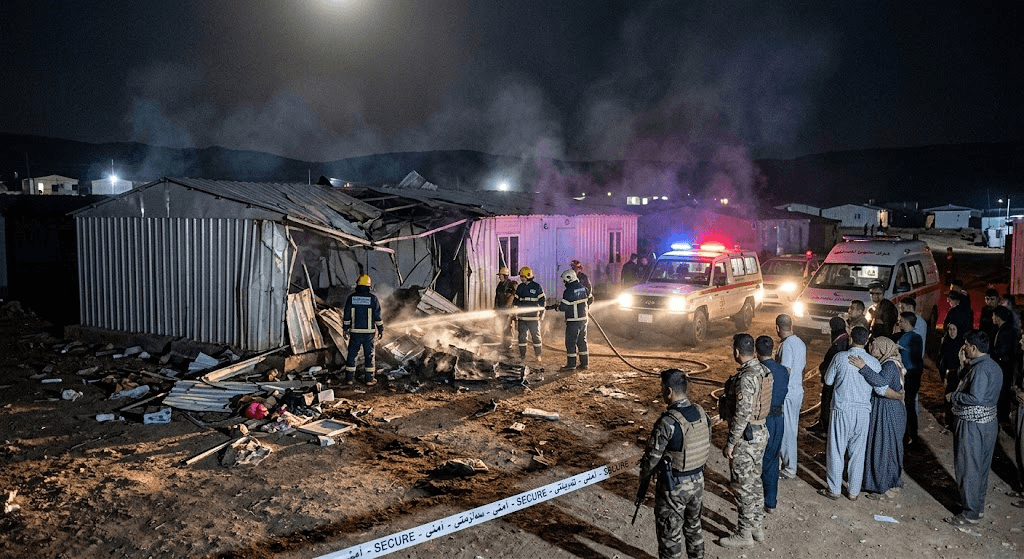
The strikes, which occurred during the early morning hours between 1:40 a.m. and 2:10 a.m. local time, sent shockwaves through the camp, which houses members and displaced families associated with the Kurdistan Democratic Party of Iran (KDPI). According to regional security officials, two of the suicide drones detonated inside the perimeter of the facility, while a third struck key infrastructure within the complex. The sudden blasts woke residents in terror as smoke rose over the site.
The Kurdistan Region Security Agency confirmed the incident shortly after the barrage, stating that emergency responders and security forces immediately rushed to secure the area and assess the site. Miraculously, initial assessments from authorities and camp officials indicate no fatalities occurred despite the violent impact, though significant structural damage was recorded across the hit locations.
Tensions remain exceptionally high across the region following the strike, as local law enforcement establishes a security cordon around the perimeter. Forensic teams are currently examining wreckage and drone fragments to identify the trajectory and origin of the unmanned aircraft.
No group has officially claimed responsibility for the assault, though opposition figures and regional observers point to recurring cross-border aerial strikes targeting political factions in northern Iraq. Local administrative leaders have strongly condemned the breach of regional stability, appealing for international support to safeguard vulnerable civilian and refugee encampments from continued aerial attacks.
In the wake of the strikes, aid organizations and civil society groups have expressed grave concern over the growing vulnerability of displaced populations residing in borderland camps across the Kurdistan Region. Human rights advocates warn that the persistent threat of targeted aerial bombardment severely undermines humanitarian protection standards, leaving thousands of displaced men, women, and children in a constant state of fear and instability while basic civilian infrastructure remains acutely exposed to future hostilities.
Published by Banx Network. This article is part of the Banx decentralized media programme, powered by the BXE token on the XRP Ledger.