DECENTRALIZED MEDIA IS LIVE POWERED BY
Banx Media Platform logo
SCIENCEArchaeologyHappening NowFeatured

2,700-Year-Old Bronze Age Sword Found Standing Upright in Polish Forest Near Gdańsk May Be a Ritual Offering

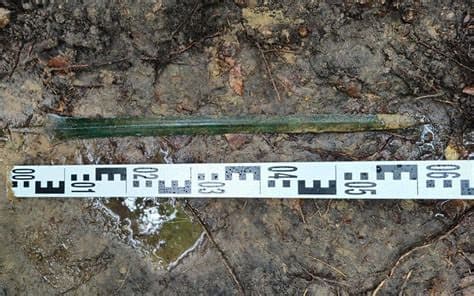
A bronze sword dating to the Late Bronze Age was discovered upright in sandy soil in a forest near Gdańsk. Archaeologists say the unusual vertical placement may indicate intentional deposition—possibly a ritual or symbolic offering—rather than the sword being lost accidentally. Officials recovered the artifact using proper methods, and it will be studied and conserved before being assigned to a museum.

B

Bobby Brown

EXPERIENCED
1 min read
9 Views
 2,700-Year-Old Bronze Age Sword Found Standing Upright in Polish Forest Near Gdańsk May Be a Ritual Offering

A 2,700-year-old Bronze Age bronze sword was found standing upright in sandy soil in a Polish forest near Gdańsk, with officials suggesting it may have been placed intentionally. Heritage authorities said the well-preserved weapon was dated to the Late Bronze Age, roughly between 900 and 700 B.C., and that its vertical positioning points away from accidental loss. A local metal detectorist reported the find promptly so archaeologists could excavate and document it properly. Experts will now study it further and decide on its eventual museum placement.

Published by Banx Network. This article is part of the Banx decentralized media programme, powered by the BXE token on the XRP Ledger.


Decentralized Media

Powered by the XRP Ledger & BXE Token

This article is part of the XRP Ledger decentralized media ecosystem. Become an author, publish original content, and earn rewards through the BXE token.

Newsletter

Stay ahead of the news — and win free BXE every week

Subscribe for the latest news headlines and get automatically entered into our weekly BXE token giveaway.

No spam. Unsubscribe anytime.

Share this story

Help others stay informed about crypto news

Related articles

Keep exploring the latest stories.

View more
The Mission That Follows the Impact

The Mission That Follows the Impact

ESA's Hera mission will rendezvous with the Dimorphos-Didymos binary asteroid pair in November 2026 to survey the aftermath of NASA's DART impact and advance p…

Superhabitable Worlds: The Planets Better Than Ours

Superhabitable Worlds: The Planets Better Than Ours

Astrobiologists propose that superhabitable worlds—larger, warmer, older planets orbiting stable K-dwarf stars—may be more suitable for complex life than Earth…

When Satellites Reveal What the Ground Hides

When Satellites Reveal What the Ground Hides

NASA satellite data reveals that global freshwater depletion is 33% worse than previously estimated, with groundwater pumping driving severe losses in agricult…