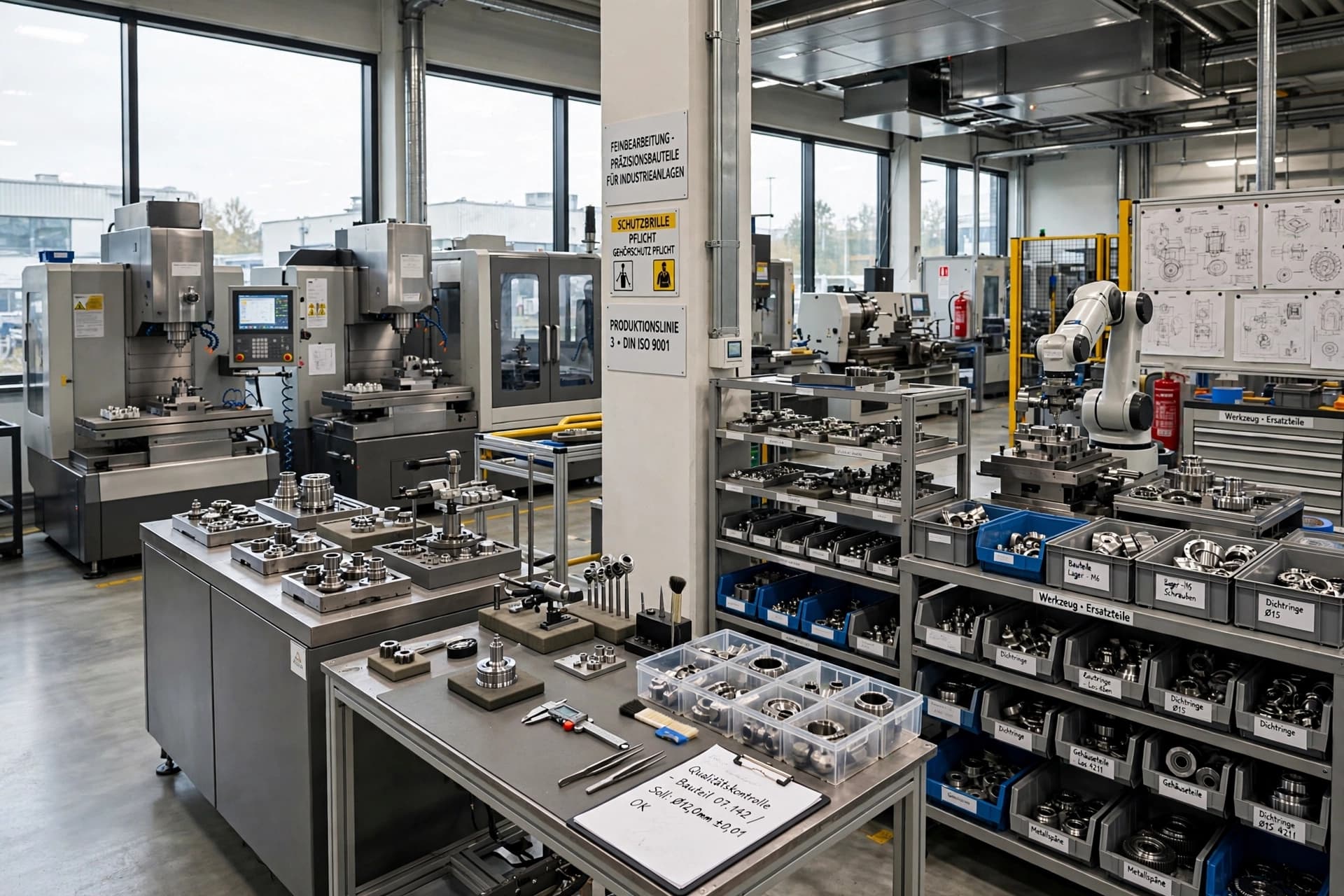
September brought another encouraging signal from German manufacturing. The final S&P Global Purchasing Managers' Index for the sector stood at 53.9, slightly below August's 54.3 but still indicating expansion. Production increased for a ninth consecutive month, while new orders rose for a fourth month. Export sales also improved, with demand reported from Asia, Europe, and the United States.
The PMI is a survey of business conditions rather than a direct measurement of industrial output. Nevertheless, readings above 50 generally indicate that more businesses are reporting improvement than deterioration. Germany's September result suggested that manufacturing activity remained relatively resilient, even as companies faced renewed inflationary pressure from energy markets.
One source of industrial demand has been the expansion of data centres and other technology infrastructure. These facilities require electrical systems, cooling equipment, building components, and a range of specialized products. The construction and operation of digital infrastructure can therefore create work for manufacturers beyond the technology companies that operate the facilities themselves.
Artificial intelligence has added to this investment cycle. As companies seek greater computing capacity for AI applications, demand for servers, chips, power infrastructure, and related equipment has grown internationally. German manufacturers may benefit where their products meet these needs, although the extent of the opportunity varies considerably between industries and individual businesses.
Earlier manufacturing surveys also identified data-centre construction, defence spending, and stockpiling as contributors to stronger demand for German industrial goods. These factors help explain why parts of the manufacturing sector have performed better than might be expected from the country's broader industrial difficulties.
Yet the recovery remains uneven. Germany's automotive sector, for example, faces different pressures from manufacturers producing machinery or electrical equipment. Demand for one category of industrial goods cannot automatically offset weakness in another. Companies must also contend with trade uncertainty, changing customer expectations, and the cost of securing materials and energy.
For manufacturers, the opportunity is not simply to produce more equipment for the technology sector. It is also to consider how digital tools can improve their own operations. Predictive maintenance, automated inspection, and data-based production planning may help factories reduce downtime and use resources more effectively. Such changes can be valuable, but they require investment, training, and careful integration with existing systems.
Europe's industrial recovery will depend partly on whether stronger orders develop into sustained demand. A short-term increase in purchasing can reflect precautionary stockbuilding as well as genuine growth in final consumption. Manufacturers therefore need to distinguish between a temporary improvement and a reliable foundation for future investment.
Germany's September manufacturing figures offer a measured sign of resilience. New orders and production continued to grow, and technology-related investment may provide additional openings for specialized businesses. Still, the lasting strength of the recovery will depend on the breadth of demand, the ability to control costs, and whether manufacturers can convert new opportunities into stable production and employment.
### AI Image Disclaimer
The illustrations are AI-generated representations of modern manufacturing and technology infrastructure. They do not depict specific companies, actual production statistics, or verified industrial facilities.
### Sources
Reuters S&P Global Germany Trade & Invest European Commission
Published by Banx Network. This article is part of the Banx decentralized media programme, powered by the BXE token on the XRP Ledger.