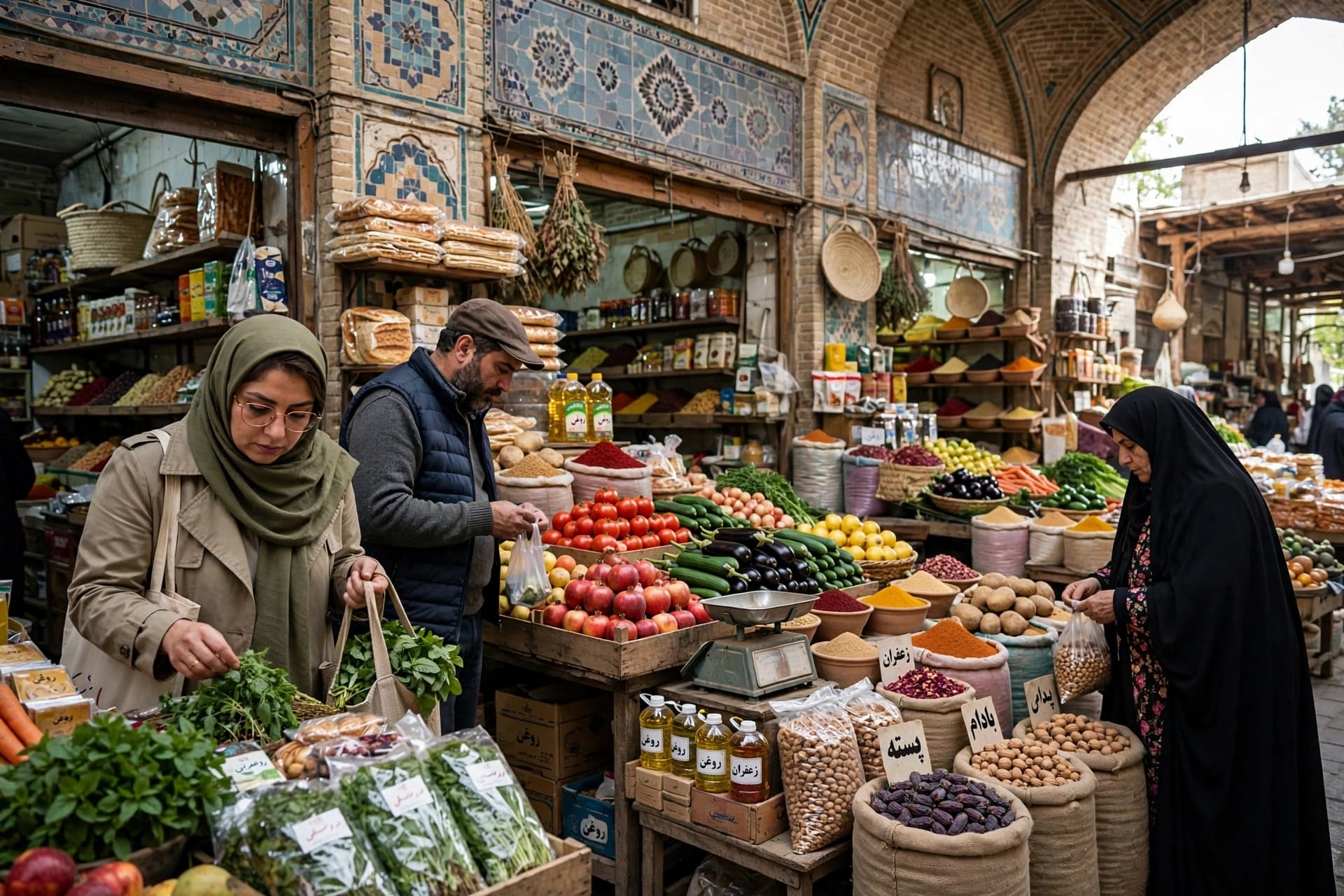
In Iran, economic pressure often becomes visible through small, repeated decisions. A family compares prices before buying groceries, a shopkeeper reassesses the cost of replacing stock, and a household postpones an expense that once seemed manageable. These moments rarely appear in economic summaries, yet together they reveal how rising costs shape daily life.
Reuters has reported that Iranians are struggling with soaring prices after months of economic and energy disruption. The pressure has reached households and businesses already working to manage an uncertain financial environment.
Inflation can affect nearly every part of a household budget. Food, transportation, housing, utilities and other necessities compete for a share of income, leaving families with less flexibility when prices increase faster than earnings.
The effects are not always immediate or uniform. Some households may reduce discretionary purchases first, while others turn to cheaper alternatives or delay replacing essential goods. Over time, these adjustments can change what people buy and how businesses respond to demand.
For small businesses, rising costs create a separate set of challenges. Retailers must pay suppliers, cover rent and utilities, and decide how much of an increase can be passed on to customers. Raising prices too quickly may discourage purchases, but absorbing every additional cost can weaken profitability.
Energy disruption can make these pressures more complicated. Interruptions or uncertainty in fuel and electricity supplies may affect manufacturing schedules, transportation networks and the cost of delivering products to market.
When businesses face higher operating expenses, the impact can travel through supply chains. A producer pays more to manufacture goods, a distributor faces higher transport costs, and a retailer must decide whether to adjust the final price.
The wider economic environment also influences confidence. When households cannot predict how much basic goods will cost in the coming weeks, planning larger purchases becomes more difficult. Businesses may respond cautiously, delaying investment or hiring until conditions become clearer.
Policy measures can offer some relief, but their effectiveness depends on the underlying problem. Assistance can help vulnerable households meet immediate expenses, while improvements in supply, currency stability and economic confidence can influence the longer-term outlook.
Iran's economy is shaped by a combination of domestic conditions and external pressures. International restrictions, regional instability, energy-market changes and currency movements can interact, making it difficult to isolate a single cause for the pressure experienced by households.
For families, however, the immediate question remains practical rather than abstract: how far can income stretch as essential expenses rise? The answer is found in the daily decisions made at markets, shops and kitchen tables across the country.
AI Image Disclaimer
This AI-generated illustration is intended to represent general cost-of-living pressures and does not portray a specific Iranian household or actual market event.
Sources
Reuters Central Bank of Iran Statistical Center of Iran Al Jazeera
Published by Banx Network. This article is part of the Banx decentralized media programme, powered by the BXE token on the XRP Ledger.