When we gaze into the night sky, we are looking back in time, witnessing the universe as it was billions of years ago. In those ancient epochs, the cosmos was a different place—denser, hotter, and teeming with the raw materials of creation. Recently, astronomers have identified a structure so vast and distant that it challenges our understanding of how quickly the universe could organize itself. This proto-supercluster, a nascent collection of galaxies bound by gravity, exists at a record-breaking distance from Earth. Its discovery invites us to reflect on the grand scale of cosmic evolution and the mysterious forces that shaped the early universe.
The object, known as z66OD, is located approximately 12.9 billion light-years away. This means we are seeing it as it existed when the universe was less than a billion years old. At this early stage, the cosmos was still emerging from the "dark ages," a period before the first stars and galaxies fully illuminated space. Finding such a massive structure so early in cosmic history is akin to finding a fully grown oak tree in a garden that was planted only yesterday. It defies conventional expectations of gradual growth.
Proto-superclusters are the seeds of today’s largest cosmic structures. Over billions of years, gravity pulls these clusters together to form the superclusters we see in the local universe. However, standard models of cosmology suggest that forming such a massive entity should take much longer than the time available in the early universe. The existence of z66OD suggests that the processes of galaxy formation and clustering may have been more efficient or rapid than previously thought.
The discovery was made using data from the Subaru Telescope and other observatories, which detected the faint glow of hydrogen gas emitted by the young galaxies within the structure. By measuring the redshift of this light, astronomers determined its immense distance. The precision required to identify such a distant and diffuse object highlights the advancements in observational technology. It is a testament to human ingenuity that we can peer so deeply into the past.
This finding has implications for our understanding of dark matter, the invisible substance that provides the gravitational scaffolding for galaxy formation. If proto-superclusters formed this quickly, it may indicate that dark matter clumped together more efficiently in the early universe. Alternatively, it could suggest that our current models of dark matter behavior need refinement. Either way, the discovery serves as a crucial data point for cosmologists.
For the scientific community, z66OD is both a puzzle and an opportunity. It prompts researchers to re-examine simulations of cosmic structure formation. By adjusting parameters to account for such early massive structures, scientists can test the limits of their theories. This iterative process of observation and modeling is how science progresses, slowly refining our picture of reality.
The public often views astronomy as a study of static objects, but this discovery reminds us that the universe is dynamic and evolving. Structures rise and fall, merge and separate, over eons. Seeing a proto-supercluster in its infancy allows us to witness the beginning of a journey that will last billions of years. It connects us to the deep history of existence.
As telescopes become more powerful, such as the James Webb Space Telescope, we may find even more extreme examples. Each discovery pushes the boundary of what is possible, expanding our horizon of knowledge. The record set by z66OD may not stand for long, but its impact on our understanding will endure.
The discovery of a massive proto-supercluster at a record distance challenges existing models of early universe evolution. It highlights the rapid formation of cosmic structures. Let us continue to explore the depths of space and time.
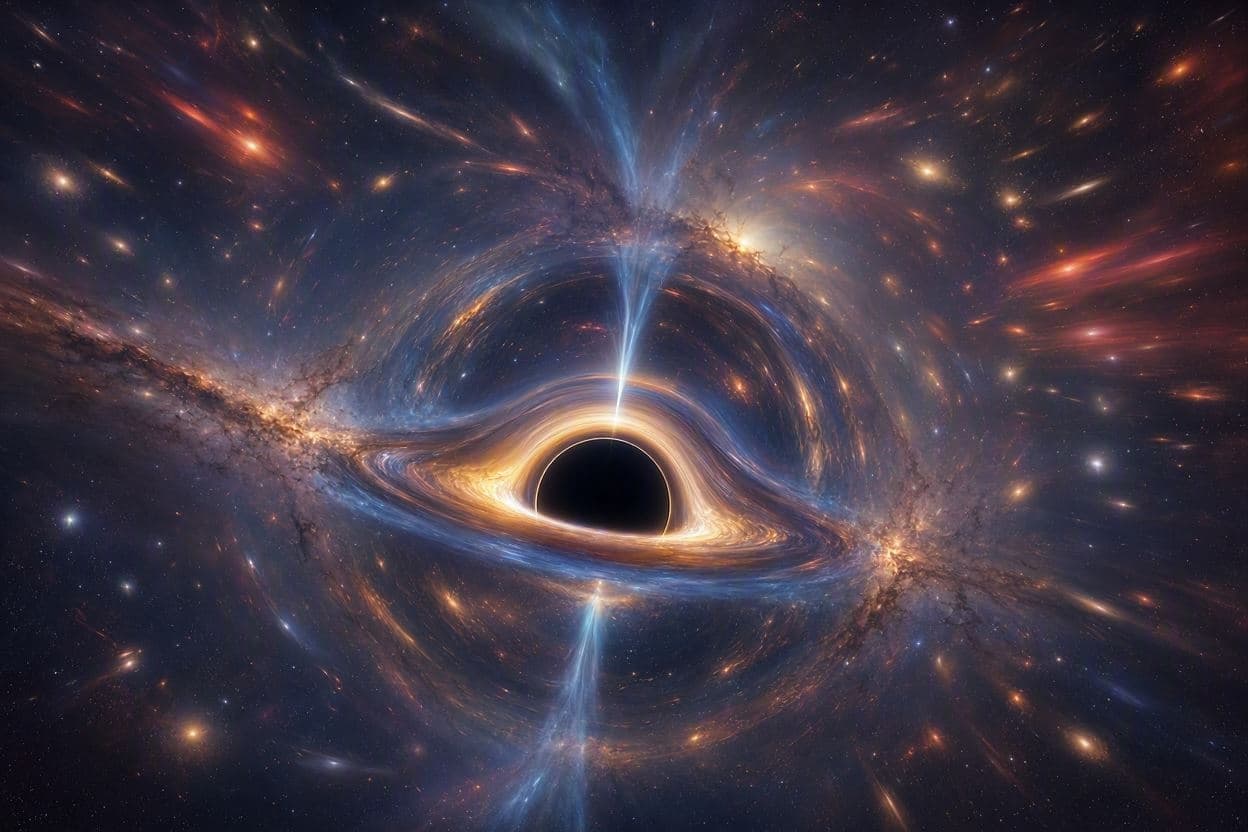
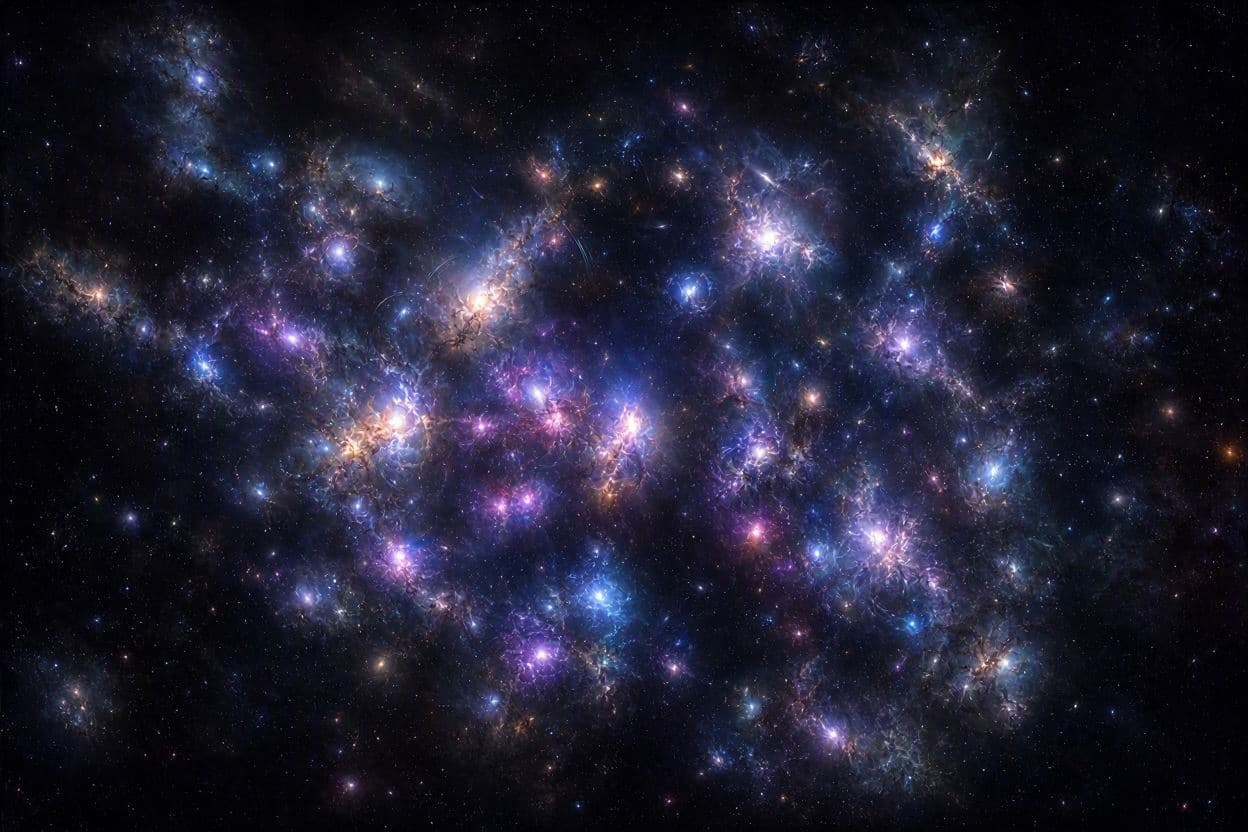
AI Image Disclaimer: Please note that any visual representations in this article are AI-generated illustrations created for conceptual clarity.
Sources: Nature Astronomy Subaru Telescope Press Release ScienceDaily
Published by Banx Network. This article is part of the Banx decentralized media programme, powered by the BXE token on the XRP Ledger.