In the vast, dark canvas of the early universe, light is a rare and precious commodity. Yet, astronomers using the James Webb Space Telescope have discovered a distant galaxy that shines with an intensity that defies current understanding. Within this ancient system, three supermassive black holes are actively feeding, a configuration so rare it challenges our models of cosmic evolution. This discovery invites reflection on the chaotic beauty of the young cosmos and the mysterious forces that shaped its first structures. It is a moment where the past speaks in whispers of immense power.
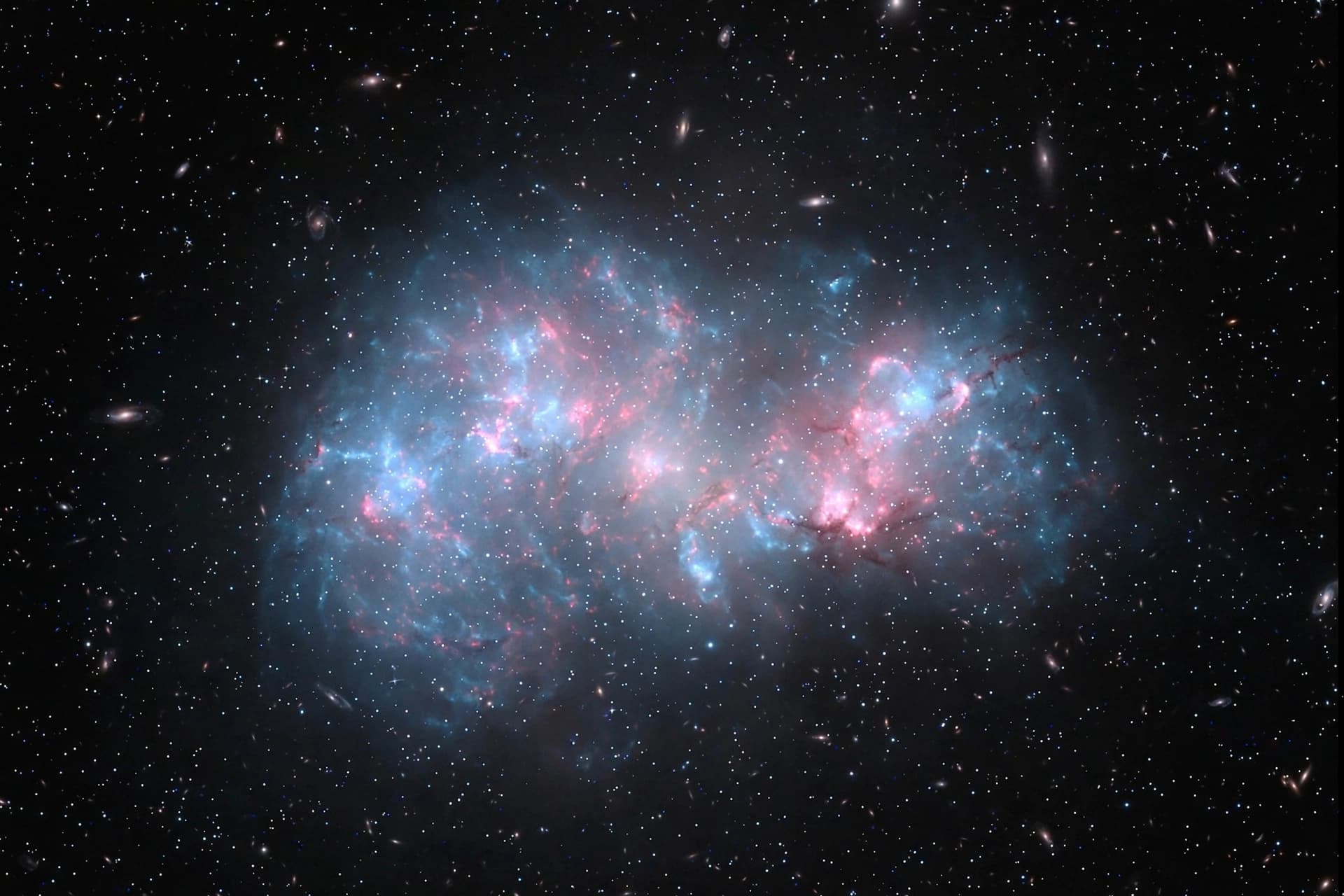
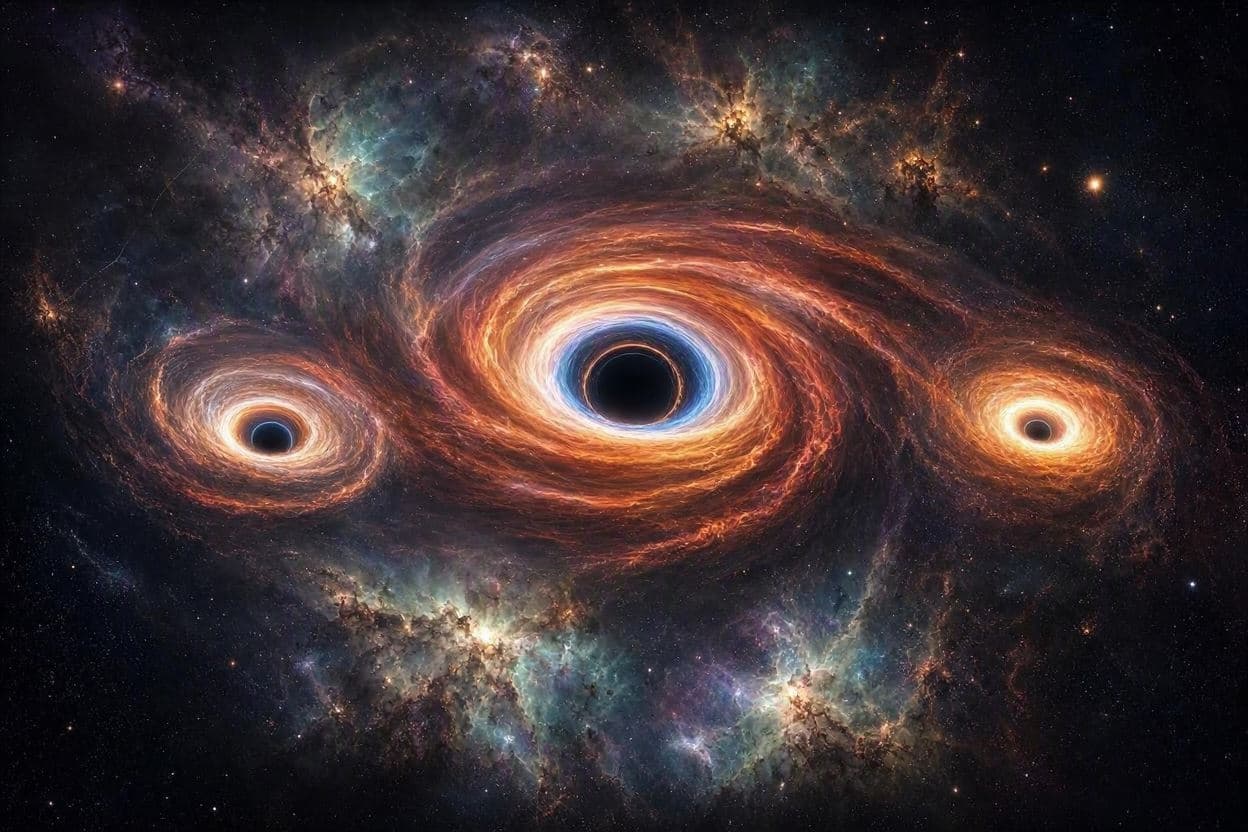
The galaxy, observed as it existed just under a billion years after the Big Bang, contains not one but three active galactic nuclei. Each black hole is consuming matter at a voracious rate, emitting brilliant radiation that outshines the surrounding stars. Power defines presence. Light reveals history.
Finding multiple supermassive black holes in such a young galaxy is unprecedented. Most theories suggest that galaxies grow through mergers over billions of years, gradually accumulating mass. To see three giants coexisting so early suggests a more rapid and violent formation process than previously imagined. Speed surprises science. Violence shapes form.
The gravitational dance between these three behemoths is likely unstable, destined to end in collisions that will create even larger black holes. These events send ripples through spacetime, known as gravitational waves, which may one day be detected by future observatories. Dance leads to union. Waves carry memory.
For astronomers, this finding is both a puzzle and a promise. It indicates that the early universe was far more dynamic and crowded with massive objects than standard models predict. Puzzle demands answer. Promise brings hope.
The team behind the discovery emphasizes that this is just the beginning. As telescopes become more sensitive, they expect to find more such systems, rewriting the timeline of galaxy assembly. Sensitivity reveals truth. Timeline shifts perspective.
As we look deeper into space, we are also looking further back in time, uncovering secrets that have been hidden for eons. The hope is that each new discovery brings us closer to understanding the origins of everything. Depth reveals origin. Understanding brings peace.
Astronomers have discovered three feeding supermassive black holes in a galaxy from the early universe, challenging existing models of galaxy formation. The finding highlights the dynamic nature of the young cosmos. The hope is for further observations to clarify how such massive structures formed so quickly.
AI Image Disclaimer: The visual elements accompanying this report are AI-generated interpretations designed to reflect the astronomical and cosmological context of the story.
Sources: Phys.org ZME Science Live Science NASA
Published by Banx Network. This article is part of the Banx decentralized media programme, powered by the BXE token on the XRP Ledger.