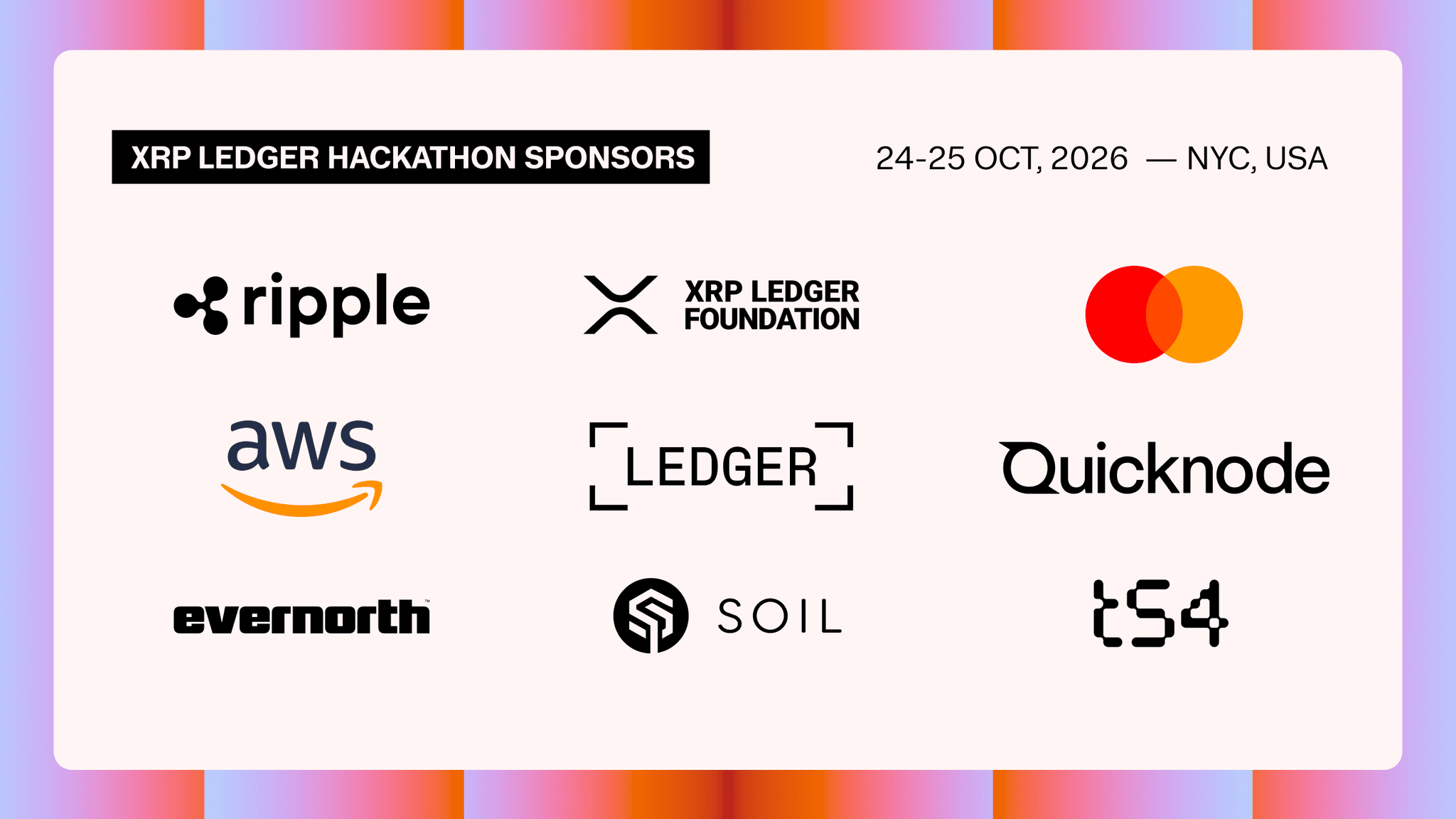
The XRP Ledger developer community is gathering in New York City for a hackathon focused on building security solutions backed by Ledger devices. According to an announcement from Ledger, the event is scheduled for October 24–25, 2026, with $10,000 in bounties and Ledger hardware devices available to developers working on qualifying projects. The event is hosted by XRP Ledger community organization XRPL Commons and is designed around three development tracks over a 36-hour period. Its stated focus on device-backed security places hardware-based protection at the center of the building challenge, bringing together blockchain development and the security considerations involved in managing digital assets. The hackathon comes as the broader cryptocurrency industry continues to explore ways to improve the security of wallets, transaction authorization and interactions with decentralized applications. Hardware wallets are designed to keep sensitive cryptographic keys isolated from ordinary computing environments, reducing exposure to certain online threats when properly configured and used. For blockchain developers, integrating hardware-backed security into applications can involve more than simply connecting a wallet. Projects may need to consider transaction signing, authorization workflows, user experience and how applications communicate with devices while preserving the security of private keys. The XRP Ledger provides a blockchain environment in which developers can build applications involving digital asset transfers, token issuance and other financial functions. Its ecosystem includes infrastructure and tools intended to help developers create applications that interact with the network. Hackathons can help turn those capabilities into practical software by giving participants a defined period to develop, test and demonstrate new ideas. The announced prizes include $10,000 in bounties alongside Ledger devices. These incentives can encourage teams to produce working prototypes and compete to deliver useful technical solutions. However, the announcement does not specify how the bounty pool is divided among tracks or individual winners, so the final distribution depends on the event's applicable rules. The event's sponsor lineup also demonstrates the participation of organizations from different parts of the technology and digital asset industries. The promotional graphic lists Ripple, the XRP Ledger Foundation, Mastercard, Amazon Web Services, Ledger, QuickNode, Evernorth, SOIL and t54. Their appearance in the sponsor lineup establishes their association with the event as presented in the announcement, but does not mean every organization is directly developing a hackathon project. The 36-hour format creates a concentrated development environment in which teams can experiment, collaborate and refine their ideas. Such events can also help developers connect with other builders and learn how to work with tools and infrastructure they may later use in production applications. For the XRP Ledger ecosystem, security-focused development is particularly relevant as blockchain networks support increasingly varied applications. Protecting keys, improving transaction authorization and reducing opportunities for malicious activity remain important challenges across the industry. Still, prototypes created during a hackathon are not automatically production-ready. Applications must undergo appropriate security testing, independent review and continued maintenance before users should rely on them to protect valuable assets. The New York event therefore offers developers an opportunity to explore device-backed security while contributing to the broader XRPL development environment. Its combination of financial incentives, hardware devices and multiple development tracks gives participants a defined platform for testing new approaches to blockchain security.
Published by Banx Network. This article is part of the Banx decentralized media programme, powered by the BXE token on the XRP Ledger.