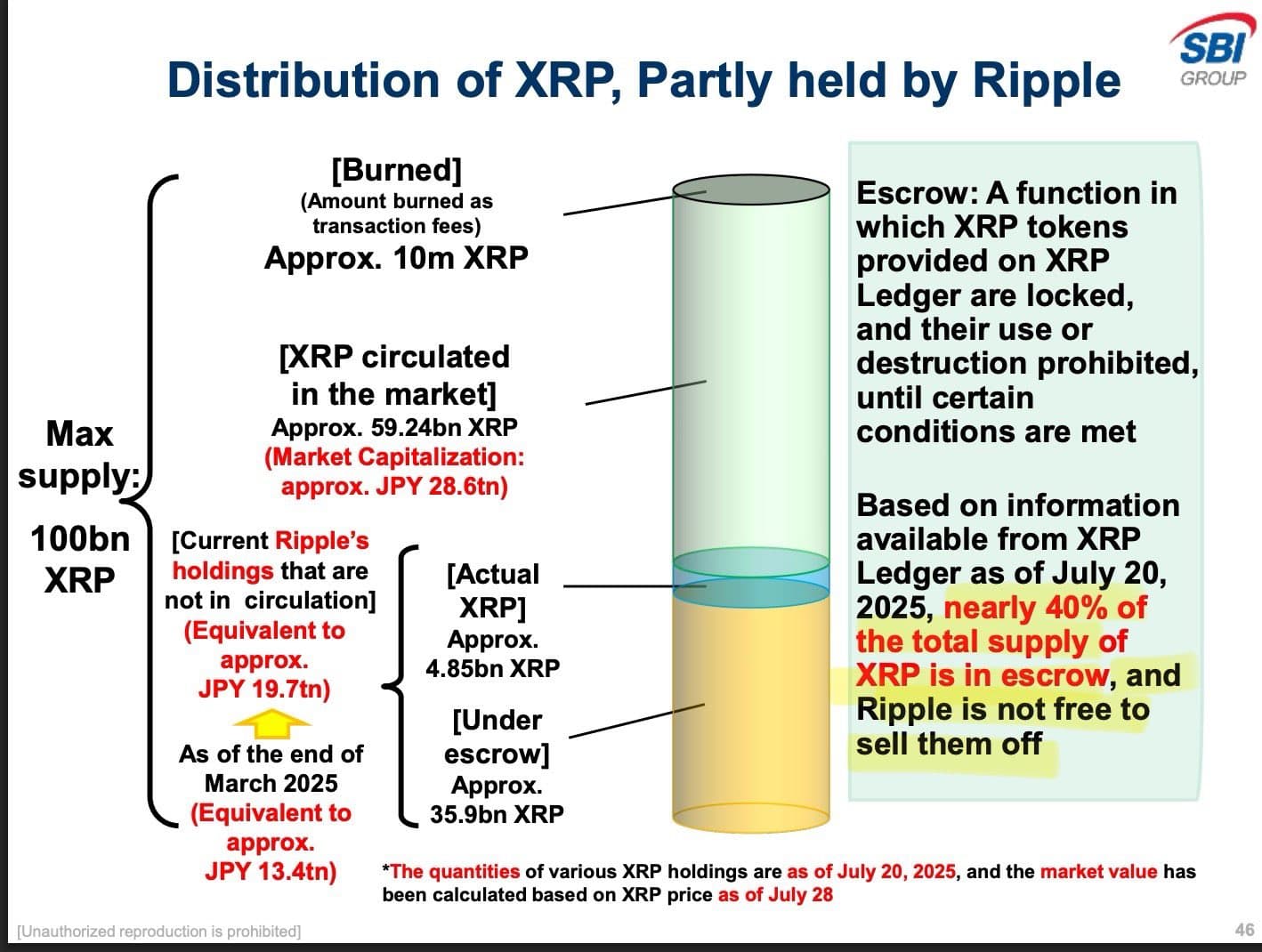
The XRP ecosystem, one of the most closely watched in the digital asset space, reveals a fascinating supply breakdown that impacts both liquidity and market perception. Out of the maximum supply of 100 billion XRP, the network has already seen approximately 10 million XRP permanently burned as transaction fees, reducing available coins over time.
Currently, around 59.24 billion XRP circulate in the open market, driving a market capitalization of nearly JPY 28.6 trillion. However, Ripple itself continues to hold a significant portion of XRP. As of March 2025, the company’s non-circulating holdings amount to roughly 19.7 billion XRP, with an estimated value of JPY 13.4 trillion. These coins, while not in immediate circulation, remain a vital part of the overall token landscape.
The most notable aspect of XRP’s distribution is its escrow system. Approximately 35.9 billion XRP—nearly 40% of the total supply—are locked under escrow contracts, ensuring they cannot be freely sold or destroyed until predefined conditions are met. This mechanism was designed to bring transparency and predictability to XRP’s supply release, countering fears of sudden market flooding.
Additionally, Ripple manages around 4.85 billion XRP as “actual holdings”, further shaping the asset’s liquidity profile. Together, these figures highlight XRP’s unique supply structure, where circulation, escrow locks, and Ripple’s strategic holdings play a crucial role in defining scarcity, investor trust, and long-term value growth.
This structured distribution continues to fuel debates about XRP’s future trajectory, particularly as adoption expands and regulatory clarity strengthens its position in the global financial system.
Published by Banx Network. This article is part of the Banx decentralized media programme, powered by the BXE token on the XRP Ledger.