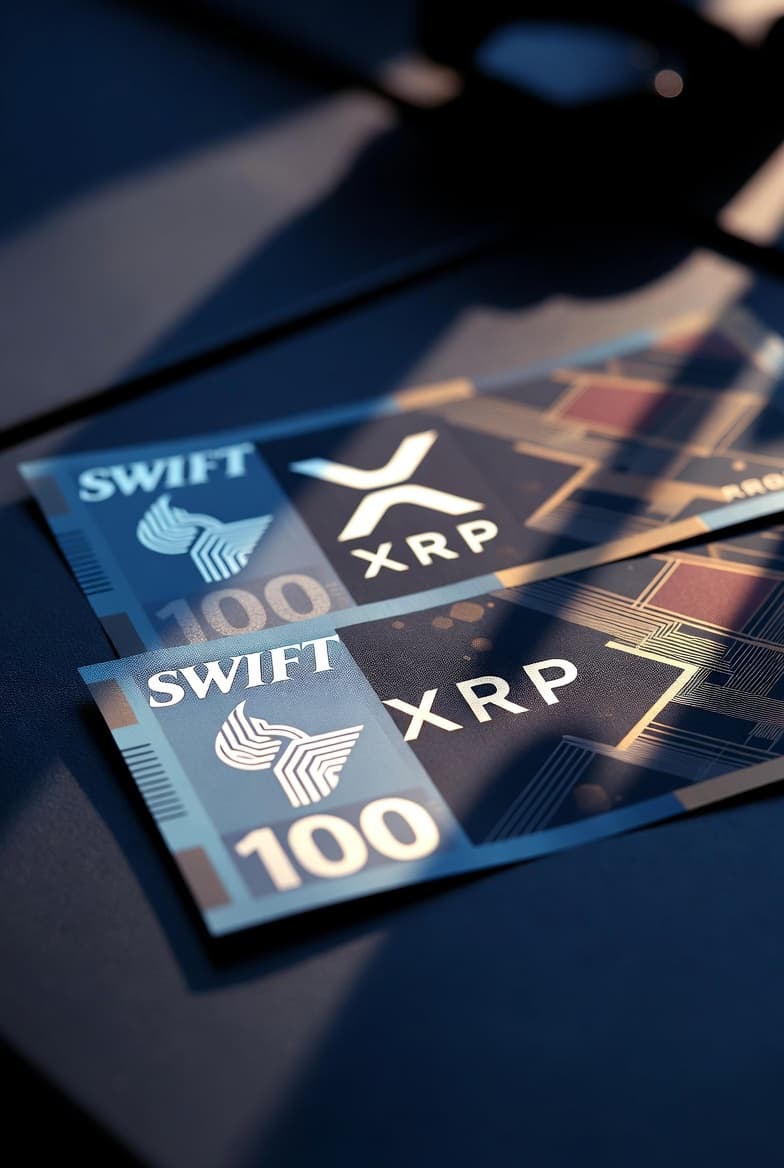
While no official announcement has been made by SWIFT, these developments have reignited discussions around XRP’s potential role in the future of global financial infrastructure.
ISO 20022: The New Backbone of Global Payments
ISO 20022 has become the global standard for financial messaging, gradually adopted by central banks, interbank payment systems, and the SWIFT network itself. The standard enables richer data, improved transparency, and greater regulatory compliance across cross-border transactions.
Ripple, through XRP and the XRP Ledger (XRPL), positioned itself early as an infrastructure designed to align with ISO 20022 requirements, with the goal of enabling near-instant, low-cost cross-border payments for financial institutions.
“Approved” Indicators Draw Market Attention
In recent days, analysts and community researchers have shared evidence pointing to references where XRP and ISO 20022 appear marked as “approved” or compliant within financial messaging or ledger-related environments linked to SWIFT workflows. Although these indicators do not constitute a formal public endorsement by SWIFT, they are widely viewed as confirmation of XRP’s technical and operational readiness for institutional integration.
For many observers, this reinforces the view that XRP is already compatible with the evolving infrastructure of modern banking, particularly as SWIFT completes its global migration to ISO 20022.
Ripple and SWIFT: Competition or Complementarity?
Contrary to popular belief, Ripple has never officially positioned XRP as a direct replacement for SWIFT. Instead, the company has consistently framed XRP as a liquidity and settlement layer that can operate alongside existing messaging systems.
Under this model, SWIFT continues to provide secure global financial messaging, while XRP functions as a real-time bridge asset for settlement and liquidity. This complementary approach aligns with what financial institutions increasingly demand: interoperability, regulatory compliance, and operational efficiency.
Market and Investment Implications
The appearance of ISO 20022-related approval signals strengthens the institutional investment thesis surrounding XRP. For market participants, this fuels expectations of broader adoption by banks, payment service providers, and potentially central banks.
In the near term, these developments support bullish sentiment around XRP. Over the longer term, they position the asset in a distinct category—one focused on core financial infrastructure rather than purely speculative use cases.
Conclusion
While an official confirmation from SWIFT has yet to materialize, the growing body of technical and operational indicators tied to ISO 20022 reinforces XRP’s credibility as a key player in the next generation of cross-border payments. As the global financial system advances toward greater standardization and tokenization, XRP appears increasingly well-positioned to play a central role in that transformation.
Published by Banx Network. This article is part of the Banx decentralized media programme, powered by the BXE token on the XRP Ledger.