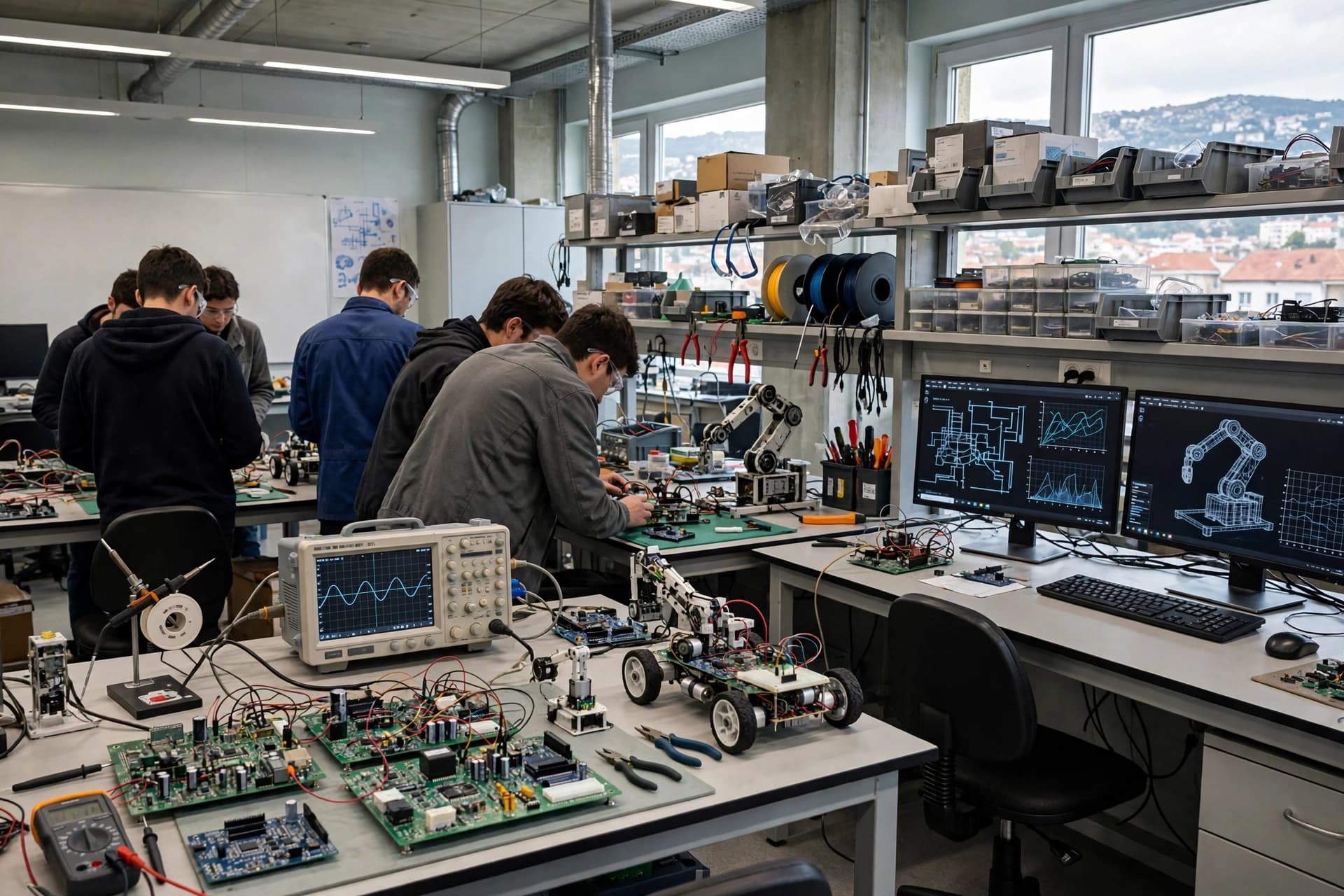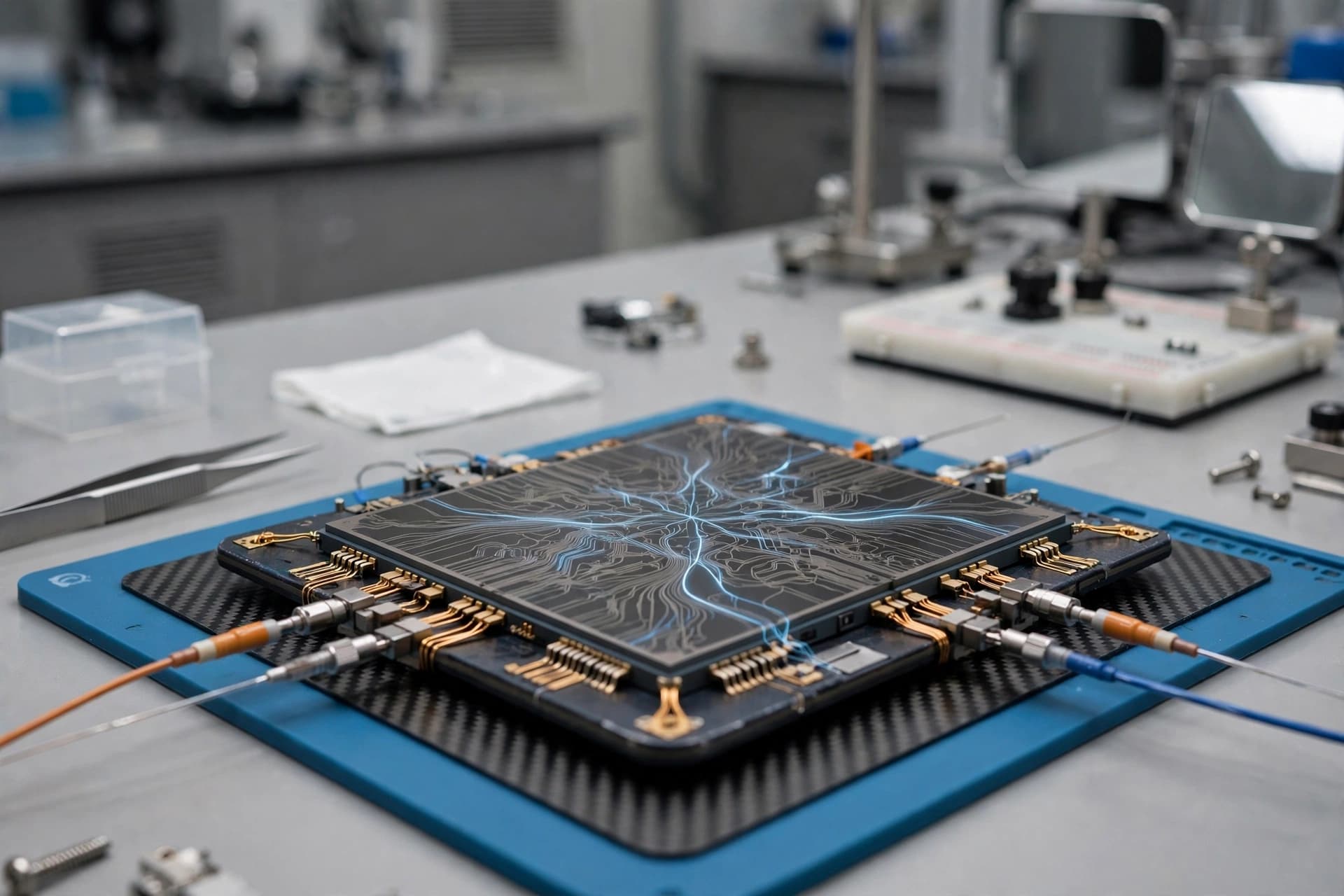
On October 6, 2026, Canadian quantum technology company Xanadu announced a multiyear manufacturing partnership with semiconductor producer GlobalFoundries. The companies said they would work to industrialize components needed for photonic quantum computers, moving beyond small-scale laboratory production toward manufacturing processes designed for larger volumes. The announcement describes a development pathway, not a declaration that utility-scale quantum computers are already commercially available.
The initial work centers on two technologies. The first is superconducting nanowire single-photon detectors, commonly abbreviated as SNSPDs. These specialized sensors detect individual photons and help determine the results of quantum calculations. In a photonic system, reading the output accurately is not a minor detail; it is part of the architecture that determines how effectively the machine can perform its intended tasks.
The second technology involves silicon nitride photonics designed to minimize the loss of optical signals. These components can guide light through intricate circuits, much as electrical traces carry signals through conventional chips. Reducing signal loss matters because photons can be difficult to preserve and measure as they travel through a complex computing system. The partnership aims to combine efficient detection with low-loss optical pathways.
Manufacturing will use GlobalFoundries’ 300-millimeter production line in Malta, New York. The use of an established semiconductor manufacturing environment could help the companies move from individually developed prototypes toward more repeatable production processes. However, transferring advanced photonic designs into a high-volume facility is technically demanding, and manufacturing yield, reliability, and consistency will need to be demonstrated over time.
For Xanadu, the agreement addresses a central question facing emerging quantum technologies: whether sophisticated laboratory systems can be built in sufficient quantities to support more ambitious computing architectures. The company develops both quantum hardware and software, including PennyLane, an open-source platform for quantum programming. Its long-term objective includes fault-tolerant quantum computers, systems designed to manage errors that otherwise undermine the reliability of calculations.
The companies also said they were exploring further work on high-performance quantum modules. Such modules could help integrate components into more complete systems, although their eventual performance and commercial applications remain matters for future development. The announcement does not provide a guaranteed timeline for mass deployment or establish that every technical challenge has been solved.
The partnership reflects a broader transition in advanced computing. Research breakthroughs may capture attention, but reliable production often determines whether an invention can move beyond specialist environments. The same principle applies to conventional processors, optical communications, and medical devices: a design must become reproducible, testable, and practical before it can serve a wider market.
For now, the agreement represents a manufacturing milestone rather than a finished quantum revolution. Its importance will depend on whether the partners can translate specialized photonic components into dependable hardware at scale. In a field where the future is often discussed in terms of extraordinary computational power, progress may ultimately rest on the patient work of making each tiny component perform as intended.
AI Image Disclaimer: Any accompanying AI-generated image is a conceptual illustration of photonic quantum computing and semiconductor manufacturing. It does not depict an actual Xanadu system, GlobalFoundries production line, or verified facility photograph.
Published by Banx Network. This article is part of the Banx decentralized media programme, powered by the BXE token on the XRP Ledger.