The universe often feels like a carefully written story—one guided by laws, patterns, and quiet consistency. Yet every so often, a single discovery reads like a misplaced sentence, challenging everything that came before it.
Astronomers have recently identified a galaxy whose structure and behavior appear to contradict established theories of cosmic formation. The object, described by researchers as “bizarre,” does not align with the known processes that typically shape galaxies over billions of years.
Initial observations suggest that the galaxy lacks characteristics expected from its age and environment. In standard models, galaxies evolve through gradual accumulation of matter, influenced by gravity, dark matter, and cosmic interactions. This newly observed system, however, seems to have formed or persisted under conditions that scientists cannot easily explain.
Researchers have noted unusual features in its composition, including an unexpected distribution of stars and matter. Some have proposed that the galaxy may have formed in isolation, while others suggest that unknown physical processes could be at play. These possibilities, while speculative, underscore the limits of current understanding.
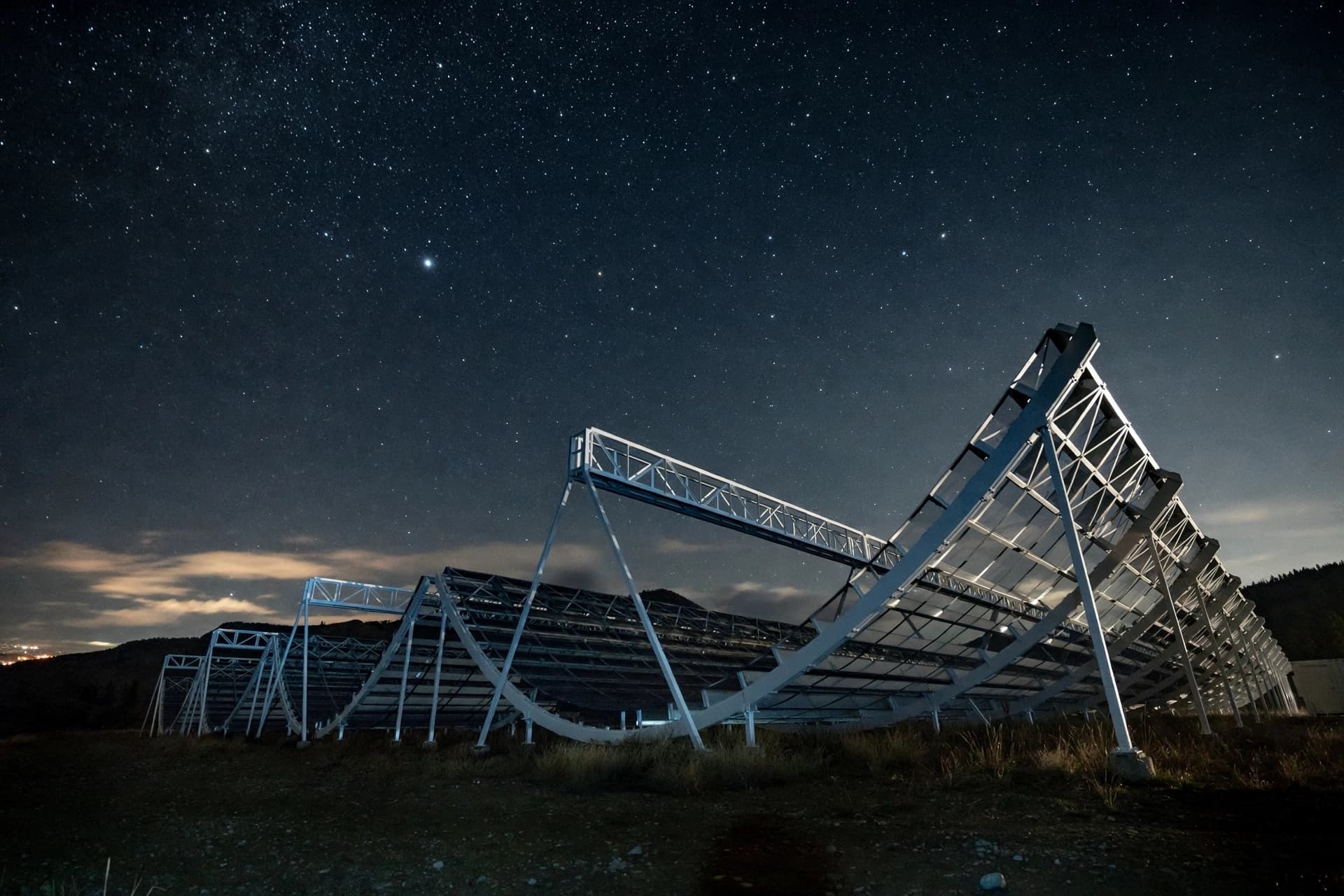
The discovery was made using advanced observational tools capable of capturing distant cosmic structures with remarkable precision. Data collected from these instruments has undergone rigorous analysis, yet the anomaly remains unresolved.
Scientists are cautious in their interpretations, emphasizing that extraordinary findings require careful verification. Additional observations and modeling will be necessary to determine whether the galaxy represents a rare exception or points to a broader gap in existing theories.
The implications extend beyond a single object. If confirmed, this discovery could prompt a reevaluation of how galaxies form and evolve, potentially reshaping aspects of modern astrophysics.
For now, the galaxy stands as a quiet contradiction—visible, measurable, yet not fully understood. It reminds researchers that even in a universe governed by laws, there is still room for surprise.
Further studies are expected in the coming months as astronomers seek to unravel the mechanisms behind this unusual phenomenon.
AI Image Disclaimer Images in this article are AI-generated illustrations, meant for concept only.
Source Check NASA Space.com Nature Astronomy Scientific American BBC Science
Published by Banx Network. This article is part of the Banx decentralized media programme, powered by the BXE token on the XRP Ledger.