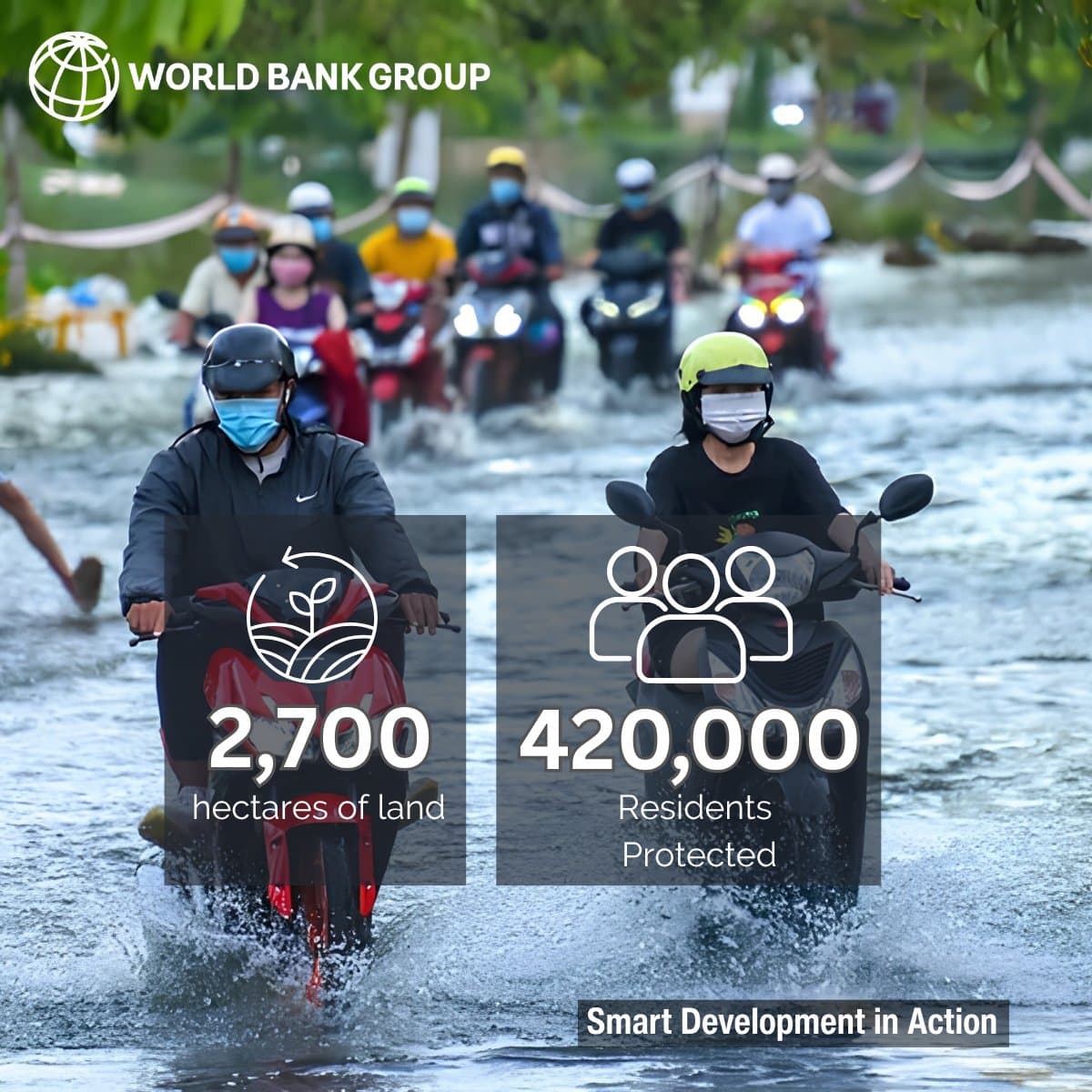
The World Bank has approved support for a major flood resilience initiative in Vietnam aimed at strengthening infrastructure, protecting vulnerable communities and reducing the long-term economic impact of increasingly frequent climate-related disasters. The project reflects the growing global emphasis on investing in resilience before disasters occur rather than focusing primarily on recovery after damage has already been done. Vietnam ranks among the countries most exposed to flooding, typhoons and rising sea levels due to its extensive coastline and densely populated river deltas. Seasonal flooding regularly affects homes, farmland, transportation networks and businesses, disrupting economic activity and threatening livelihoods. As climate change contributes to more unpredictable weather patterns, governments and international organizations are expanding efforts to improve disaster preparedness. The World Bank's investment will help finance upgraded drainage systems, stronger flood defenses, improved water management infrastructure and enhanced emergency response capabilities. The initiative also includes measures to improve urban planning and strengthen local institutions responsible for disaster risk management. Officials believe resilient infrastructure delivers long-term economic benefits by reducing repair costs, limiting business interruptions and protecting essential public services. Investments in roads, bridges, water systems and flood barriers can significantly reduce future losses while improving the quality of life for millions of residents living in high-risk regions. The project aligns with broader international efforts to support sustainable development while adapting to climate risks. Multilateral development institutions increasingly prioritize resilience projects that combine environmental protection with economic growth, recognizing that climate adaptation is becoming an essential component of national development strategies. Vietnam has experienced rapid economic expansion over recent decades, becoming an important manufacturing and export hub within Asia. Protecting infrastructure from climate-related disruptions is therefore viewed as critical to maintaining long-term growth, attracting investment and safeguarding supply chains that support both domestic and global markets. The World Bank's latest commitment demonstrates how climate resilience is evolving into a core investment priority rather than simply an environmental objective. By strengthening infrastructure today, Vietnam aims to reduce future disaster risks while supporting sustainable economic development for generations to come.
Published by Banx Network. This article is part of the Banx decentralized media programme, powered by the BXE token on the XRP Ledger.