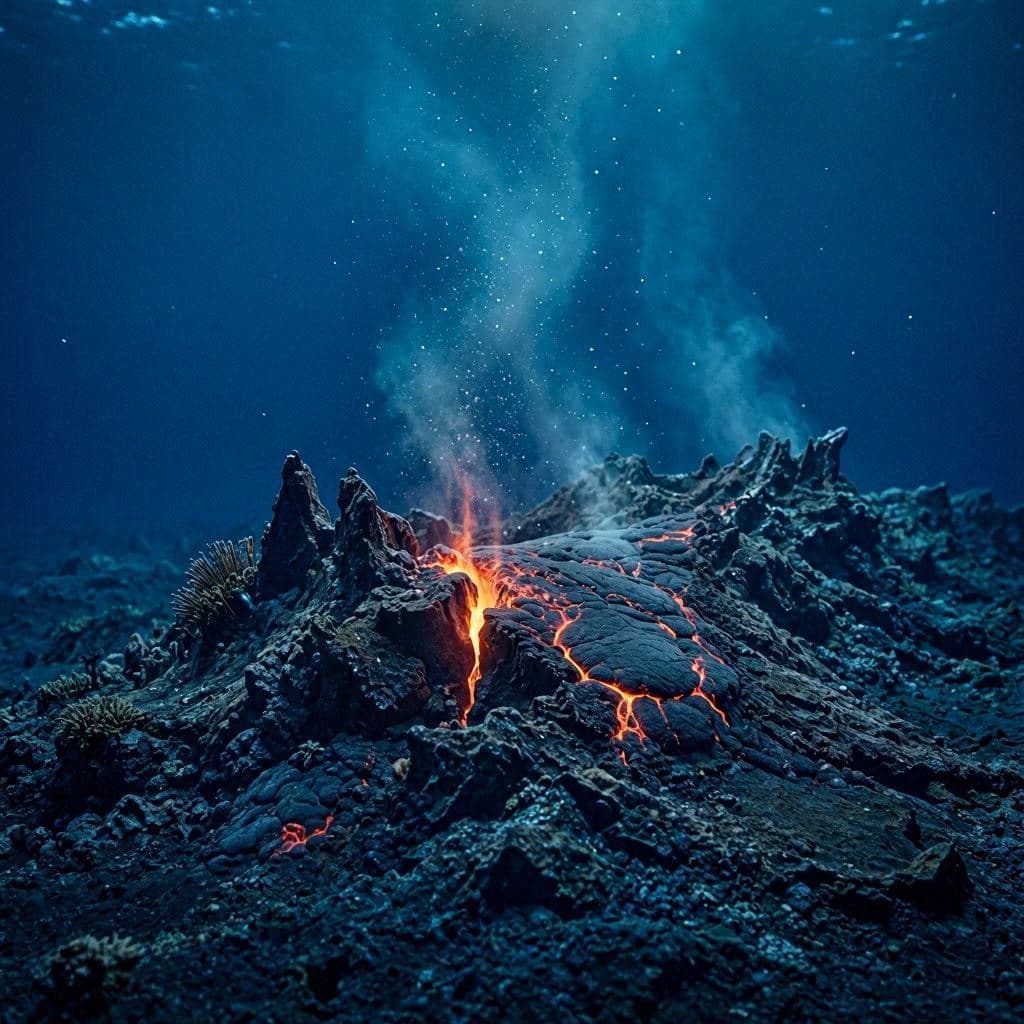
Beneath the crushing weight of the ocean’s surface, where sunlight fades into eternal darkness and pressure mounts with every meter, the Earth’s crust is engaged in a slow, silent dance. For decades, scientists have understood that tectonic plates shift and spread, but witnessing this process in real time has remained elusive. Recently, researchers captured unprecedented data as the deep ocean floor tore itself apart, revealing the raw mechanics of our planet’s construction. This event, observed through advanced seismic monitoring and underwater sensors, offers a rare glimpse into the forces that shape continents and oceans. It invites reflection on the dynamic nature of the world beneath the waves and the technological marvels that allow us to see it.
The discovery serves as a testament to human curiosity and engineering. It highlights how modern science can illuminate processes that were once only theoretical, bringing the hidden depths of the Earth into clearer focus.
Body: The observation took place along a mid-ocean ridge, a vast underwater mountain range where new crust is formed as tectonic plates diverge. Using a network of seismometers and pressure sensors deployed on the seabed, scientists detected a swarm of earthquakes followed by a sudden uplift and fracturing of the rock. This sequence indicated that magma was rising from the mantle, pushing the plates apart and creating new oceanic crust in a matter of days rather than millennia.
The event provided high-resolution data on the mechanics of seafloor spreading. Researchers observed how the brittle upper layer of the crust cracked and faulted, while the deeper, hotter layers flowed more plastically. This detailed view helps clarify how stress is released during these events and how magma interacts with surrounding rock. The findings were published in leading scientific journals, marking a significant advancement in geophysics.
For geologists, this real-time capture is akin to watching a volcano erupt or a glacier calve. It transforms abstract models into observable reality. The data allows for more accurate predictions of seismic activity and volcanic behavior in other parts of the world. Understanding these processes is crucial for assessing hazards in coastal regions and near subduction zones.
The technology enabling this discovery includes autonomous underwater vehicles (AUVs) and fiber-optic cables that transmit data instantly to shore. These tools have revolutionized marine science, allowing for continuous monitoring of remote and hostile environments. The investment in such infrastructure reflects the growing importance of oceanography in understanding global climate and geological systems.
Beyond the scientific implications, the event reminds us of the Earth’s constant state of change. The ocean floor is not a static foundation but a living, breathing part of the planet’s system. Each tear and refill contributes to the recycling of materials that sustain life on the surface. It is a cycle of destruction and creation that has operated for billions of years.
Public interest in the discovery has been high, with many fascinated by the idea of the Earth “tearing itself apart.” While the language may sound dramatic, the process is natural and essential. It drives plate tectonics, which influences everything from mountain building to the carbon cycle. Educating the public about these mechanisms fosters a deeper appreciation for planetary science.
Future missions aim to deploy even more sensitive instruments to capture smaller-scale events. By expanding the network of observers, scientists hope to build a comprehensive picture of seafloor dynamics. This long-term monitoring will be vital for understanding how the Earth responds to internal and external stresses.
As we continue to explore the deep, each discovery adds a piece to the puzzle of our planet’s history. The real-time observation of seafloor spreading is a milestone that will influence geological research for years to come.
Closing: The real-time observation of the ocean floor tearing apart marks a major achievement in geoscience. It invites continued investment in marine technology and a deeper understanding of the Earth’s dynamic systems.
AI Image Disclaimer: The visuals accompanying this article are AI-generated illustrations designed to reflect the themes of deep-sea geology and scientific discovery.
Sources: Science Advances Discover Magazine Louisiana State University Columbia Climate School
Published by Banx Network. This article is part of the Banx decentralized media programme, powered by the BXE token on the XRP Ledger.