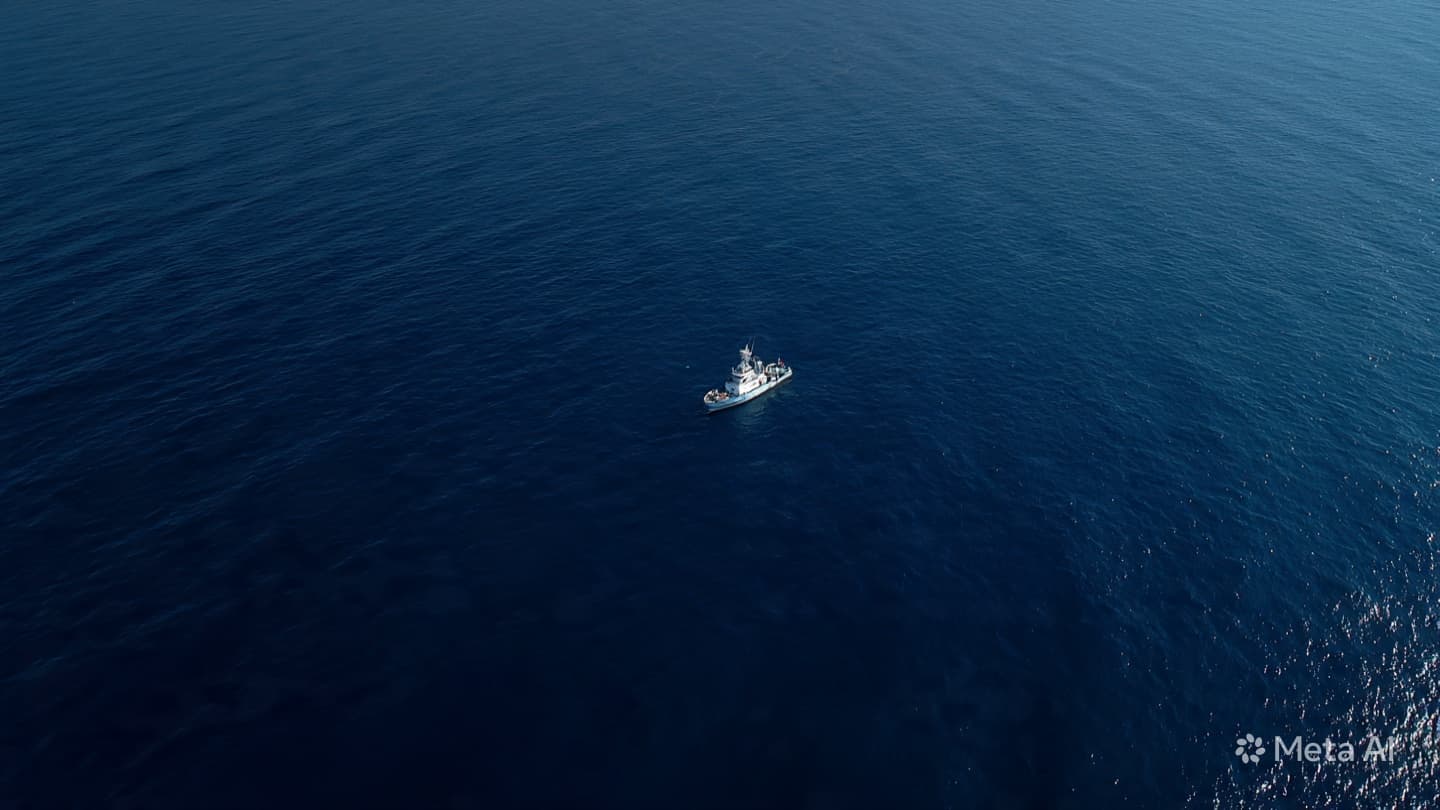
The Sicilian Channel, a thin stretch of water that separates worlds, has long been a witness to the profound and often silent dramas of the sea. It is a place of currents and contradictions, where the deep blue of the Mediterranean obscures the passage of those seeking a different life. When a vessel disappears here, the news does not arrive with a thunderclap, but as a slow, creeping realization that echoes across the international maritime community. The sea, in its vastness, becomes a keeper of secrets, and the search for the missing is an endeavor defined by the fragility of hope against the overwhelming scale of the environment.
Search operations in this part of the channel are a testament to the endurance of the human spirit. Teams scan the expanse with a precision that borders on the poetic, their eyes tracking the shifting patterns of the waves, searching for the slightest deviation from the norm. The air above the channel is often filled with the drone of surveillance and the rhythmic churn of patrol vessels, a mechanical hum that emphasizes the silence beneath. It is a theater of persistence, where every hour spent scanning the horizon is a quiet, rhythmic act of defiance against the finality of the deep.
The geography of the Sicilian Channel—its underwater ridges, its variable depths, and its unpredictable winds—plays a central role in the narrative of any maritime incident. Here, time moves differently. A few hours at sea can be an eternity, and the passage of days turns into a landscape of shifting probabilities. The rescue crews, navigating these waters, understand that they are working against both the clock and the inherent indifference of the maritime environment. They move with a deliberate, measured caution, acknowledging the reality that the sea rarely yields its own without a struggle.
In the aftermath of a reported shipwreck, the channel seems to hold its breath. The surface, often a deceptive, shimmering sheet of light, hides the structural wreckage and the personal artifacts that mark the site of the tragedy. For those on the surface, the search is an exercise in focus, a narrowing of the lens until all that matters is the next kilometer of water. It is an editorial process of elimination, stripping away the noise of the wider world to focus on the singular, haunting possibility of survival.
The emotional weight of these operations is rarely voiced but is felt in the collective stillness of the crews. There is a profound, shared understanding that the search is not merely about finding a vessel, but about finding the truth of an event that has vanished into the blue. The sailors and rescuers maintain a narrative distance, a professional restraint that allows them to function in a space where tragedy is a common, if devastating, component of the daily routine. They are the conduits of accountability in a place where no one else is watching.
As the search continues, the channel’s atmosphere shifts with the light. The mornings are crisp and clear, revealing the stark beauty of the maritime corridor, while the afternoons bring a hazy, softening quality that makes the horizon difficult to define. This constant change in perspective serves as a metaphor for the search itself—always shifting, always challenging the observer to see past the surface. The rescue vessels, small dots of orange and white against the immense, shifting blue, are symbols of human determination in a space that knows no human law.
The international cooperation required to mount such a search is a reminder of the interconnectedness of the Mediterranean. Ships from different nations, guided by a common maritime imperative, converge on coordinates provided by distress signals, a transient community formed in the wake of disaster. It is a quiet, essential diplomacy—the kind that takes place far from the halls of government, out on the open water where the only thing that matters is the preservation of human life. The channel, in this sense, is not a divider, but a connector of collective effort.
Eventually, the search yields either closure or the onset of a new, long-term uncertainty. For those involved, the conclusion of an active search is a transition from the physical to the contemplative. The data is filed, the vessels return to port, and the channel remains, vast and unchanged, waiting for the next chapter in its long history of transit and tragedy. The silence returns, heavier now, layered with the memory of the incident and the unanswered questions that linger in the wake of the search.
Ongoing search and rescue operations are currently focused on the Sicilian Channel following reports of a shipwreck in the area. Maritime authorities from neighboring jurisdictions are coordinating with specialized units to locate missing individuals. Aerial surveillance and naval assets have been deployed to sweep the identified sector despite challenging conditions. Official channels have confirmed that the search effort will continue throughout the coming days, with focus shifting to debris mapping and surface-level identification to assist in the investigation.
Published by Banx Network. This article is part of the Banx decentralized media programme, powered by the BXE token on the XRP Ledger.

.jpg&w=3840&q=75 "Intelligence Agencies Suspect Russia Is Developing Anti-Satellite Weapon to Target Starlink")