There is a world that exists without distance, a landscape folded inward rather than spread across horizons. It moves quietly, without sound or spectacle, yet it is constant—woven into the rhythm of the body itself. In this interior space, countless microorganisms live alongside us, their presence so familiar that it often goes unnoticed, like a conversation carried on in another room.
For years, scientists have understood that these microbes, particularly those in the gut, play a role in shaping human health. They assist in digestion, influence metabolism, and contribute to the balance that allows the body to function with a kind of steady coherence. But what has been less clear is how direct their influence might be, how precisely they communicate with the systems that protect us.
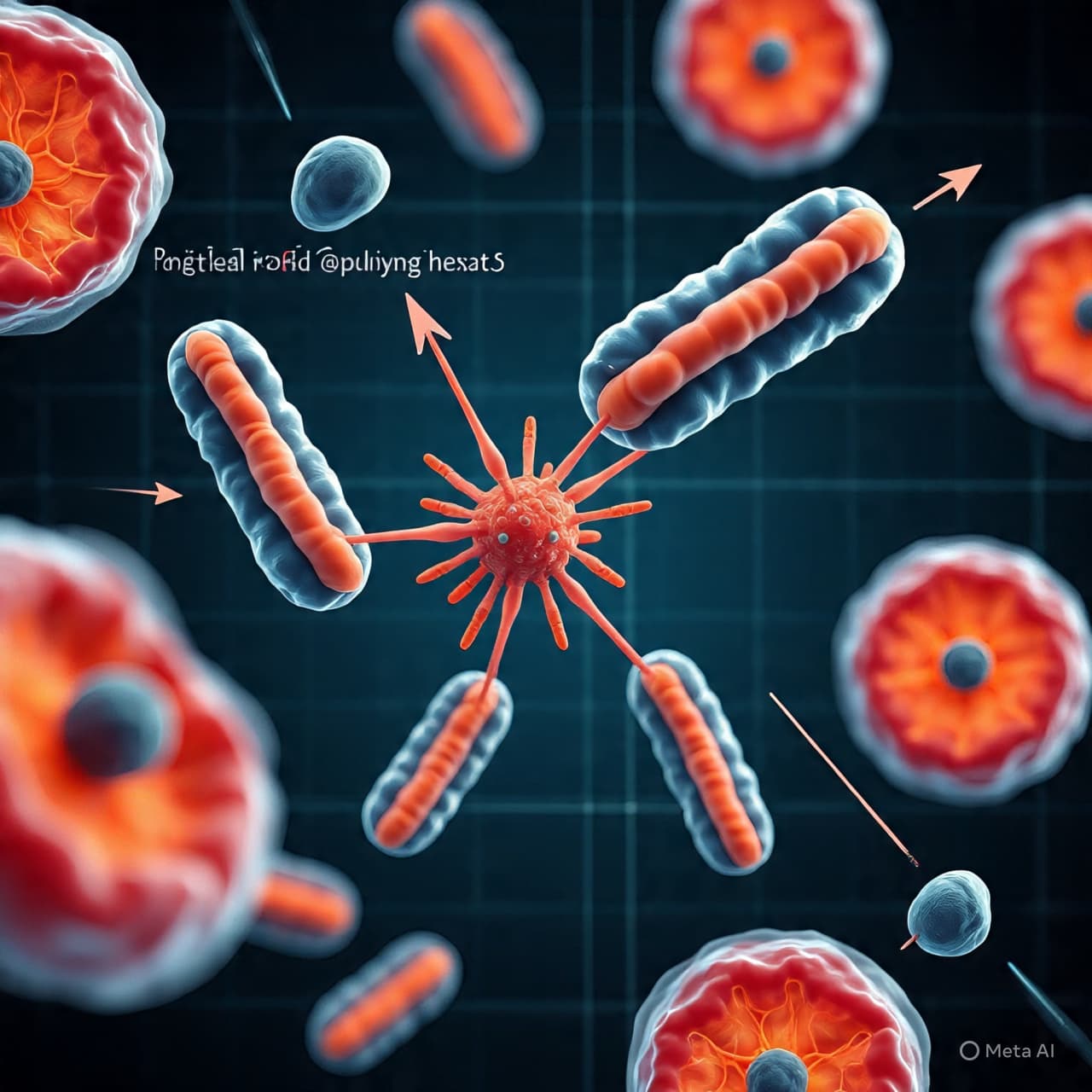
Recent research has begun to illuminate this interaction with unexpected clarity. Scientists have found that certain gut bacteria are capable of injecting proteins directly into human cells, a process that allows them to influence the immune system more actively than previously recognized. Rather than signaling from a distance, these microbes appear to engage in a form of close contact, delivering molecular instructions that can alter how immune responses are regulated.
The mechanism resembles systems seen in some pathogenic bacteria, which use specialized structures to transfer proteins into host cells. In this case, however, the interaction is not necessarily harmful. Instead, it may form part of a broader, more nuanced relationship, where bacteria help calibrate the immune system—encouraging it to respond when needed, and to remain restrained when not.
This discovery adds depth to the evolving understanding of the gut microbiome as something more than a passive community. It suggests a level of coordination, where microbial activity contributes to maintaining balance within the body’s defenses. The immune system, often described in terms of vigilance and reaction, is also shaped by signals that guide its sensitivity and tolerance.
Researchers are still working to determine how widespread this mechanism is, and what its implications might be for health and disease. There is particular interest in how these bacterial proteins influence conditions linked to immune dysregulation, including inflammatory disorders and autoimmune diseases. If the pathways can be mapped with sufficient detail, they may offer new approaches for treatment—ways to adjust immune behavior by working with, rather than against, the microbial communities that already exist within us.
There is a certain subtlety in this relationship, a sense that the body is not acting alone but in quiet coordination with its smallest inhabitants. The boundary between self and other becomes less defined, replaced by an ongoing exchange that sustains balance over time.
Scientists report that specific gut bacteria can inject proteins into human cells, influencing immune system activity. The findings provide new insight into microbiome–immune interactions and may inform future therapies for immune-related conditions.
AI Image Disclaimer
Images are AI-generated to illustrate the topic and do not depict real events or locations.
Source Check (verified coverage exists): BBC News, Reuters, The Guardian, Nature, Science
Published by Banx Network. This article is part of the Banx decentralized media programme, powered by the BXE token on the XRP Ledger.