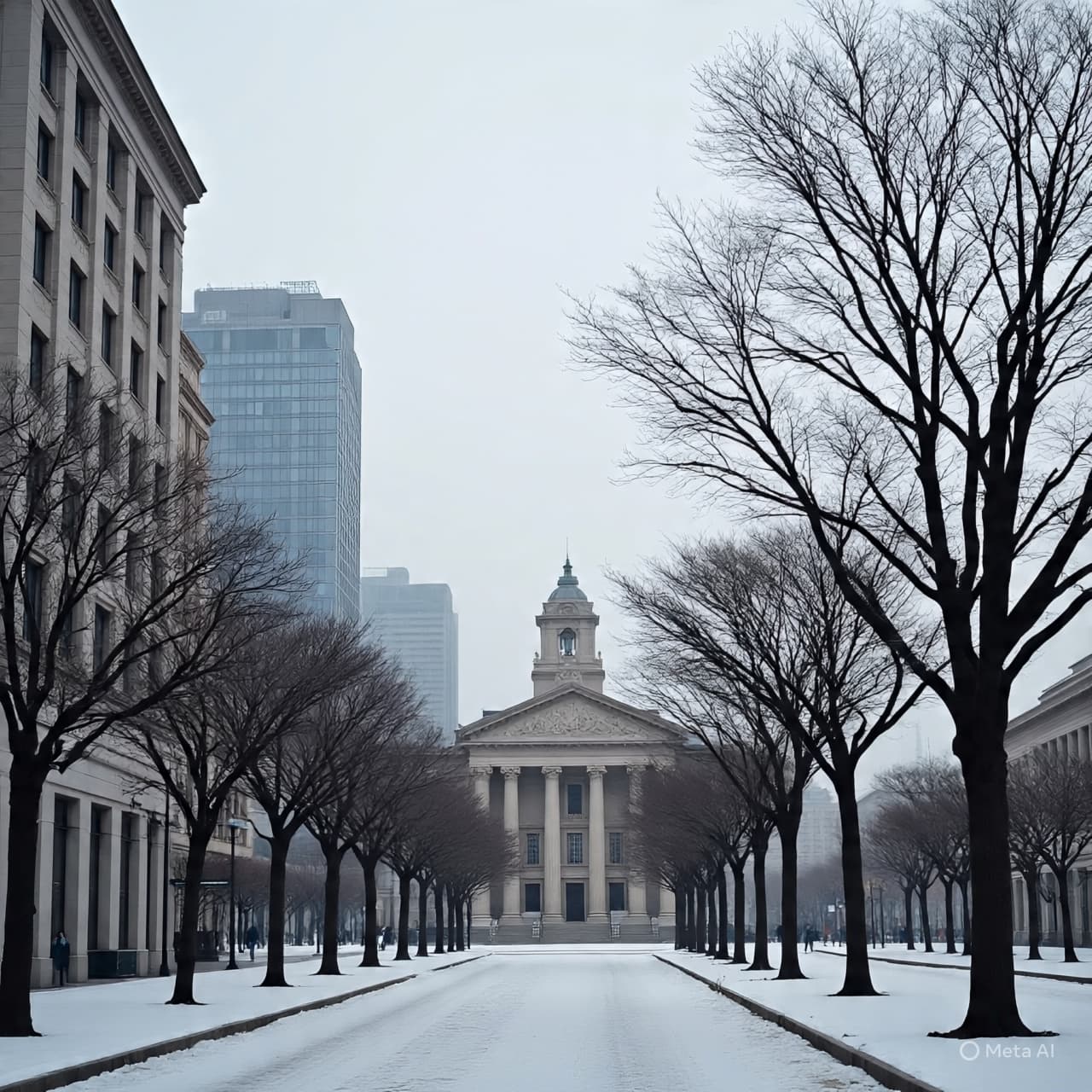
Winter moves slowly through Seoul, settling along the banks of the Han River and pressing quiet against the city’s glass and stone. The season carries a familiar discipline, stripping trees to their outlines and softening the noise of daily life. In this restrained atmosphere, the country finds itself looking inward, toward a courtroom where the past year’s turbulence has been reduced to words, statutes, and measured silence.
Yoon Suk Yeol, once seated at the center of South Korea’s executive authority, now occupies a different position within the national frame. Removed from office following impeachment last year, he faces a charge that carries uncommon historical gravity. Prosecutors have asked the court to impose the death penalty, arguing that his brief declaration of martial law in December amounted to insurrection, a rupture serious enough to threaten the constitutional order itself.
The events at the heart of the case unfolded quickly. Amid mounting political deadlock with the National Assembly, Yoon issued an emergency decree that sought to assert extraordinary authority. Within hours, lawmakers moved to block the order, and public unease spread through streets and screens alike. The declaration was short-lived, but its resonance proved lasting, setting in motion impeachment proceedings and a criminal investigation that has now reached its most severe demand.
In court filings and statements, prosecutors have described the decree as illegal and unconstitutional, asserting that it attempted to suspend or override democratic institutions. They argue that the charge of leading an insurrection, one of the most serious crimes under South Korean law, leaves little room for leniency. The request for capital punishment reflects not only the legal weight of the accusation, but also the symbolic boundary prosecutors say was crossed.
Yoon has rejected this interpretation. He has maintained that his actions were taken to preserve national stability during a period of intense political confrontation, not to dismantle democratic governance. His defense positions the decree as a misjudged but temporary measure rather than a deliberate challenge to constitutional rule. Between these positions, the court is tasked with drawing careful distinctions, guided by precedent and statute rather than public mood.
South Korea’s legal history adds a quiet complexity to the moment. Although the death penalty remains on the books for crimes such as insurrection, the country has not carried out an execution since the late 1990s. In practice, capital sentences have often been commuted or left unimplemented, making the punishment more a reflection of legal possibility than expectation. Legal observers note that life imprisonment remains a likely alternative should the court find Yoon guilty.
Beyond the courtroom, the case touches deeper currents in South Korean political life. The country has, more than once, witnessed former leaders stand trial after leaving office, reinforcing an institutional commitment to accountability that has evolved alongside its democracy. At the same time, the severity of the charge underscores lingering anxieties about authority, emergency powers, and the fragile line between order and overreach.
As proceedings move toward a verdict expected in the coming weeks, Seoul continues its winter routine. Commuters cross bridges, lights flicker on in office towers, and the city holds its breath in a subdued, collective way. The outcome will be delivered in formal language, bound by law, but its meaning will extend beyond the courtroom.
South Korean prosecutors have formally requested the death penalty for former President Yoon Suk Yeol on charges of insurrection, with the court expected to issue its ruling next month.
AI Image Disclaimer Visuals are AI-generated and serve as conceptual representations.
Sources (Media Names Only) Associated Press Reuters The Korea Times ABC News Al Jazeera
Published by Banx Network. This article is part of the Banx decentralized media programme, powered by the BXE token on the XRP Ledger.