On the windswept coast of southern Patagonia, where the ocean’s breath sculpts dunes and nests alike, life has learned to bend to the rhythm of harsh elements and gentle tides. Among these rhythms, the pulse of nature’s larger tale often surprises us — an old predator returning to a landscape it once inhabited long ago, rediscovering new patterns of life and hunger.
In recent years, conservation efforts and shifts in land use have helped puma populations rebound across parts of Argentine Patagonia, a region of sweeping grasslands and rugged coastlines. Where once these great cats had been pushed back by human activity, they now stroll back into territories rich with prey and promise. Their return, while a tribute to successful wildlife protection, has unfolded in unexpected ways.
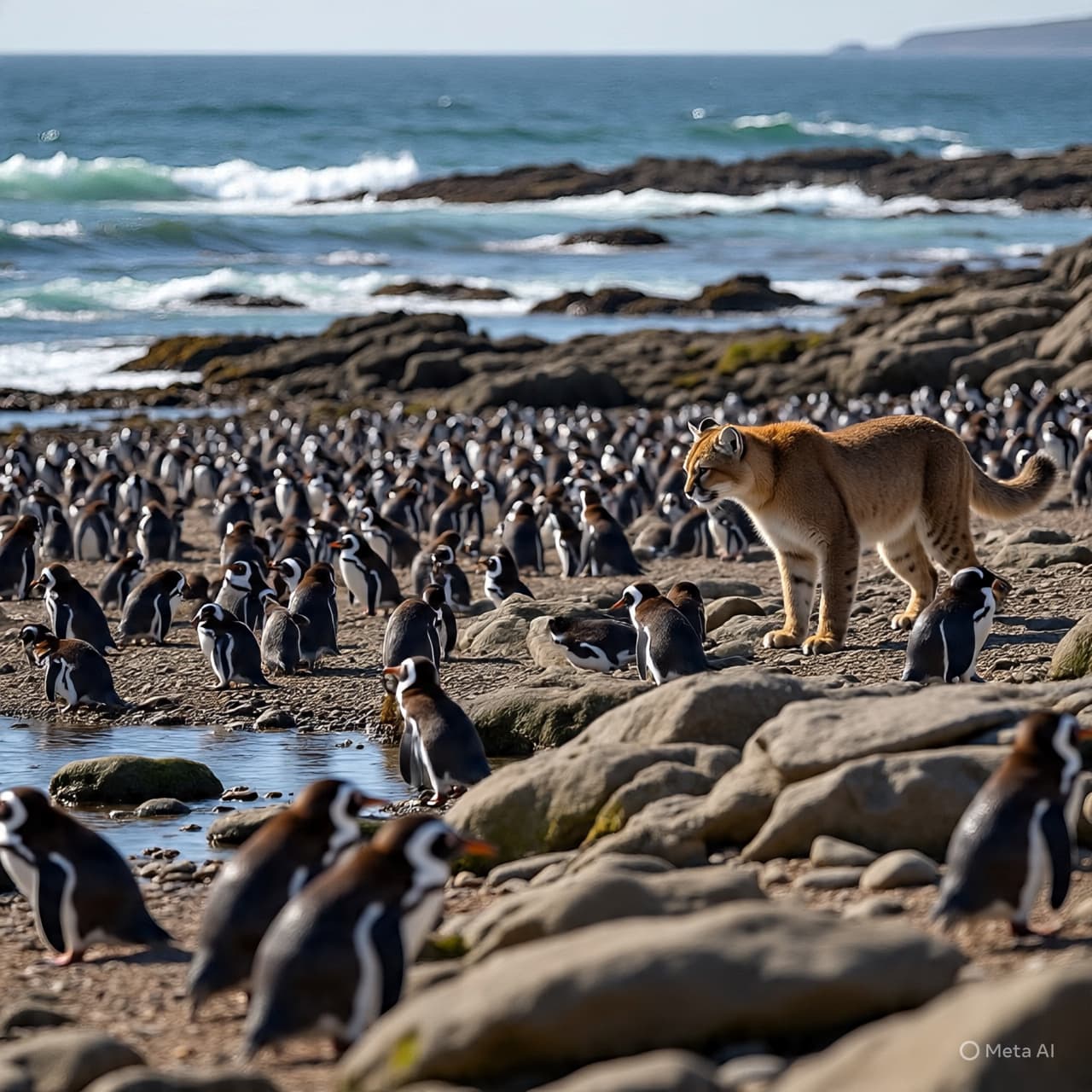
Scientists observing natural parks such as Monte León and others along the Patagonian edge have documented pumas venturing closer to the sea than they have in decades. There, Magellanic penguin colonies — dense communities of tuxedoed denizens that nest on coastal beaches — have become part of the puma’s seasonal foraging landscape. During the penguins’ breeding season, when adults and chicks congregate ashore to nest, opportunistic pumas have taken advantage of this abundance, targeting penguins as a food source.
This intersection of terrestrial and marine life feeds into deeper ecological narratives: how the resurgence of a top predator reshapes food webs and challenges our simplistic views of “predator” and “prey.” In mid-2000s studies and park observations, individual pumas and their young were seen not only preying on guanacos and rheas — their more traditional prey — but also killing Magellanic penguins in significant numbers, sometimes far exceeding what they consumed.
The history of this interaction stretches back further than today’s headlines. In ecological research, it is noted that the decline of pumas and other large predators during the 20th century — driven largely by sheep farming and predator control — created a vacuum that allowed penguin colonies to flourish along mainland shores rather than being concentrated on predator-free islands. As pumas have returned under conservation protections, the relationship with penguins has naturally re-emerged, reflecting a complex web of cause and effect that spans decades of human and wildlife influence.
For conservationists and ecologists, this development prompts both awe and reflection. On one hand, the puma’s return is a reminder that ecosystems are resilient when given space and care. On the other, it raises challenging questions about coexistence — how to honor the recovery of one species without inadvertently imperiling another that has benefited from past absences of predation.
In the quiet dawns on Patagonia’s sandy shores, the dance of life between feline stealth and avian buoyancy continues — a natural symphony that invites us to listen more deeply to the interconnectedness of all species.
AI Image Disclaimer *Visuals are created with AI tools and are not real photographs.*
Source Check – Credible Media Names ABC News – report on rising puma populations and penguin predation. National Geographic – detailed look at pumas returning to Patagonia and their effect on penguins. Smithsonian Magazine – historical and ecological context of pumas and penguin predation. Discover Magazine – coverage of puma impacts on penguin colonies. Chip Chick / wildlife commentary – additional narrative on pumas and penguins interactions.
Published by Banx Network. This article is part of the Banx decentralized media programme, powered by the BXE token on the XRP Ledger.