Antarctica is often perceived as a desolate void, a place where life struggles to survive beneath layers of ice and snow. Yet, this frozen continent holds a secret treasure trove, not of gold or gems, but of stones from the stars. More than 45,000 meteorites have been recovered from its icy expanse, a number that dwarfs finds from any other region on Earth. This abundance is not due to a higher frequency of cosmic impacts in the south, but rather to a unique natural conveyor belt. The interplay of glacial movement and polar winds creates a perfect preservation and concentration system, turning the white landscape into a museum of solar system history. It is a reminder that nature often hides its greatest gifts in the most unlikely places.
The process begins high in the interior of the continent, where meteorites fall and become buried in accumulating snow. Over thousands of years, the ice sheet flows slowly toward the coast, carrying these extraterrestrial visitors with it. When the moving ice encounters mountain ranges or other obstacles, it is forced upward, bringing the embedded rocks closer to the surface. This geological uplift is the first step in revealing the hidden treasures, lifting them from the depths of the ice to the reach of human discovery.
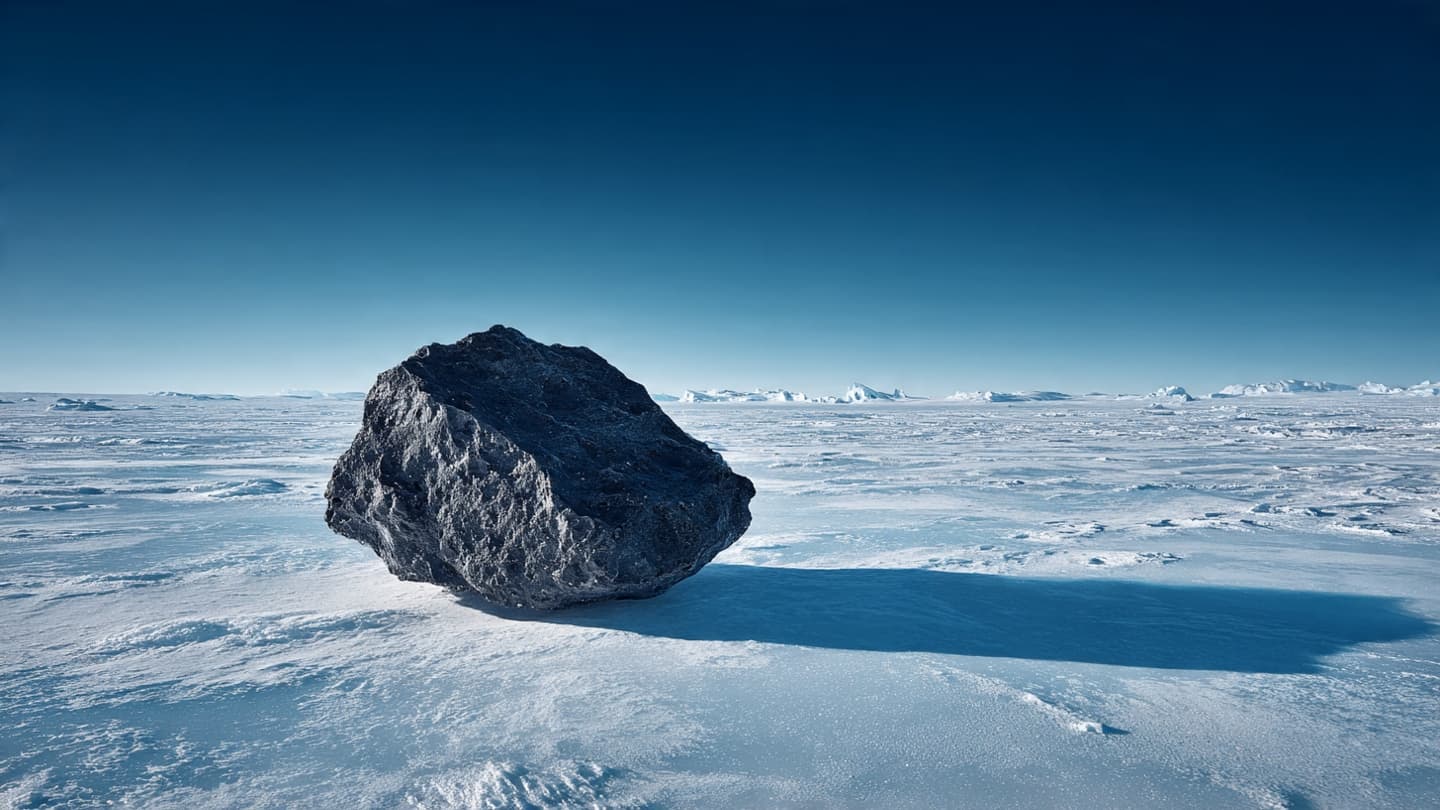
Once near the surface, the harsh Antarctic winds play their part. These katabatic winds, cold and relentless, scour away the top layers of snow, exposing the blue ice beneath. Because meteorites are typically dark, they stand out starkly against the pale blue and white background. This contrast makes them easy to spot for scientists traversing the barren landscape. The wind acts as a natural cleaner, stripping away the obscuring snow and leaving the rocks exposed for collection.
These areas of exposed blue ice are known as "stranding zones." They act as traps where the flow of ice slows or stops, causing the meteorites to accumulate over millennia. In some zones, thousands of specimens can be found in a relatively small area. This concentration allows researchers to gather large samples efficiently, providing a diverse array of materials from different parts of the solar system. It is a rare opportunity to study the building blocks of planets without the need for expensive space missions.
The meteorites collected include fragments from the Moon, Mars, and various asteroids. Each stone offers clues about the formation and evolution of our celestial neighbors. By analyzing their composition and age, scientists can reconstruct the history of the solar system, understanding how planets formed and how life’s ingredients might have been delivered to Earth. The Antarctic collection is thus a library of cosmic history, written in rock and ice.
Preservation in the cold, dry environment of Antarctica is exceptional. Unlike in warmer climates, where weathering and oxidation degrade meteorites quickly, the icy conditions keep them pristine. This allows for detailed chemical and isotopic analysis, revealing information that would otherwise be lost. The quality of these specimens makes them invaluable for research, driving discoveries in planetary science and astrobiology.
The recovery of over 45,000 meteorites from Antarctica highlights the unique role of the continent in scientific exploration. Through the natural processes of ice flow and wind erosion, Earth’s southernmost region serves as a collector of cosmic debris. As research continues, these frozen stones will continue to unlock the secrets of our universe.
AI Image Disclaimer: The visual elements accompanying this report are AI-generated interpretations designed to reflect the scientific and environmental context of the story.
Sources: Science Advances EGU Blogs Case Western Reserve University (ANSMET)
Published by Banx Network. This article is part of the Banx decentralized media programme, powered by the BXE token on the XRP Ledger.