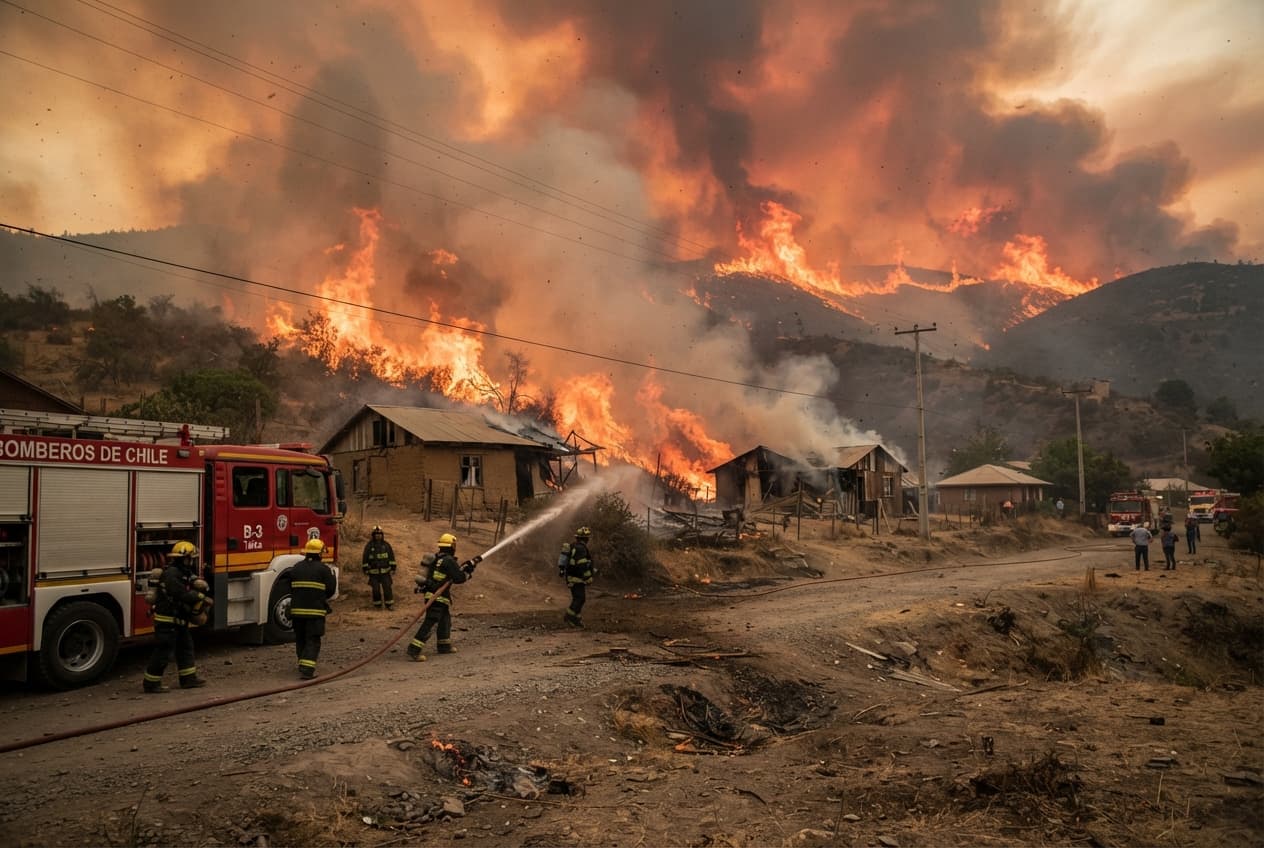
Santiago, Chile—Thick, acrid smoke choked the valleys of central Chile early Tuesday morning as fierce winds whipped uncontrolled wildfires through rural residential sectors. Flames swept down dry hillsides with terrifying speed, reducing wooden homes to smoldering ash within minutes and forcing hundreds of families to flee on foot. Emergency services confirmed that at least one civilian perished in the inferno after becoming trapped by rapidly shifting fire fronts driven by unseasonable heat and prolonged drought.
Firefighters labored in near-zero visibility against towering walls of fire that jumped containment lines and threatened electrical infrastructure across multiple rural municipalities. Water-dropping aircraft buzzed low through the dense smoke canopy, dumping red chemical retardant onto scorched earth where livestock and fences had already vanished. Local hospitals activated emergency triage protocols to treat scores of residents suffering from severe smoke inhalation and acute burns.
National forestry corporation officials warned that ongoing meteorological conditions created an extreme fire risk index across several central provinces. Strong gusts exceeding sixty kilometers per hour picked up burning embers and hurled them hundreds of meters ahead, sparking secondary blazes in nearby pine plantations. Evacuation sirens wailed continuously through neighborhoods as police officers went door-to-door urging reluctant residents to abandon their properties immediately.
Displaced families gathered at makeshift community shelters set up in local gymnasiums, wrapped in blankets and waiting for news about their destroyed homes. Municipal social workers distributed bottled water and medical supplies while coordinating temporary housing arrangements for hundreds of newly homeless individuals. Regional authorities declared a state of emergency across the affected zones, mobilizing military personnel to assist with evacuation patrols and security checkpoints.
Utility companies cut power grids in high-risk sectors to prevent downed transmission lines from triggering additional sparks amid the relentless gale-force winds. Environmental analysts noted that cumulative rainfall deficits over the past three years left local vegetation bone-dry and primed for explosive combustion. Fire suppression crews from neighboring districts rushed to reinforce exhausted local brigades battling the front lines without adequate rest.
Presidential spokespersons announced that federal disaster relief funds would be deployed instantly to reimburse municipalities for emergency equipment purchases and rescue operations. Volunteers organized supply drives in unaffected cities, loading trucks with non-perishable food items and pet supplies destined for emergency shelters. Forensic teams awaited clearance from active burn zones to recover the remains of the civilian victim and begin formal identification procedures.
As afternoon turned to dusk, the orange glow of burning timber illuminated the night sky, casting long shadows over charred orchards and twisted metal debris. Winds showed little sign of abating, forcing ground crews to adopt defensive positions around critical water infrastructure and fuel depots.
The firefighting coalition continues its desperate containment efforts while meteorological agencies predict no immediate relief from the punishing drought conditions.
Published by Banx Network. This article is part of the Banx decentralized media programme, powered by the BXE token on the XRP Ledger.