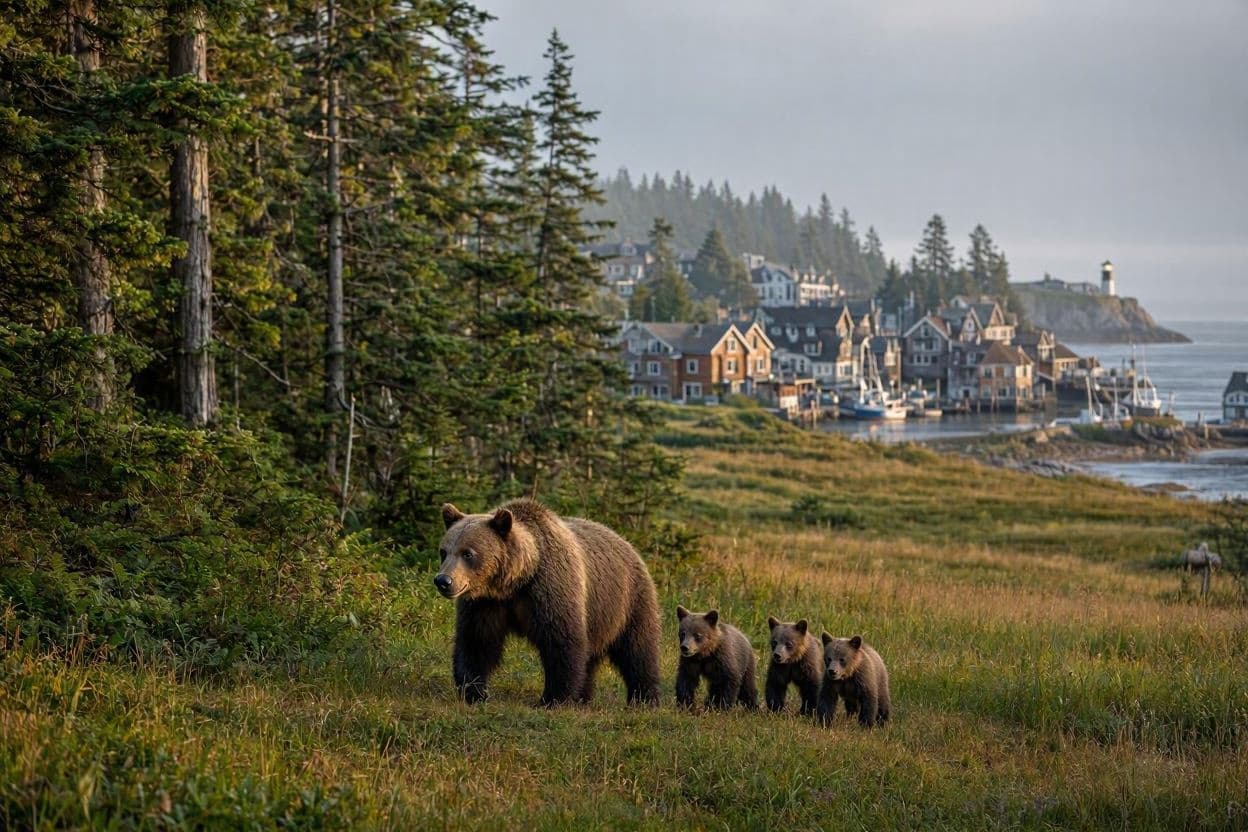
In the picturesque town of Pender Harbour, British Columbia, the usual rhythm of coastal life has been interrupted by the presence of an unusual visitor: a mother grizzly bear and her three yearlings. While black bears are a common sight in the region, grizzlies are rare, and their appearance in a populated area has stirred a mix of awe and anxiety among residents. This encounter highlights the ongoing challenge of coexistence between humans and wildlife in shared landscapes.
The family was first spotted wandering near residential areas, prompting immediate alerts from local authorities and wildlife experts. Grizzly bears, being larger and more potentially dangerous than their black bear counterparts, require careful management to ensure public safety. The BC Conservation Officer Service has been monitoring the situation closely, advising residents to secure attractants such as garbage and pet food to avoid encouraging the bears to stay.
For many in the community, the sight of the grizzlies is a reminder of the wildness that still exists on the edges of human settlement. Some residents express admiration for the animals, viewing their presence as a sign of a healthy ecosystem. Others, however, feel uneasy, particularly those with young children or pets. This division of opinion reflects the broader debate about how best to manage wildlife interactions in growing communities.
Wildlife specialists note that grizzly bears are expanding their range in parts of British Columbia, driven by factors such as habitat changes and food availability. Encounters like this in Pender Harbour may become more frequent as bears explore new territories. Education and preparedness are key to reducing conflict, with programs like WildSafeBC providing resources for residents to learn how to live safely alongside large carnivores.
The local government has responded by increasing patrols and issuing warnings to keep doors and windows locked during peak bear activity times. They emphasize that feeding bears, intentionally or unintentionally, poses a risk to both the animals and people. Bears that become habituated to human food sources often face lethal consequences, making prevention a critical component of conservation efforts.
Community meetings have been held to discuss strategies for managing the situation, with experts offering advice on bear-proofing homes and yards. These discussions foster a sense of collective responsibility, encouraging neighbors to work together to minimize attractants. The goal is to create an environment where bears can pass through without becoming dependent on human resources, allowing them to return to the wild.
As the grizzly family continues its journey, the town of Pender Harbour remains vigilant. The incident serves as a poignant example of the delicate balance required in modern coexistence with nature. By respecting wildlife and taking proactive steps, communities can ensure that both humans and bears thrive in their shared environment. The hope is that this encounter leads to greater awareness and stronger practices for living harmoniously with the wild.
AI Image Disclaimer: The illustrations in this article are AI-generated visuals designed to depict the natural setting and wildlife context.
Sources: The Globe and Mail, CBC News, Broadview
Published by Banx Network. This article is part of the Banx decentralized media programme, powered by the BXE token on the XRP Ledger.