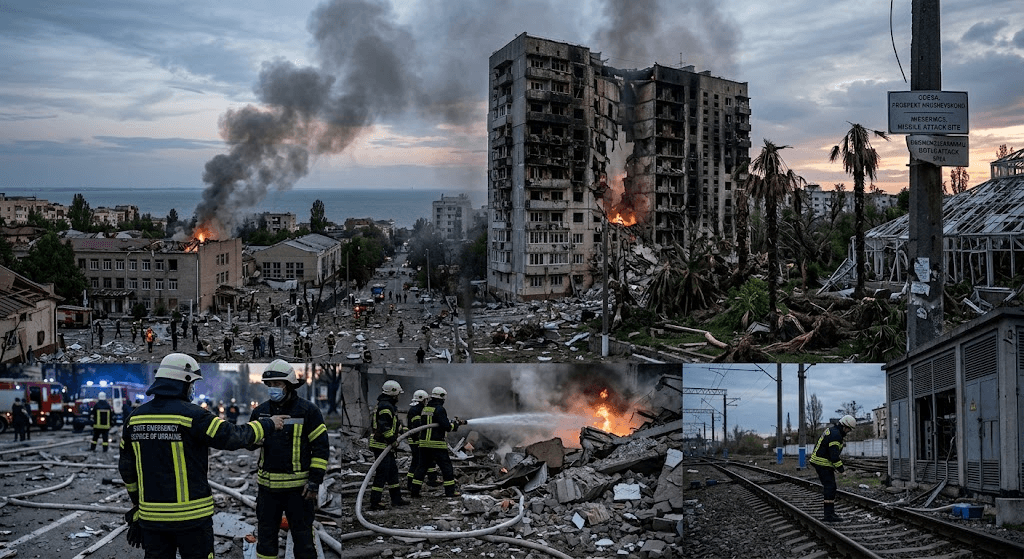
ODESA, Ukraine — A massive wave of combined Russian missile and drone strikes hit targets across Ukraine, causing heavy structural damage to residential high-rises in Odesa, igniting fires at the historic Odesa Botanical Garden, and striking transport infrastructure in the western city of Ternopil.
The coordinated, multi-axis barrage triggered air raid sirens across several regions as Ukrainian air defense units engaged incoming low-altitude attack drones and high-velocity missiles. Emergency dispatch teams operated across multiple blast sites throughout the morning to clear rubble, fight localized blazes, and extricate civilians trapped in damaged buildings.
In Odesa, the strikes caused severe destruction to a multi-story residential apartment tower, tearing through the upper floors and sending heavy structural debris plunging onto surrounding streets. Secondary strikes ignited blazes within the grounds of the historic Odesa Botanical Garden and damaged adjacent warehouse facilities and a children's sanatorium. First responders from the State Emergency Service (SES) deployed specialized heavy rescue equipment to pull residents from the compromised high-rise while firefighting units contained flames spreading across the botanical preserve.
Simultaneously, long-range attack drones targeted the western city of Ternopil, striking key transport and industrial facilities. Emergency crews in Ternopil quickly established perimeters around damaged transit infrastructure to quench secondary fires and ensure the stability of surrounding urban grids.
"Our emergency crews were deployed across multiple districts simultaneously to battle structural fires and clear rubble," stated an official from the State Emergency Service. "Operations remain active to secure weakened building envelopes and evaluate potential structural collapses."
Air Force command officials and regional military administrations have launched a comprehensive technical analysis of missile trajectories and drone debris recovered from the strike sites. Defense analysts noted the heavy reliance on saturation tactics designed to strain regional air defense batteries and disrupt key civilian logistics hubs along the Black Sea coast and interior transport routes.
In the wake of the coordinated aerial assault, national and municipal authorities pledged immediate emergency funding for civilian shelter repairs, grid stabilization, and victim relief. Federal energy and transport ministries announced plans to accelerate the physical hardening of vital municipal infrastructure, expand automated early-warning threat detection networks in high-density urban sectors, and reinforce air defense shielding around critical civilian transport hubs to withstand future long-range strikes.
Published by Banx Network. This article is part of the Banx decentralized media programme, powered by the BXE token on the XRP Ledger.