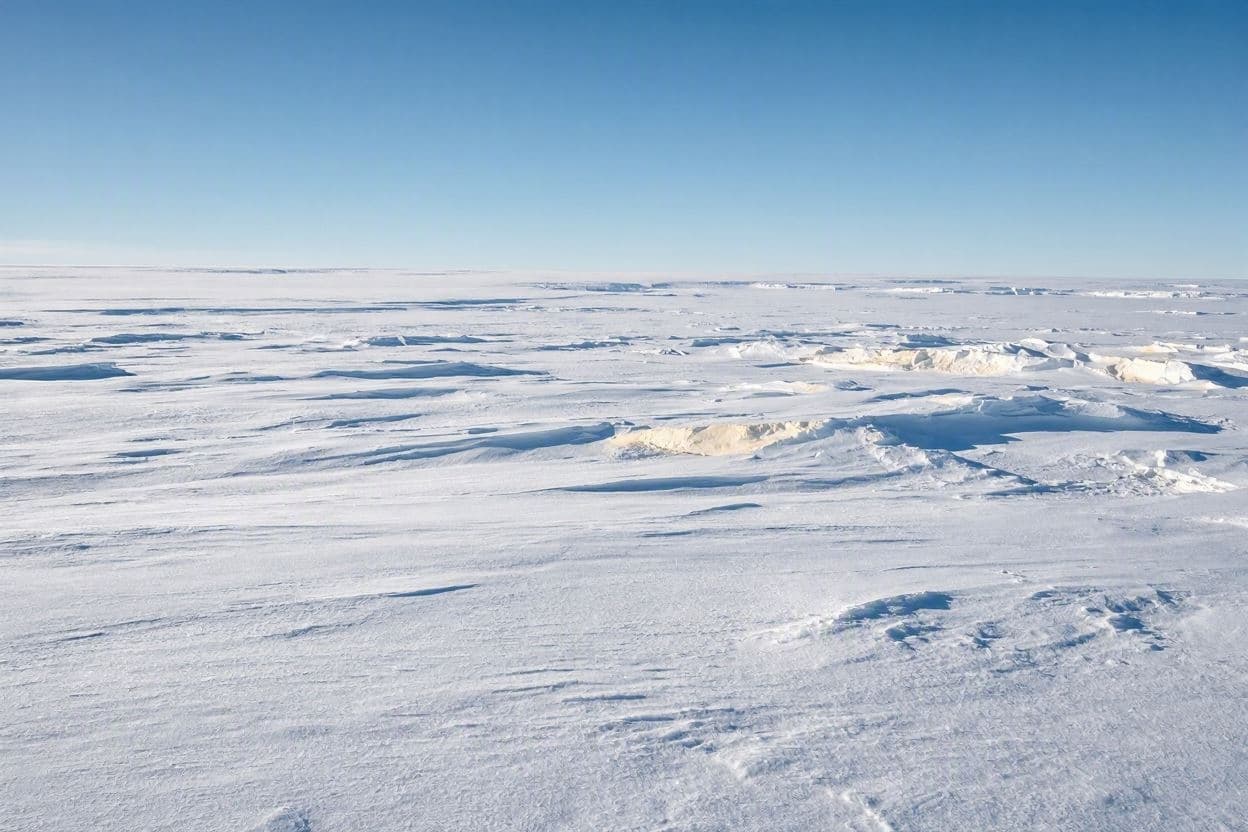
In the narrative of climate change, Antarctica is often portrayed as a victim, a frozen continent slowly melting into the rising seas. Images of cracking ice shelves and calving glaciers dominate our understanding of the polar regions. Yet, the Earth’s systems are complex and full of counterintuitive patterns. Recent data reveals that Antarctica has actually gained a record 695 billion tons of ice, a finding that seems to contradict the prevailing trend of loss. This apparent paradox invites us to look deeper, to understand the nuanced interplay of weather, snow, and temperature that defines the polar environment.
The increase in ice mass is primarily attributed to heavy snowfall in certain regions of the continent. Over the past few decades, changes in atmospheric circulation have led to increased precipitation in East Antarctica, where the cold temperatures ensure that this snow accumulates rather than melts. This accumulation adds significant weight to the ice sheet, offsetting losses from other areas. It is a reminder that global warming does not affect all parts of the planet uniformly, and that local conditions can produce unexpected results.
Scientists point to the role of warmer air holding more moisture as a key factor. As global temperatures rise, the atmosphere can carry more water vapor, which then falls as snow in polar regions. This phenomenon, known as the "snowfall effect," can temporarily boost ice mass in specific areas. However, this gain is not evenly distributed. While East Antarctica sees increases, West Antarctica and the Antarctic Peninsula continue to lose ice at alarming rates due to warming ocean waters and melting from below.
The net gain of 695 billion tons is a significant figure, but it must be viewed in context. When compared to the long-term trends of ice loss globally, this increase is a temporary fluctuation rather than a reversal of the overall decline. The ice lost from Greenland and other parts of Antarctica far outweighs this gain. Therefore, while the news is surprising, it does not negate the broader reality of climate change. Instead, it highlights the complexity of modeling Earth’s cryosphere and the need for detailed regional analysis.
Understanding this dynamic is crucial for accurate sea-level rise predictions. If models only account for melting without considering increased snowfall, they may overestimate or underestimate future changes. By incorporating these new findings, scientists can refine their projections, providing more reliable data for policymakers and coastal communities. It underscores the importance of continuous monitoring and the integration of diverse data sources in climate science.
The discovery also serves as a caution against simplistic interpretations of climate data. A single metric, such as total ice mass, can be misleading if not broken down into its components. Gain in one area does not mean safety in another. The health of the Antarctic ice sheet is a balance of competing forces, and tipping points may still be reached if warming continues unchecked. We must remain vigilant and avoid complacency based on isolated positive trends.
Furthermore, this finding opens new avenues for research into atmospheric patterns and their connection to global climate systems. Studying why snowfall has increased in East Antarctica can help us understand shifts in wind patterns and ocean currents. These insights contribute to a more holistic view of Earth’s climate, revealing the interconnectedness of different regions and processes. It is a testament to the value of scientific inquiry in uncovering hidden truths.
As we continue to monitor the poles, we must embrace both the bad news and the surprising good news. Each data point adds to our understanding, helping us navigate the challenges of a changing world. The gain in Antarctic ice is a fascinating puzzle piece, reminding us that nature is full of surprises and that our knowledge is always evolving.
The record ice gain in Antarctica is a nuanced chapter in the story of climate change. It reminds us to look beyond headlines and appreciate the complexity of our planet’s systems. Let this finding encourage deeper inquiry and sustained attention to environmental science.
AI Image Disclaimer: Visuals included in this article are AI-generated representations designed to illustrate the concepts discussed.
Sources: Nature Communications NASA Earth Observatory The Guardian
Published by Banx Network. This article is part of the Banx decentralized media programme, powered by the BXE token on the XRP Ledger.