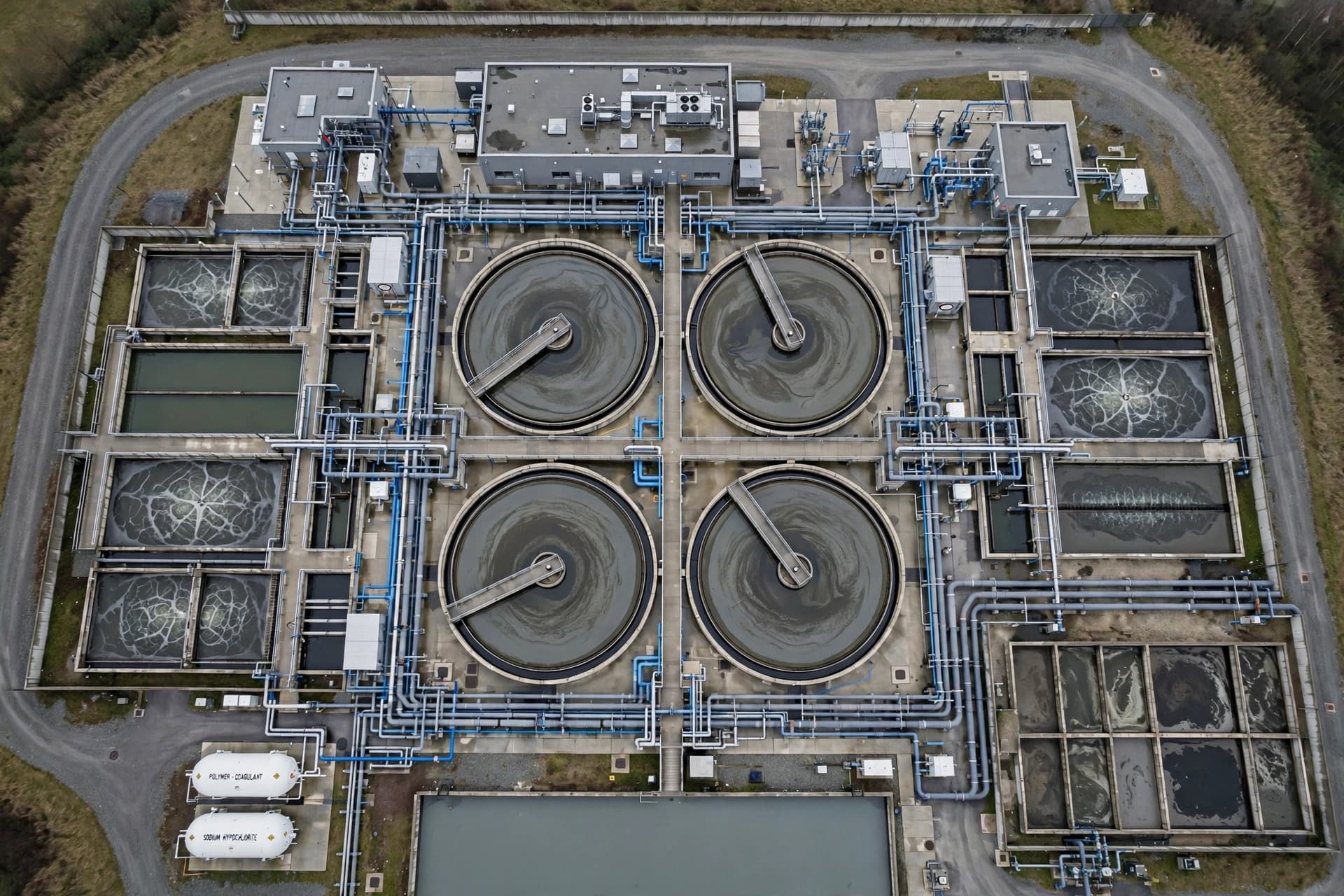
Water is the most ordinary thing in a city, and perhaps the most invisible. It arrives through pipes we never see, serves purposes we rarely consider, and leaves through systems we take for granted. And yet, the question of how a city manages its water—how it pays for it, who controls it, what it costs—is ultimately a question about what kind of city we are building, and for whom.
Toronto mayoral candidate Brad Bradford has promised to cut household water bills by 25 percent if elected, restructuring Toronto Water into a publicly owned utility modeled on Toronto Hydro. Under his plan, the average home would see its annual water cost drop from about $1,118 to just under $840—a savings of roughly $300 per year for the first $1,500 of each bill .
The mechanism, Bradford explained, is a shift in how infrastructure is financed. Currently, about two-thirds of Toronto's water bills—roughly $1.1 billion in 2026—flow into a reserve fund that pays upfront for capital projects like pipe replacements and treatment plant upgrades. Bradford argues this amounts to over-collection. "That's your money," he said. "You've already paid it and city hall has been sitting on it" .
His proposed solution would allow the new utility to borrow for infrastructure, spreading costs over decades like a mortgage rather than collecting cash in advance. The utility would be governed by an independent board with authority to set rates, while a bylaw would permanently ban private investment .
The plan has drawn sharp criticism from incumbent Mayor Olivia Chow, whose campaign called it a "water scheme" that "will open the door to privatization and cost people a lot more in the long run." Chow's team cited provincial Bill 60, passed in 2025, which grants the province power to appoint a corporation to manage municipal water services and approve rates—a legal framework they say Bradford's plan cannot protect against .
Mayoral candidate Chris Alexander also opposed the proposal, saying Toronto Water's reserve is not over-collection but "the money that fixes our pipes and treatment plants." He warned that spending it on a discount would leave no funding for capital renewal, forcing future ratepayers to cover the costs with interest .
Municipal finance experts note that while borrowing can distribute costs across generations who benefit from infrastructure, it carries risks. Interest payments increase the total cost of projects, and an independent board with a legal obligation to remain solvent could raise rates if borrowing costs spike—decisions that would rest with unelected officials rather than city council .
The debate, at its core, is not merely about dollars or pipes. It is about who decides, who pays, and what kind of control a city chooses to keep over the systems that sustain it. The water will flow regardless. The question is who holds the valve.
---
AI Image Disclaimer: The images accompanying this article are AI-generated and are for illustrative purposes only.
Sources: CBC News, Radio-Canada, National Observer, TorontoToday.ca, CityNews Toronto
Published by Banx Network. This article is part of the Banx decentralized media programme, powered by the BXE token on the XRP Ledger.