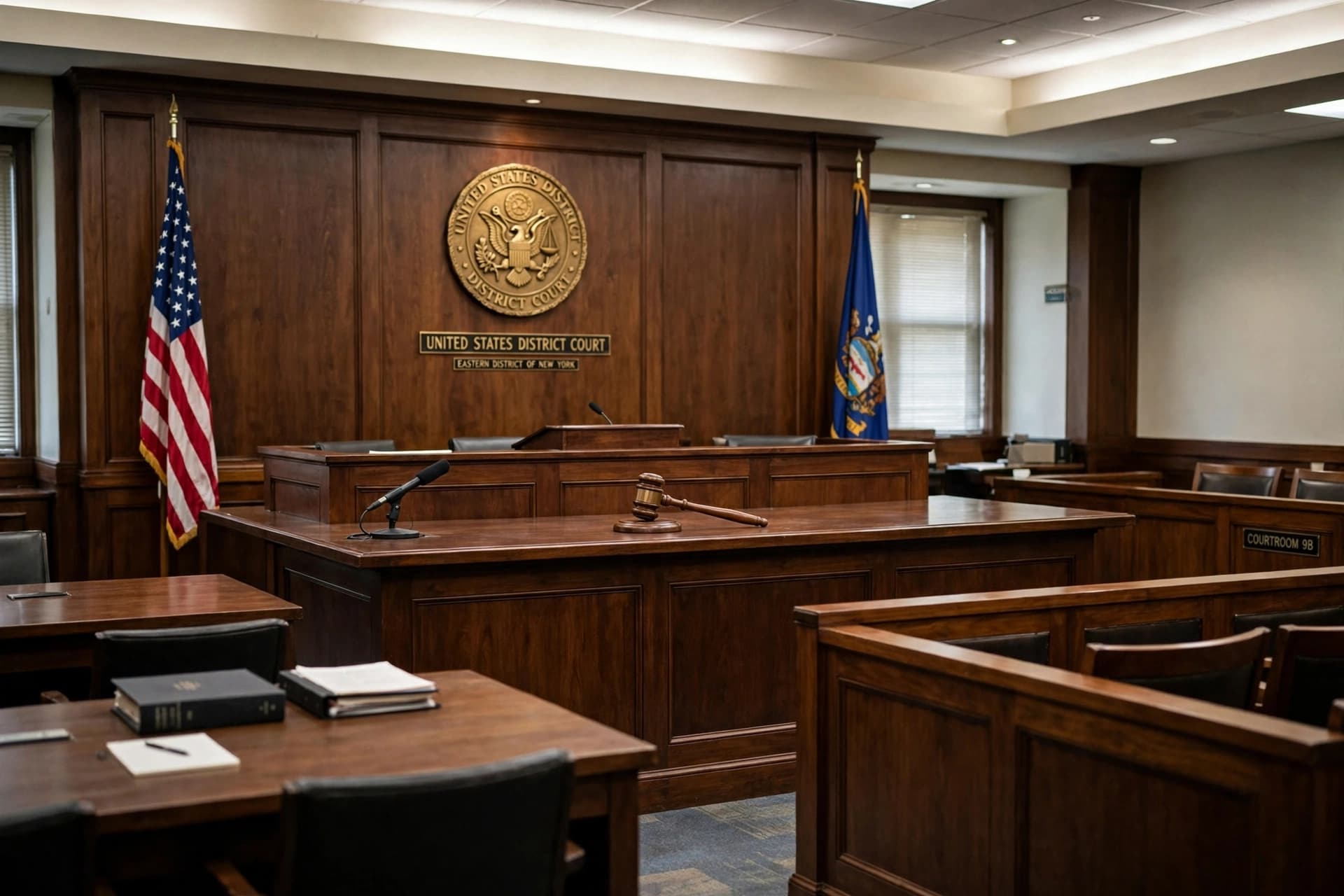
There is a quiet architecture to the way democracies protect the act of voting—a set of assumptions, written into law and custom, that the machinery of elections exists to serve the voter, not to sort them. This week, that architecture was tested on two fronts: in a federal courtroom in Washington, where a judge blocked the Justice Department from using a flawed database to purge voter rolls, and in a trove of internal documents that revealed how Immigration and Customs Enforcement had amassed tens of millions of voter records in pursuit of a theory of fraud that most election experts say is exceedingly rare.
On Friday, U.S. District Judge Sparkle Sooknanan struck down the Justice Department’s policy of comparing state voter rolls against the Department of Homeland Security’s Systematic Alien Verification for Entitlements database, or SAVE . The ruling came in a lawsuit brought by Common Cause and four individual voters who had been wrongly removed from the rolls. One plaintiff, Anthony Nel of Texas, received a letter identifying him as a noncitizen and was disenfranchised while his passport was expired .
In her 78-page decision, Sooknanan wrote that the policy “represents the federal government’s attempt to decide who gets to vote,” and that Congress had left that authority with the states . She noted that the SAVE database has been shown to make “persistent mistakes,” particularly when assessing naturalized citizens, and that the DOJ had “downplayed the risk of voter disenfranchisement” while “knowingly relying on an inaccurate database” .
Separately, documents obtained by Democracy Forward through a Freedom of Information Act request revealed the scale of ICE’s parallel efforts. Homeland Security Investigations, the criminal investigative arm of ICE, had ingested 50.6 million voter records from the Justice Department and another 48.4 million from Heather Honey, a senior DHS official and prominent 2020 election denier . Investigators reviewed dozens of nonprofit voter-registration organizations in Pennsylvania, New Jersey, and Ohio, finding no evidence of wrongdoing in most cases . The records also showed that HSI considered deploying undercover agents against voter registration groups and explored whether voter data could be uploaded into a Palantir system used for immigration enforcement .
The two developments paint a picture of an administration that has sought to expand federal authority over elections—a domain the Constitution leaves largely to the states—by assembling vast databases of personal information and using them to identify and investigate individuals and organizations suspected of voter fraud. The court’s ruling blocks one avenue of that effort. The documents reveal the scope of another.
For voters like Nel, who told the court he worries he will be deemed ineligible again, the ruling offered a measure of protection . For the broader system, it offered a reminder that the machinery of elections is not neutral—it reflects choices about who is trusted to participate, and who is not.
AI Image Disclaimer: All images associated with this report are AI-generated and serve illustrative purposes only, not as documentary records of the events described.
Sources: Democracy Docket, Courthouse News Service, Biometric Update, CBS News, Protect Democracy, Democracy Forward
Published by Banx Network. This article is part of the Banx decentralized media programme, powered by the BXE token on the XRP Ledger.