

Key Highlights
- Project Overview:The White House announces the construction of a new National Security Facility and State Ballroom.
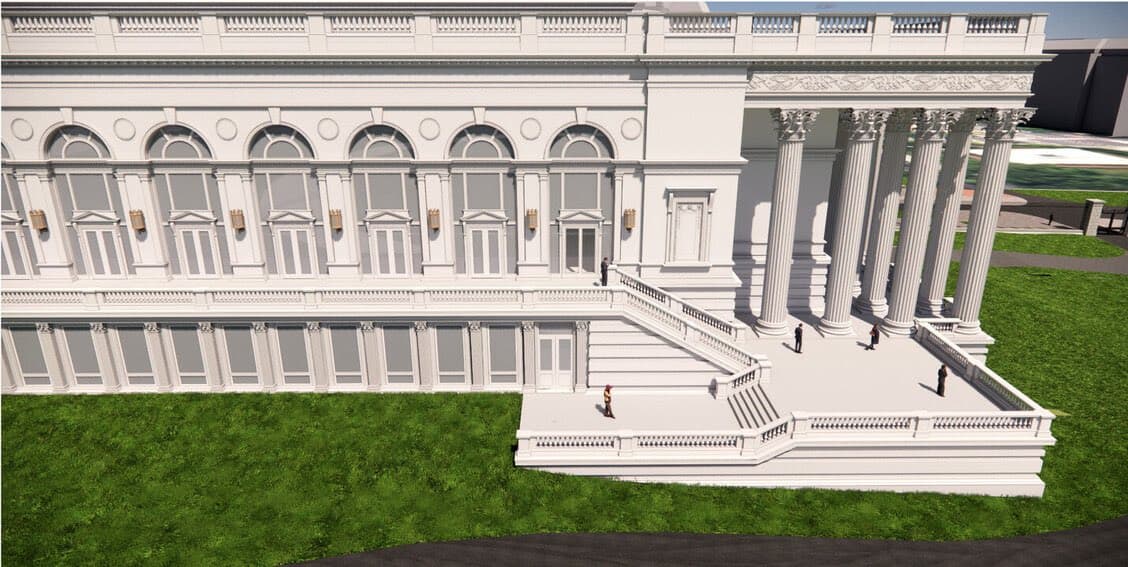
- Architectural Design:Renderings showcase a neoclassical structure designed to blend with the historic White House.
- Security Enhancements:The facility will feature advanced security and communication systems.
The White House has unveiled new renderings of what President Donald Trump describes as a significant expansion of the Executive Mansion. The construction of a new National Security Facility and State Ballroom is reportedly progressing on schedule. This ambitious project is being touted as one of the most substantial additions to the White House complex in decades, aimed at enhancing national security operations and improving the nation's capacity to host high-level diplomatic events.
According to President Trump, the completed facility will be unprecedented among government buildings, combining state-of-the-art security infrastructure with a world-class ceremonial venue that can accommodate larger state functions. The expansion is intended to modernize aging facilities while maintaining the historic aesthetic of the White House.
Architectural renderings released by the administration depict a neoclassical structure characterized by grand columns, symmetrical façades, and expansive ceremonial halls that complement the existing White House design. Officials have indicated that the new complex will incorporate upgraded communications systems, advanced cybersecurity capabilities, secure meeting rooms, and expanded facilities for the National Security Council and senior government officials.
The proposed ballroom is expected to reduce the government's reliance on temporary event structures that have historically been utilized for major state dinners and international gatherings. Proponents argue that establishing a permanent venue will enhance security, streamline logistics, and improve operational efficiency, all while providing a more prestigious setting for welcoming foreign leaders.
Administration officials assert that the expansion will bolster America's diplomatic capabilities while supporting emergency response and national security coordination. The project has garnered significant public attention, with supporters praising the modernization effort, while critics raise concerns regarding overall costs, priorities, and long-term funding arrangements.
Construction planning has also prioritized ensuring that the expansion integrates seamlessly with the historic White House grounds, minimizing disruption to daily government operations. Engineers and preservation specialists are collaborating to balance modern security requirements with the architectural heritage of the site.
If completed as planned, the new National Security Facility and Ballroom could represent one of the most significant physical additions to the White House in modern history, reflecting evolving security demands and the changing role of the presidency in international diplomacy.
Published by Banx Network. This article is part of the Banx decentralized media programme, powered by the BXE token on the XRP Ledger.




