
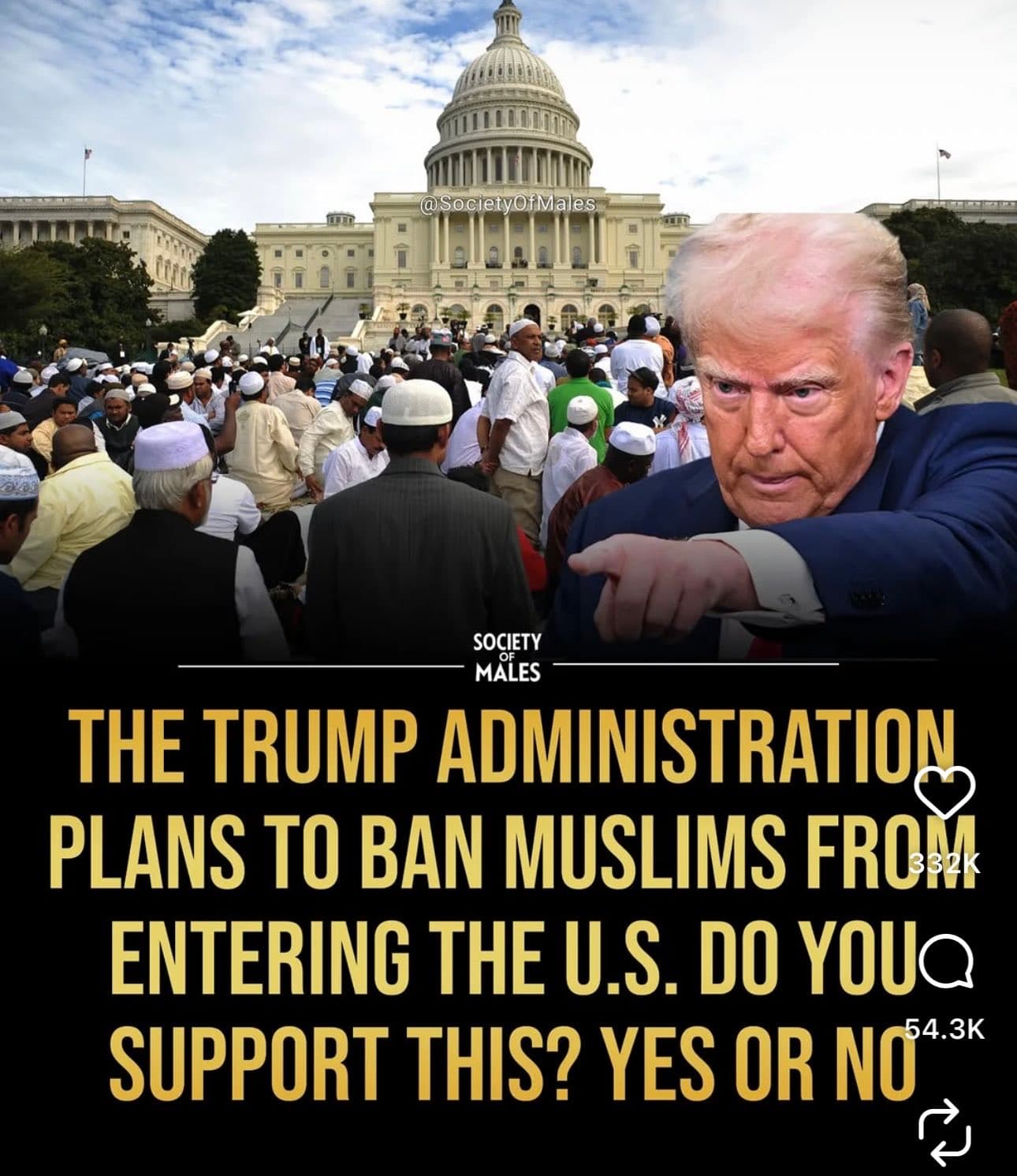
A seismic political and ethical debate has erupted following reports that the Trump administration is crafting a plan to ban Muslims from entering the United States. The potential policy, framed by the administration as a necessary security measure, has been met with immediate and fierce condemnation from a wide array of critics who label it a blatant act of religious discrimination and a violation of foundational American principles.
The core question, "Do you support this? YES OR NO," has polarized public discourse, reducing a complex issue of national security and religious freedom to a binary choice. Proponents of the ban argue that it represents a decisive action to protect the homeland from potential threats, citing the global landscape of terrorism. They view it as a proactive, if controversial, step toward ensuring national safety.
However, human rights organizations, religious leaders, and political opponents have decried the proposal as unconstitutional and morally reprehensible. They argue that it collectively punishes an entire global faith community of over 1.8 billion people, fundamentally contradicts the American value of religious freedom enshrined in the First Amendment, and serves as a powerful propaganda tool for extremist groups. Legal experts anticipate immediate and protracted court battles, arguing that a religion-based ban would not survive constitutional scrutiny.
Beyond the domestic uproar, the mere consideration of such a policy has severe international ramifications. It risks alienating Muslim-majority nations that are critical allies, damaging America's global standing as a beacon of liberty, and deepening cultural divisions. The controversy forces a stark national introspection, pitting fears over security against the nation's core identity as a nation of immigrants built on religious tolerance.
Published by Banx Network. This article is part of the Banx decentralized media programme, powered by the BXE token on the XRP Ledger.



.jpg&w=3840&q=75 "Zelensky Warns China Is Helping Russia Develop a Starlink Rival")