
Key Highlights
- White House Response:The White House has denied Senator Marco Rubio's claims regarding Israeli influence on Trump.
- Controversial Remarks:Rubio suggested that Israel played a significant role in U.S. military decisions concerning Iran.
- Policy Independence:Officials emphasized that U.S. foreign policy is based on national security, not foreign influence.
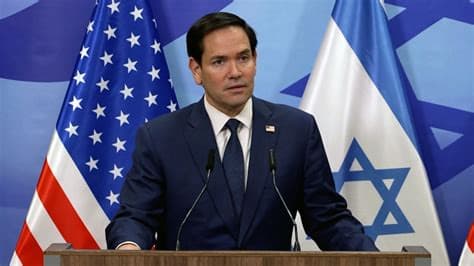
The White House has firmly rejected remarks from Senator Marco Rubio, who alleged that Israel influenced former President Trump to engage in a military conflict with Iran. In response to Rubio's comments, a White House spokesperson stated that such claims are baseless and do not reflect the complexities of U.S.-Israel relations or the decision-making processes during Trump’s presidency.
Rubio's statements have sparked controversy and discussion regarding the influence of foreign nations on U.S. military actions. He contended that Israeli leadership had a significant role in steering U.S. policy toward confrontation, claiming that their interests were directly linked to American military involvement in the region. The White House characterized these assertions as a misrepresentation of the facts.
Officials pointed out that U.S. foreign policy decisions, particularly concerning Iran, were based on comprehensive assessments and strategic interests rather than external influence. The spokesperson reiterated that the administration remains committed to evaluating threats based on national security considerations, emphasizing the importance of a careful approach when discussing foreign affairs.
As the political discourse continues, experts are analyzing the implications of Rubio's comments and the White House's swift denial. The situation highlights the delicate nature of U.S.-Israel relations and the need for clarity in public statements surrounding military engagements. Observers will be keen to see if this exchange influences ongoing discussions about U.S. strategy in the Middle East and the dynamics of foreign influence in American policymaking.
The controversy comes at a time when U.S.-Israel relations are under scrutiny, particularly in light of ongoing tensions in the Middle East. The Biden administration has sought to navigate these complexities while maintaining a strong alliance with Israel, which has historically been a cornerstone of U.S. foreign policy in the region.
In conclusion, the White House's denial of Rubio's claims underscores the administration's stance on maintaining an independent foreign policy that prioritizes national security over foreign influence. As discussions continue, the implications of these statements may resonate in future policy decisions and political debates.
Published by Banx Network. This article is part of the Banx decentralized media programme, powered by the BXE token on the XRP Ledger.



