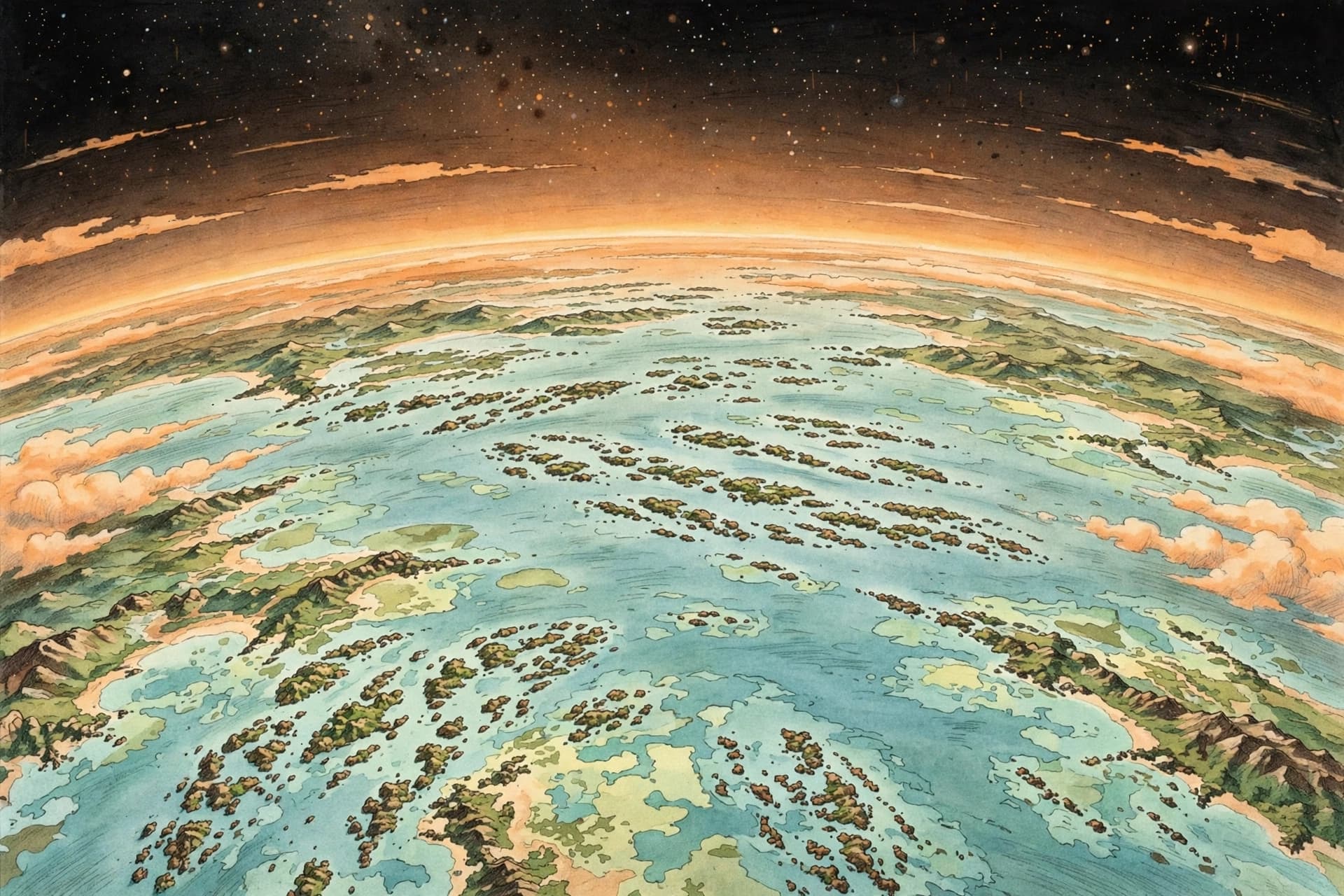
There are ideas that drift into our collective imagination like dust motes in a sunbeam — soft, sparkling notions that catch the light and fill us with wonder. The idea of reshaping another world to mirror our own has lived in both fiction and earnest scientific debate for decades. Mars, with its rust‑tinted plains and silent vistas, seems to beckon, a quiet neighbor whose silent beauty stirs the questions of possibility and purpose. Could the cold, thin air of that distant place ever feel warm and life‑breathing, like the breeze on a spring morning back on Earth?
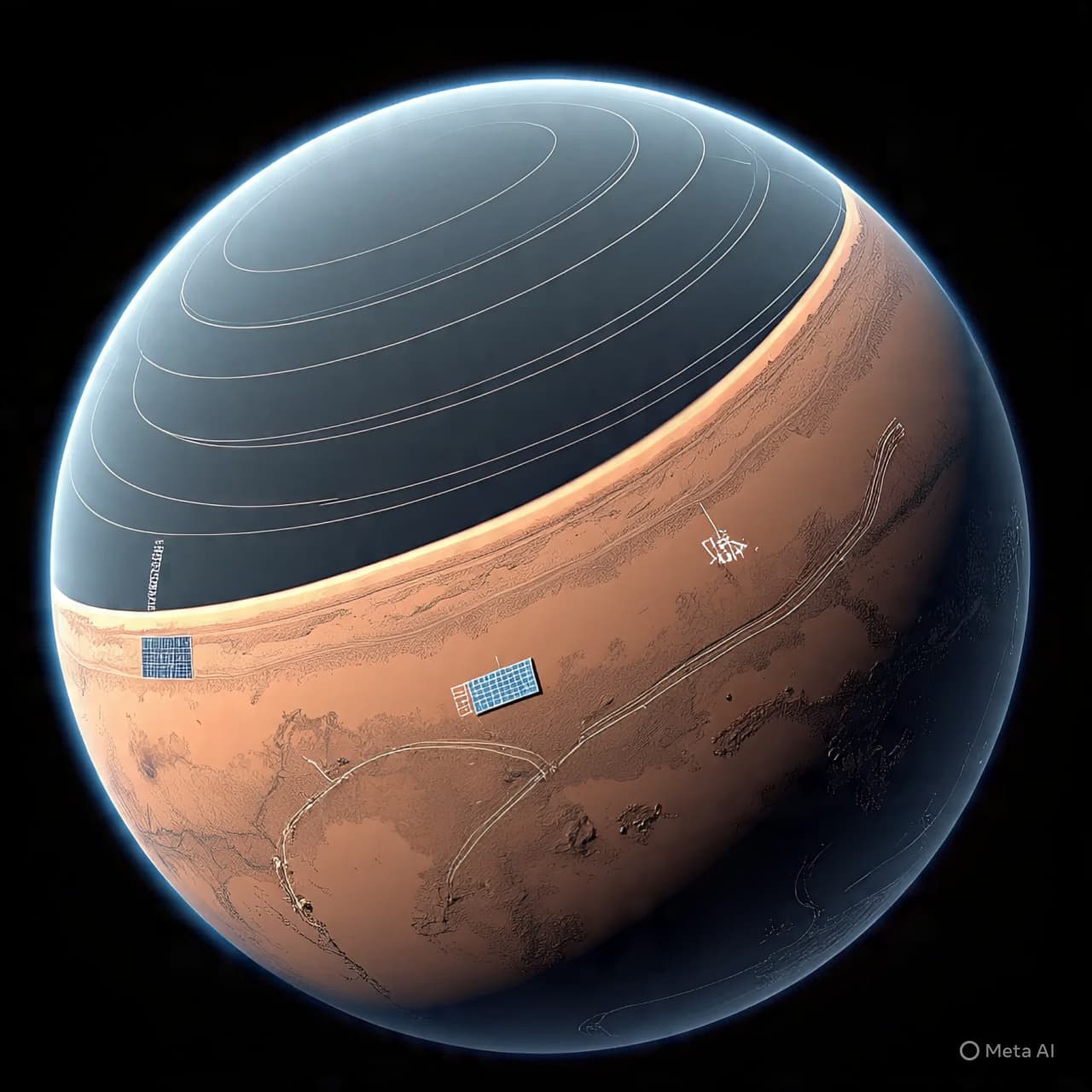
Terraforming Mars — the notion of deliberately transforming its environment to make it more Earth‑like — has captivated dreamers and engineers alike. For years, researchers have mapped out the ingredients we would need: thicker atmosphere, warmer temperatures, oceans that could flow and reflect the light of a pink sunrise. These visions have been sketched in scientific journals and explored in spirited podcast conversations about what life beyond Earth might be like. In them, the spark of human curiosity burns brightly, touching the edges of engineering, biology, and planetary science. ([turn0news1]
Yet, as with any large dream, the details matter, and recent studies suggest that the path from dream to reality is far steeper than many had hoped. A study by Dr. Slava G. Turyshev at NASA’s Jet Propulsion Laboratory, shared as a preprint on the scientific archive arXiv, lays out the immense scale of terraforming in clear, almost poetic numbers — billions upon billions of kilograms of gas, mirrors the size of continents to catch and reflect sunlight, and an energy budget that dwarfs anything human civilization currently produces. Each of these figures is like a mountain on the horizon — visible, awe‑inspiring, and daunting all at once. ([turn0search17]
To make Mars’s atmosphere dense enough even for liquid water to be stable on the surface, we would have to add amounts of gas comparable to the mass of one of Mars’s moons. To raise temperatures sufficiently, calculations suggest we might need a vast network of giant mirrors to focus sunlight onto the planet’s surface, a feat of engineering that seems almost otherworldly in its scope. And then there is the matter of oxygen: producing enough breathable air would demand staggering quantities of water and an energy output that, even spread over centuries, would eclipse modern human consumption many times over. In every direction, the dream leads to questions of scale — how to move, process, and manage matter on a planetary level. ([turn0search17]
Yet, within this tapestry of challenges there are threads of possibility. Researchers continue to explore subtler approaches, from engineered particles that could help warm the atmosphere to long‑term experiments that test the interplay between dust, ice, and warmth on the Martian surface. There are conversations in academic circles about what incremental steps might look like — ways to make small patches of Mars more habitable without altering an entire planet, and how our understanding of life’s resilience might grow as we study extreme environments here on Earth. ([turn0search45]
In that sense, the story of terraforming is as much about human curiosity as it is about technological hurdles. It invites us to consider not just what is possible with machines and materials, but what it means to expand life beyond our home planet. Does reshaping another world offer a mirror to how we steward our own? Can the journey of possibility teach us about patience, humility, and care? These are the quieter questions that settle around the edges of every calculation.
Ultimately, while current studies underscore that fully transforming Mars into an Earth‑like world lies far beyond our present capabilities, they also chart a course for future exploration and innovation. The research highlights the immense energy, materials, and time required, and points toward more feasible projects, like creating controlled habitats and incremental atmospheric changes rather than wholesale planetary overhaul. In the ever‑unfolding story of space exploration, the notion of terraforming remains alive — perhaps not as an imminent breakthrough, but as a long‑distance horizon toward which humanity may continue to reach.
AI Image Disclaimer Visuals are created with AI tools and are not real photographs.
Sources (media names only):
Daily Galaxy Phys.org University of Chicago News (context on terraforming discussions) SN Explores Science News Explores
Published by Banx Network. This article is part of the Banx decentralized media programme, powered by the BXE token on the XRP Ledger.