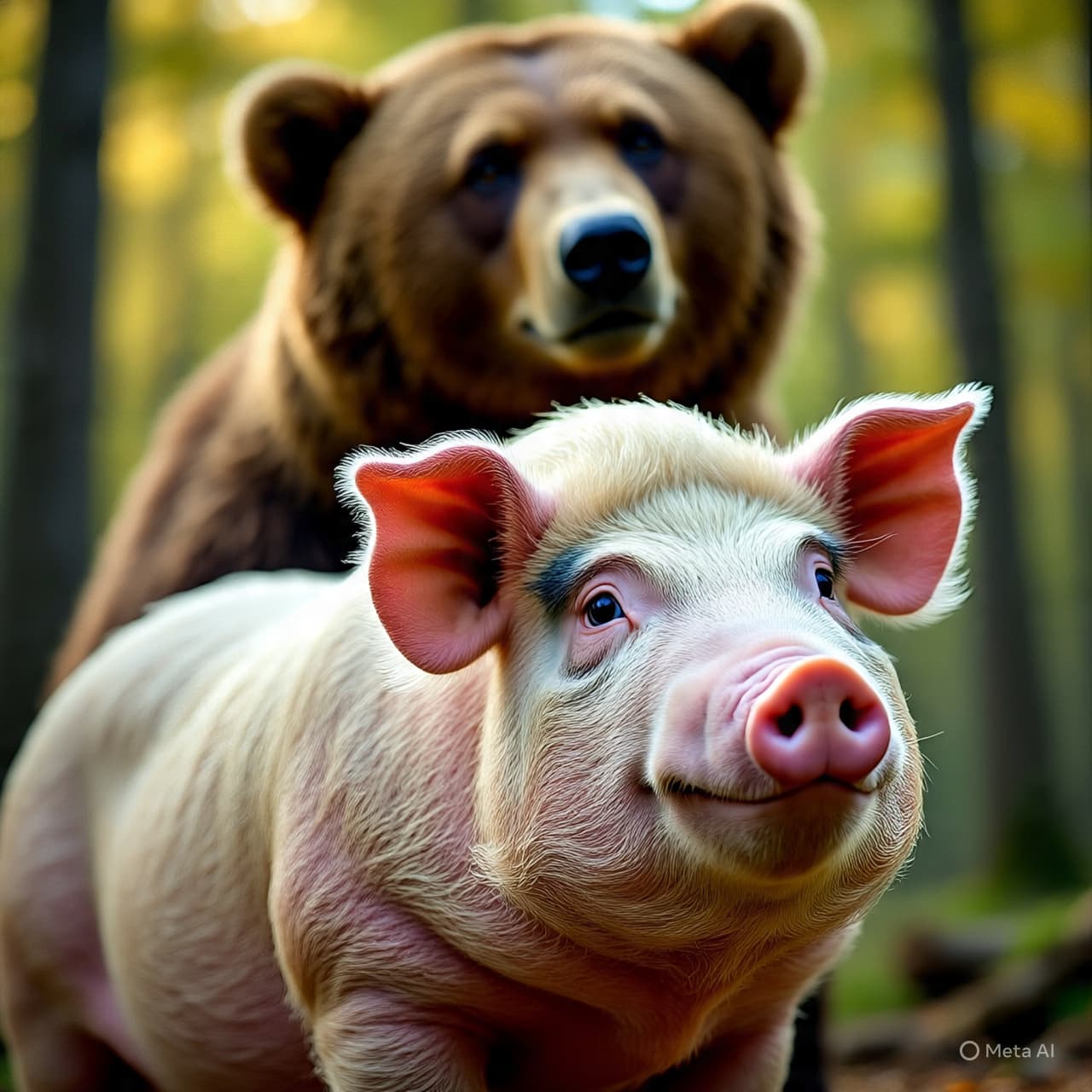
Beneath the forest canopy and across farmyards, life carries secrets written in skin and fur. Scientists now suggest that pigs and grizzlies may hold clues to one of humanity’s enduring quests: preserving youthful, healthy skin. These creatures, often overlooked in daily life, reveal biological mechanisms that could guide research into tissue repair, resilience, and aging.
Pigs, long valued in medical studies for their physiological similarities to humans, provide insights into skin regeneration and healing. Grizzlies, meanwhile, exhibit extraordinary resilience, surviving long hibernation periods without the tissue degradation one might expect. Researchers are exploring cellular pathways and protein structures in these animals, seeking lessons that might translate into therapies to slow or reverse human skin aging.
There is a quiet wonder in these connections. In creatures that roam forests or lie in barnyards, the mysteries of biology unfold in ways both practical and poetic. By studying the endurance and regenerative capacity of other species, humans glimpse a narrative of adaptation and resilience, where every organism carries strategies honed over millennia, waiting for discovery.
The implications extend beyond vanity. Skin is the body’s first barrier, reflecting health, immunity, and vitality. Understanding how other mammals maintain its integrity offers lessons not just in aesthetics, but in survival, healing, and the quiet art of aging gracefully. In the interplay between humans and animals, science finds both inspiration and instruction, reminding us that even the simplest observations in nature can illuminate profound truths about life.
AI Image Disclaimer Visuals are AI-generated and serve as conceptual representations.
Sources Nature Science Daily Cell Reports Harvard Medical School Smithsonian Institution
Published by Banx Network. This article is part of the Banx decentralized media programme, powered by the BXE token on the XRP Ledger.