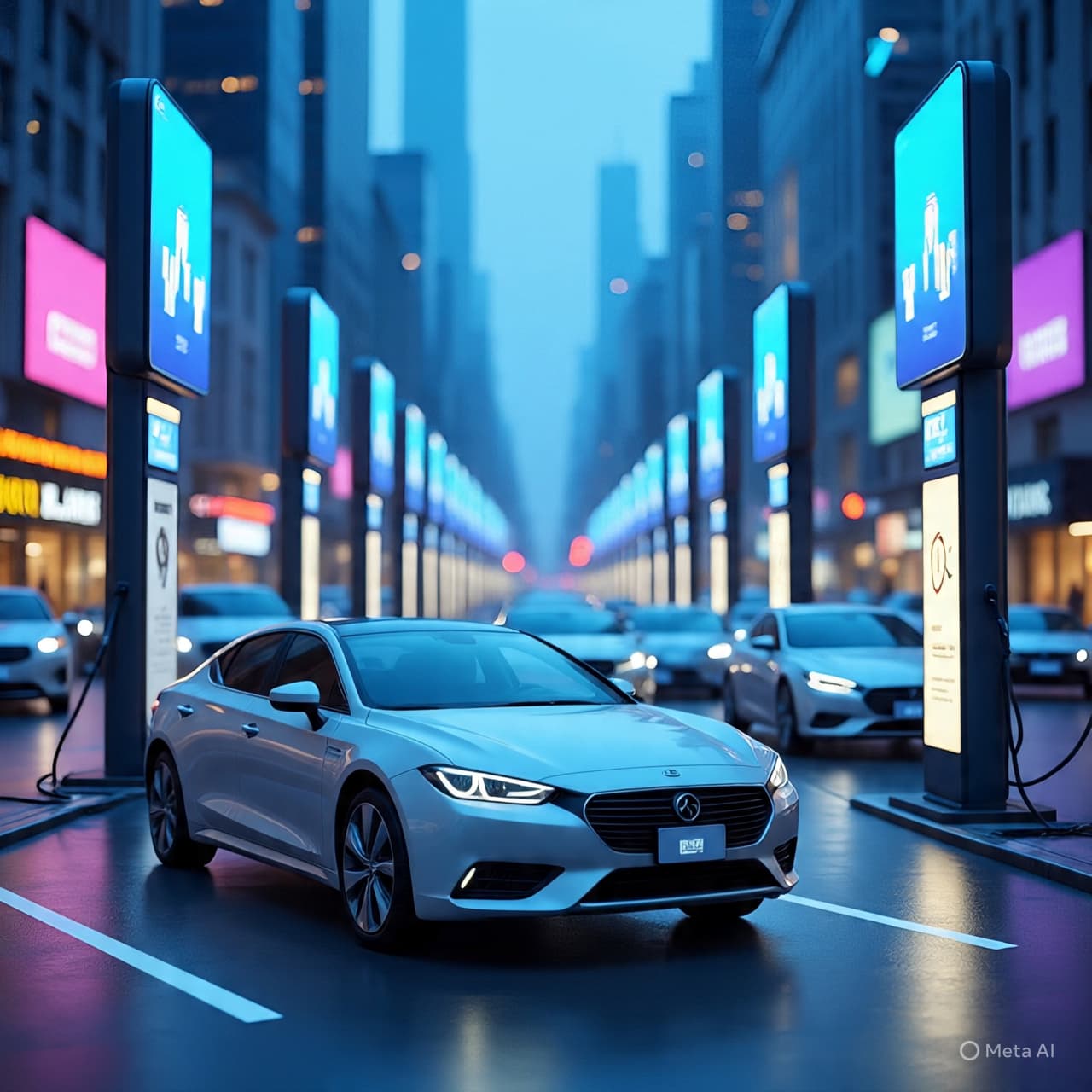
In the gentle hush that often precedes a city’s morning rush, the places where machines sleep can tell their own story. A silent lot of autonomous vehicles, tethered not to any driver’s hand but to a promise of movement yet to come, awaits the first charge of day — not unlike a field lying fallow before the seeds of spring awaken. In this quiet space, Uber Technologies has begun to weave another strand of its unfolding journey, sharing news of an investment that feels less like a thunderous declaration and more like a thoughtful step toward a long‑term vision.
On Wednesday, the ride‑hailing company said it will invest more than $100 million to build fast‑charging hubs for autonomous vehicles — a move that underlines its desire to keep pace in an era where the electric, driverless future seems both closer and more complex than ever. This commitment is not simply about dollars and infrastructure; it’s about the subtle dance between innovation and utility, between the romantic idea of a robotaxi and the very real need for power ready at each vehicle’s return.
For a company traditionally known for connecting people rather than owning assets, the shift toward building charging networks feels almost poetic — like a storyteller stepping onto the stage to craft not just narratives, but the very props that give them life. Uber’s plan envisions DC fast charging stations at its autonomous depots and at key pit stops in cities such as the Bay Area, Los Angeles and Dallas. In these spaces, machines won’t just rest; they will renew themselves, drink deeply from the grid like travelers at an oasis.
This infrastructure push reflects a broader moment in technology’s evolution: one where autonomy and electrification are not isolated threads but interwoven strands in a larger tapestry. By building its own network, Uber is consciously embracing the fundamental truth that without the flow of electrons, a fleet of robotaxis cannot rise — no matter how sophisticated the software beneath their sensors. Companies like Tesla and Waymo have already signaled that charging — and its placement in the urban fabric — will shape how and where autonomous vehicles thrive.
Yet Uber’s path is not one of sheer competition alone. The company is also partnering with established charging operators globally — from EVgo in American cities to Electra in Europe and Ionity in London. Through these utilization guarantee agreements, Uber hopes to encourage a wider rollout of chargers where they’re needed most, turning what could have been isolated outposts into interconnected waypoints in a future road network.
Like a traveler pausing to consider the horizon before choosing a route, Uber’s leaders have spoken about this investment with humility and intent. It aligns with the company’s broader ambition to operate autonomous services in multiple cities by late 2026, all while balancing the practical challenges that come with scale, cost and competition.
In watching this quiet transformation unfold, one can almost hear the hum of chargers warming up, like soft notes in a symphony that hasn’t yet reached its crescendo — a reminder that in the story of tomorrow’s mobility, the simplest elements often carry the loudest echoes.
AI Image Disclaimer (Rotated Wording) Visuals are created with AI tools and are not real photographs.
Source Check — Credible Sources Found
Reuters Bloomberg News GuruFocus News Transport Topics Automotive World
Published by Banx Network. This article is part of the Banx decentralized media programme, powered by the BXE token on the XRP Ledger.