There are moments when progress does not stall for lack of vision, but for lack of passage.
Plans exist. Capital waits. Landscapes, already mapped in diagrams and projections, hold the potential for turbines, cables, and systems yet to arrive. And somewhere between intention and execution, there is a pause—not of uncertainty, but of process.
In Scotland, that pause has become a subject of quiet reconsideration.
Within the Scottish Business Manifesto 2026, business leaders have drawn attention to a recurring friction point: the planning system. Not as an obstacle in principle, but as a structure whose pace and complexity no longer align easily with the urgency of global investment flows—particularly those tied to renewable energy and green infrastructure.
The concern is not abstract.
Scotland has positioned itself as a significant player in the transition toward a low-carbon economy, with strengths in offshore wind, hydrogen, and emerging clean technologies. Its natural resources and technical expertise place it within reach of substantial international investment. Yet the pathway from proposal to approval remains, in many cases, extended and uncertain.
According to the manifesto, accelerating planning processes for major projects is central to improving competitiveness. A more streamlined system, coupled with clearer frameworks for approval, could help secure what it describes as the “next wave of global investment.”
This reflects a broader pattern observed across the sector.
Industry groups and economic bodies have noted that renewable and green infrastructure projects often encounter delays linked to complex approval procedures and inconsistent institutional support. Calls have emerged for fast-track routes for nationally significant projects—mechanisms designed to reduce uncertainty while maintaining standards.
The challenge lies in balance.
Planning systems exist to ensure that development proceeds responsibly—considering environmental impact, community needs, and long-term sustainability. Yet when the processes themselves become prolonged, they can shift from safeguard to constraint, particularly in industries where timing influences both cost and viability.
For investors, this balance is more than procedural.
Global capital, especially in the energy sector, moves with a sensitivity to certainty. Projects that offer clear timelines and predictable outcomes tend to attract funding more readily than those subject to extended delays. In this sense, planning reform is not simply administrative; it is competitive.
Scotland’s position within this landscape is shaped by both opportunity and expectation.
The country has already articulated ambitions through broader strategies, including its green industrial framework and long-term economic transformation plans. These emphasize attracting inward investment, building internationally competitive sectors, and aligning economic growth with climate targets.
The manifesto’s call, then, does not introduce a new direction, but rather addresses the conditions required to sustain it.
There is also a temporal dimension to consider.
The transition to net zero is often discussed in decades, but investment decisions are made in shorter intervals. A delay of months or years at the planning stage can ripple outward, affecting supply chains, financing structures, and the broader pace of development. In this way, time itself becomes a factor of infrastructure.
And yet, the process of reform is rarely immediate.
Adjusting planning systems involves legal frameworks, institutional coordination, and public consultation. It is, by nature, deliberate. The question is not whether change will occur, but how it can be calibrated to preserve oversight while enabling movement.
Across Scotland, the landscapes in question remain unchanged for now.
Coastlines where wind projects are envisioned. Industrial sites prepared for decarbonization. Regions identified for new forms of energy production. Each holds a future that is both defined and deferred—waiting for alignment between approval and action.
The stillness, in this case, is not absence.
It is a moment between decisions.
The Scottish Business Manifesto 2026 calls for streamlined planning processes to accelerate approval of renewable and green infrastructure projects. Business groups argue that clearer and faster planning frameworks are necessary to attract international investment and support Scotland’s role in the global energy transition.
AI Image Disclaimer
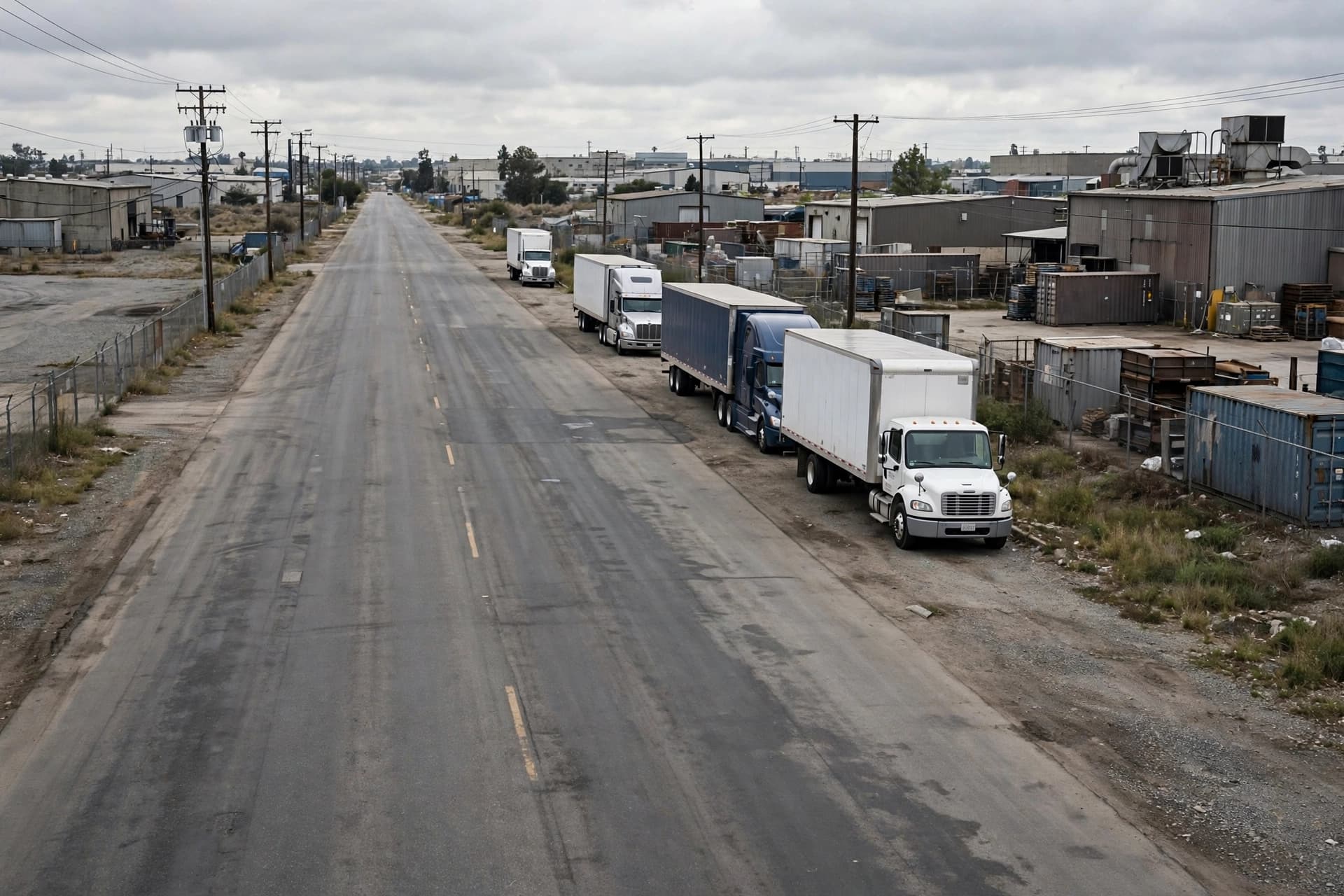
All images are AI-generated visualizations intended to represent concepts rather than real-world scenes.
Sources
CBI Scotland ICAEW Scottish Government Financial Times KPMG
Published by Banx Network. This article is part of the Banx decentralized media programme, powered by the BXE token on the XRP Ledger.