
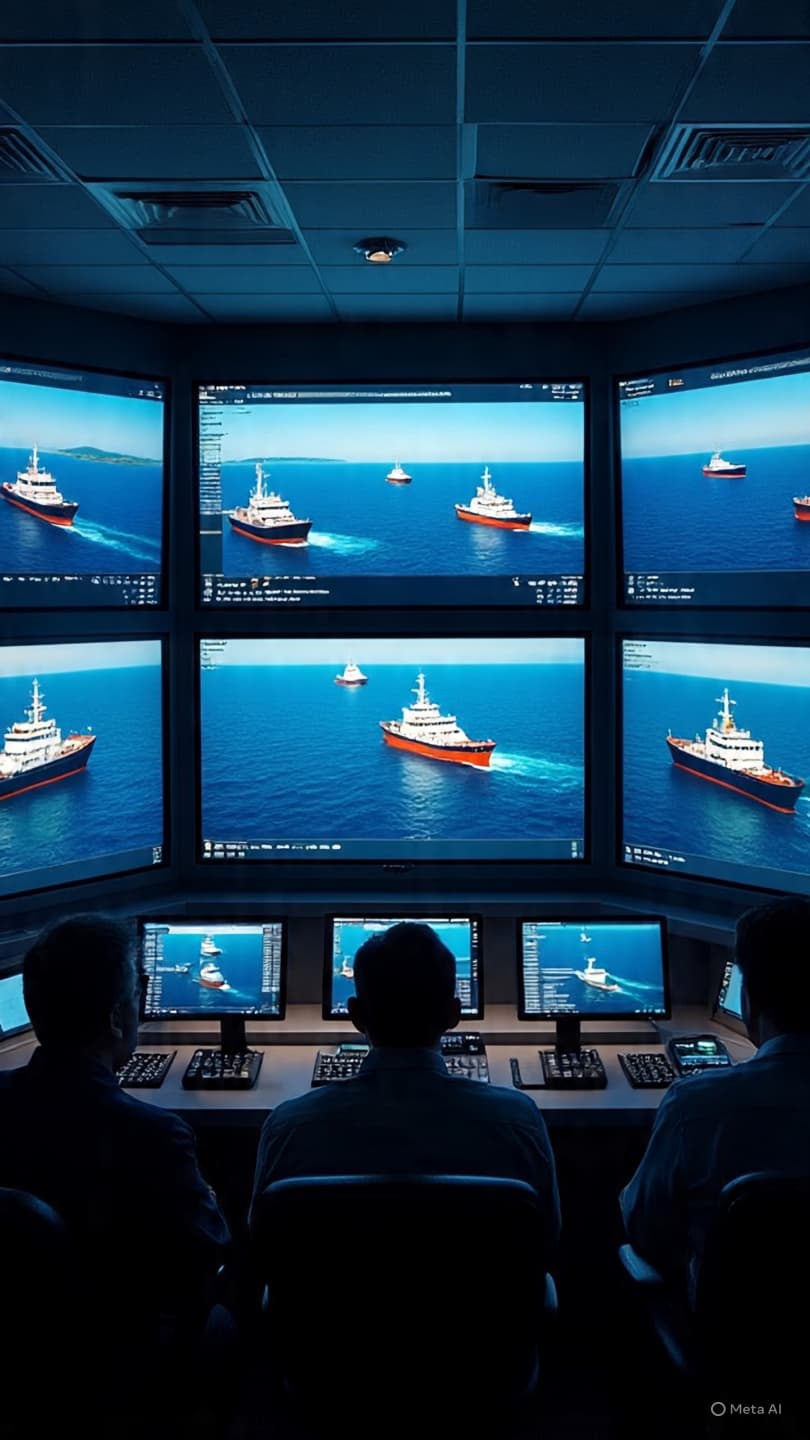
Key Highlights
- Oil Tankers:Recent reports show tankers altering routes in the Strait of Hormuz.
- Diplomatic Tensions:Stalled US-Iran talks are influencing maritime decisions.
- Global Trade Impact:The strait is crucial for global oil trade, affecting shipping logistics.
The Strait of Hormuz, a vital maritime corridor, has become a focal point of geopolitical tension as oil tankers navigate the complexities of international relations. Recent reports indicate that several tankers have altered their courses or turned back due to stalled diplomatic engagement between the United States and Iran. This shift in maritime activity reflects a broader narrative of caution and recalibration in response to the uncertain political landscape.
The strait is not just a geographical feature; it is a critical artery for global oil trade, with a significant percentage of the world's seaborne oil passing through its waters. The movements of vessels in this region are closely monitored, as they often serve as indicators of the prevailing diplomatic climate. When tankers slow down, reroute, or reverse course, it signals a heightened awareness of potential risks, even in the absence of formal escalations.
According to officials and observers familiar with the situation, the breakdown in discussions between Washington and Tehran has reintroduced a familiar ambiguity into regional energy logistics. While no immediate threats have been declared, the sensitivity of maritime operations in the Strait of Hormuz compels shipping companies to adjust their routes preemptively. This proactive approach is a response to perceived risks rather than confirmed disruptions, highlighting the interconnectedness of economic flows and political dialogue.
For shipping companies and energy markets, the Strait of Hormuz is more than just a distant geography; it is a critical factor in their operational calculations. Changes in diplomatic tone can lead to fluctuations in insurance rates, routing decisions, and arrival schedules. In this context, a tanker’s change of direction is not merely a navigational decision but also a reflection of the broader economic implications tied to political developments.
Along the coastlines bordering the strait, ports continue their daily operations—loading, tracking, and communicating—while remaining acutely aware of the geopolitical dynamics at play. This juxtaposition of local continuity against the backdrop of international sensitivity creates a complex reality for those involved in maritime activities in the region.
As discussions between the United States and Iran remain unresolved, the possibility of renewed engagement or further distance looms large. While neither outcome is immediately visible, the effects are felt in advance through the adjustments made by ships, traders, and officials operating at the intersection of expectation and precaution. The maritime landscape is thus shaped by a delicate balance of hope and caution.
In conclusion, the situation in the Strait of Hormuz is characterized by a sense of hesitation rather than outright rupture. The movements of tankers—whether they are proceeding, pausing, or turning back—become part of a larger narrative, one that speaks volumes about the intricate relationship between diplomacy and maritime logistics. In this vital corridor, where every mile carries the weight of geopolitical history, even silence has a direction, echoing the complexities of international relations.
Published by Banx Network. This article is part of the Banx decentralized media programme, powered by the BXE token on the XRP Ledger.



