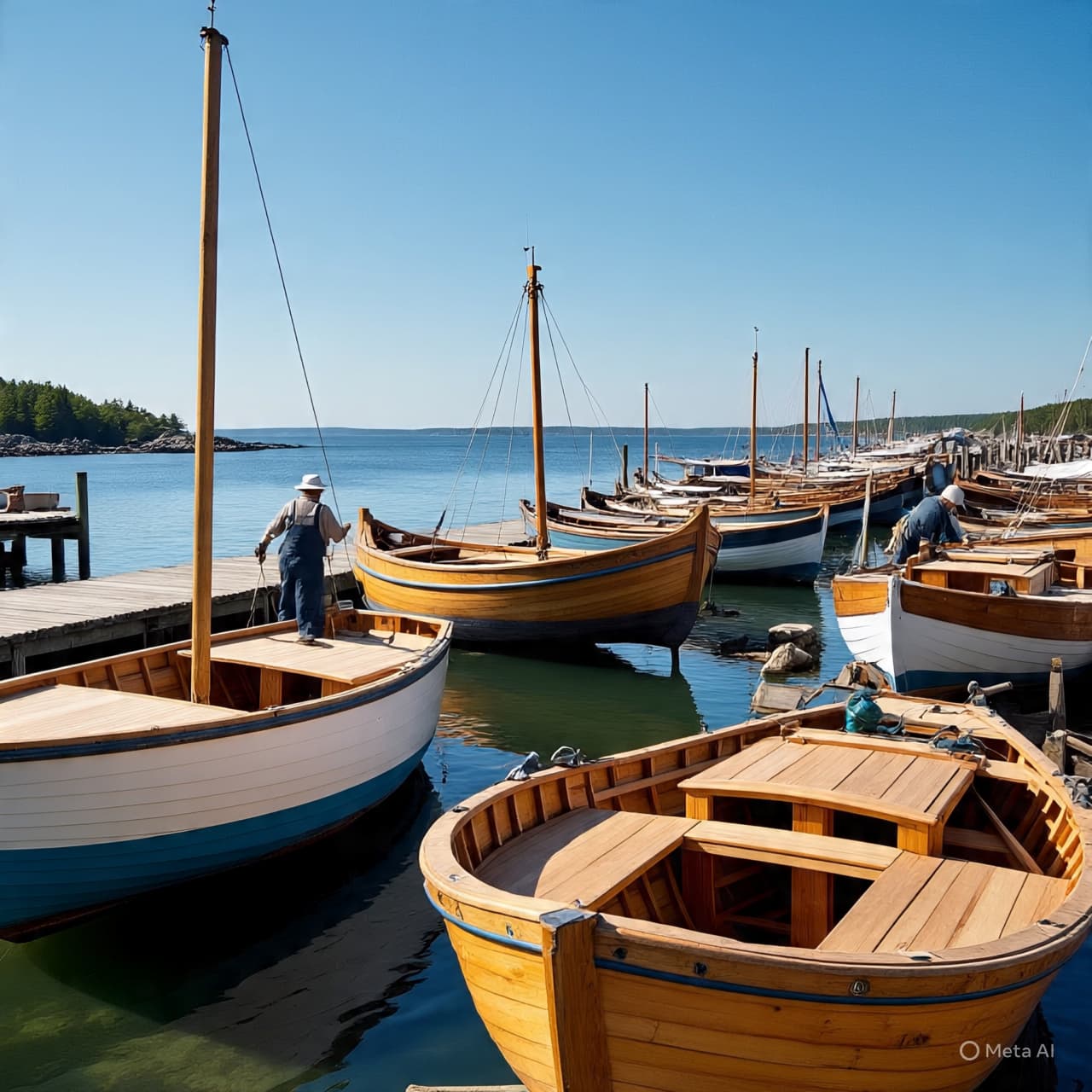
Along the rugged shoreline of Maine, the craft of boatbuilding has long moved to the rhythm of tides and seasons. Workshops open early, the scent of timber and salt drifting through wide doors as hulls take shape piece by piece. For generations, these boatyards have relied on a blend of skill, patience, and tradition—knowledge passed quietly from one pair of hands to the next.
Yet even in places where tradition runs deep, new currents of change are beginning to flow.
A coastal boatyard in Maine has secured $1.5 million in funding to expand its operations and explore new marine technologies, marking an effort to connect the state’s historic maritime industry with emerging innovations in boat design and manufacturing. The investment will support upgrades to facilities, equipment, and research capabilities aimed at integrating advanced materials and modern engineering methods into boatbuilding.
For a region closely tied to the ocean, the project reflects an evolving vision of the marine economy. Maine’s shipyards and boatbuilders have long produced fishing vessels, workboats, and recreational craft, but global shifts in technology—from electric propulsion to composite construction—are gradually reshaping how boats are designed and built.
Industry leaders say the funding will allow the yard to experiment with these developments while maintaining the craftsmanship that defines Maine’s maritime reputation. New tools and research partnerships could enable the exploration of lighter materials, improved hull efficiency, and propulsion systems designed to reduce fuel consumption or environmental impact.
Such initiatives have become increasingly important as coastal industries adapt to changing markets and environmental expectations. Marine transportation, fishing operations, and recreational boating are all facing pressure to adopt cleaner technologies and more efficient designs.
For local communities, the investment carries another meaning as well: economic continuity. Boatyards in Maine often serve as anchors of coastal employment, supporting skilled trades from carpentry and welding to marine engineering. Expanding into technology-focused projects can help ensure those jobs remain viable as the industry evolves.
The $1.5 million funding package is expected to support both infrastructure improvements and workforce development. Training programs may help employees learn new manufacturing techniques while allowing younger workers to enter a field that blends traditional craftsmanship with advanced engineering.
Observers say the effort reflects a broader trend across maritime regions. Historic boatbuilding centers—from New England to Scandinavia—are increasingly pairing centuries-old skills with modern research, allowing them to remain competitive in a rapidly changing marine industry.
In Maine, where the coastline stretches for thousands of miles and the ocean shapes much of the state’s identity, that evolution carries a particular resonance. The same waters that once guided wooden schooners and fishing fleets are now influencing the next generation of marine innovation.
Inside the boatyard, the work continues much as it always has—hulls under construction, tools laid carefully across benches, workers studying lines and measurements.
But somewhere among those familiar sounds of hammers and saws, a quieter shift is underway.
The future of boatbuilding, it seems, may be arriving not as a replacement for tradition, but as its next chapter.
Published by Banx Network. This article is part of the Banx decentralized media programme, powered by the BXE token on the XRP Ledger.

.jpg&w=3840&q=75 "India Says First Phase of U.S. Trade Deal Is Nearly Done, Seeks Edge Over Rivals")