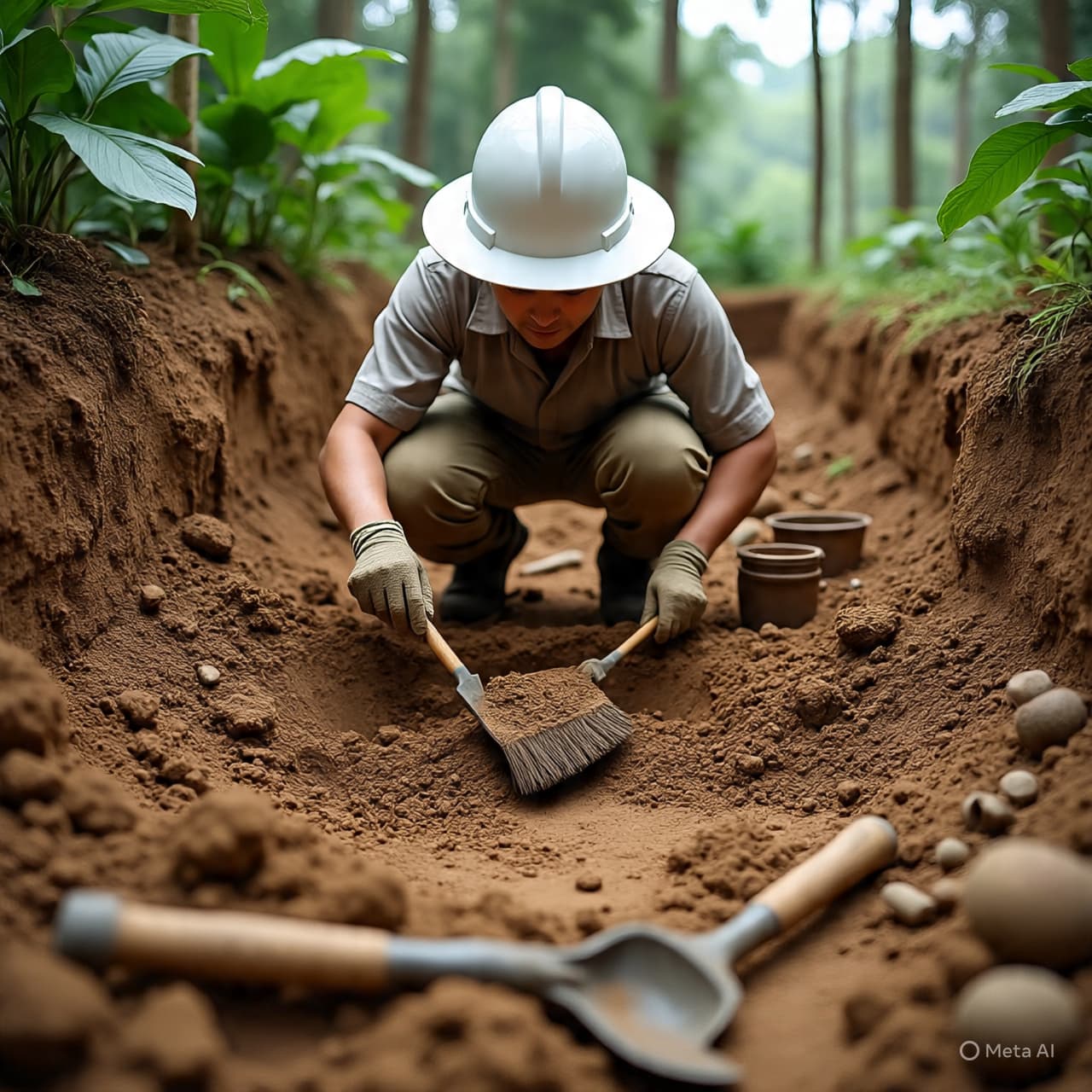
There are places in the world where the past seems to breathe quietly beneath the surface, like a slow current beneath still waters. In central Panama, where the land bridges continents and cultures, archaeologists have gently lifted a fragment of time from beneath centuries of soil and foliage — a resting place that has held its quiet for more than a millennium. What lay there was not just bones and earth, but the echoes of lives lived and stories unwritten, waiting to be told once more.
At the El Caño archaeological site in the Natá district of Coclé province, some 200 kilometers (124 miles) southwest of Panama City, researchers have unearthed a tomb that was built between roughly 800 and 1000 AD, revealing human remains accompanied by objects that speak of status, craft, and belief. These delicate discoveries are like threads drawn from a woven tapestry of history, each gold piece and ceramic vessel reflecting craftsmanship, symbolism, and meaning long since faded into the earth.
For nearly two decades, investigators have gently probed the layered soil at El Caño, uncovering remnants of pre-Hispanic cultures that once inhabited Panama’s central provinces. The tomb recently brought to light — one among at least nine other similar burial sites found here — rested quietly beneath the surface until this season. Its contents tell us that the people buried here were not merely placed in the earth but were honored with objects that carried significance far beyond simple ornamentation.
In the soft dimness of that space, the skeleton of a principal individual was discovered surrounded by gold ornaments, pottery decorated with traditional motifs, and personal ornaments such as bracelets and earrings. The patterns — including figures of bats and crocodiles — hint at artistic expression, cosmology, and perhaps the role these creatures played in the spiritual or social lives of the people. Such careful placement of offerings suggests that this individual held high social standing within the community that nurtured these traditions many centuries ago.
Gold, here and in other artifacts from El Caño, was not merely an aesthetic choice but a marker of prestige, signaling the enduring role of rank long after life’s final breath. Ceramics, too, carried their own stories — shapes and motifs that link these people with the landscapes and symbolic languages they valued. In these quiet chambers of remembrance, the human connection to beauty and meaning remains palpable, crossing the threshold of centuries.
As researchers document this tomb and its treasures, they are also piecing together a broader picture of regional social structures and cultural dynamics. The presence of similar elite burials points to sustained traditions of ceremony and remembrance over roughly two centuries, and to communities with skills in metallurgy and artistic expression that underscore their sophistication. These discoveries help frame a narrative of pre-Hispanic societies on the Central American isthmus, revealing lives and deaths shaped by culture, identity, and social fabric.
In straight news terms, archaeologists working at El Caño in Panama have uncovered a tomb more than 1,000 years old containing human remains and a range of grave goods including gold ornaments and ceramic vessels. The find — dated between approximately 800 and 1000 AD — was made in Natá district and adds to several similar elite burials previously identified at the site. Researchers note that the burial goods indicate the practices and social hierarchy of pre-Hispanic societies that lived in the region between the 8th and 11th centuries, and that this discovery offers valuable insight into cultural and archaeological understanding of Central America’s past.
AI Image Disclaimer (rotated wording) “Visuals are created with AI tools and are not real photographs.”
Sources (credible mainstream / authoritative)
• AFP (via multiple international outlets) — report on tomb discovery in Panama.
• The Peninsula Qatar — archaeological detail from AFP.
• The Archaeologist — context of burial and artifacts.
• NDTV World News — summary of tomb contents and cultural significance.
• Berliner Tageblatt — additional confirmation of discovery details.
Published by Banx Network. This article is part of the Banx decentralized media programme, powered by the BXE token on the XRP Ledger.