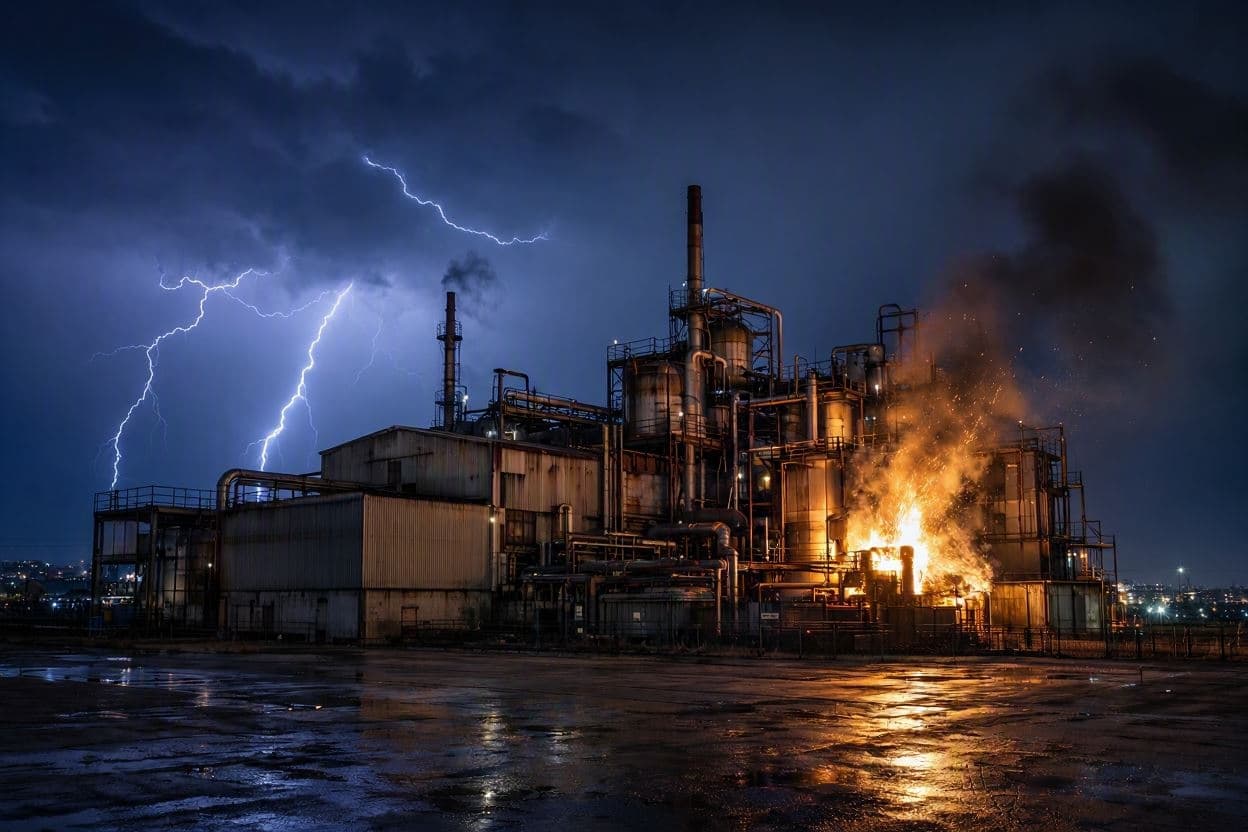
The industrial edges of Paramaribo are spaces defined by utility, where rows of metal warehouses and concrete structures sit silent under the heavy, humid canopy of the Surinamese night. During the day, these quarters hum with the clatter of logistics and the quiet movement of goods, but the dark hours bring a deep, undisturbed stillness. It is within this architectural solitude that an unexpected warmth began to alter the dark, cool air of the district.
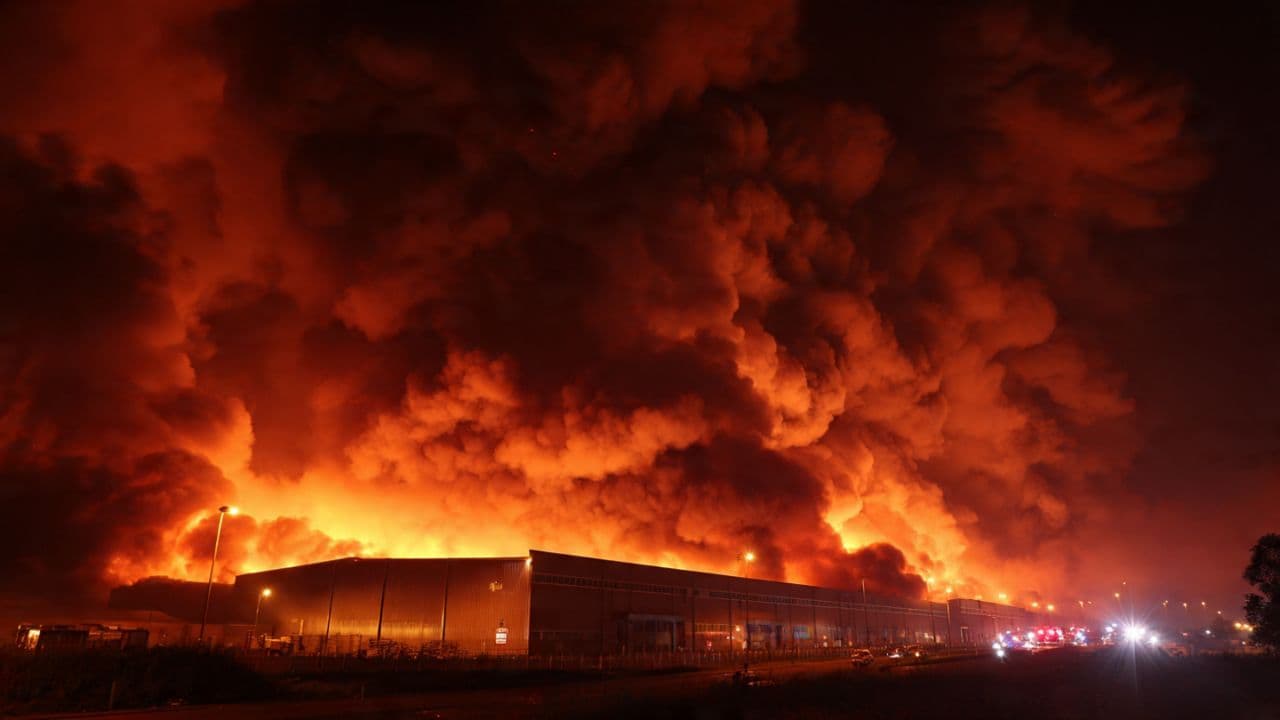
The first plumes of smoke did not announce themselves with violence, but rather drifted softly into the night sky, blending almost imperceptibly with the low-lying clouds. Slowly, the dark grey billows thickened, illuminated from beneath by a deep, undulating orange glow that signaled a substantial fire within a prominent warehouse. The metal walls, built to contain the fruits of commerce, became a temporary furnace, groaning softly under the intense thermal pressure.
When the sirens finally fractured the late-night silence, the sound rolled across the industrial lots with a stark, urgent resonance. Emergency response vehicles arrived in a choreographed sequence, their headlights cutting through the descending soot as firefighters deployed lines of hose against the growing perimeter of the blaze. The water struck the heated metal panels with a sharp, continuous hiss, producing vast curtains of white steam that blanketed the area.
For hours, the struggle between the elements and human effort played out against the backdrop of the darkened industrial park. The fire department worked methodically to prevent the flames from leaping across the narrow alleys to adjacent commercial structures, isolating the danger with disciplined precision. There is a specific gravity to an industrial fire, where the unknown nature of stored materials demands a quiet, calculated caution from every individual on the line.
By the time the early morning light began to gray the eastern horizon, the main body of the fire had been suppressed, leaving behind a smoking skeleton of twisted steel and charred beams. The immediate danger had passed, yet the air remained thick with the acrid scent of burnt synthetic materials and waterlogged debris. The structure stood as a stark monument to the night's sudden, destructive intervention, its utilitarian purpose entirely erased.
With the embers cooled, the scene was formally handed over to police investigators and forensic fire experts, who began the slow process of charting the fire's path. The initial assessment suggested an unnatural progression of the flames, prompting authorities to officially launch an investigation into the origin of the blaze under a cloud of suspicion. Investigators moved quietly through the ruins, collecting samples and documenting the patterns left by the heat upon the concrete floor.
The local business community has expressed a quiet concern over the incident, recognizing how deeply a major structural loss can ripple through the regional logistics chain. Inquiries are being made regarding the warehouse’s recent inventories and any recent activities that might explain the sudden outbreak of fire during the facility’s dormant hours. The gathering of testimonies from security personnel and neighboring workers proceeds with methodical care.
As the city fully awakens to its daytime routine, the industrial zone returns to a semblance of normal function, though the blackened perimeter remains cordoned off from the general public. The process of uncovering the truth behind the smoke will require time, patience, and a careful analysis of the physical evidence left behind. Until then, the quiet ruins serve as a somber reminder of the vulnerabilities that dwell within the spaces of our daily labor.
Published by Banx Network. This article is part of the Banx decentralized media programme, powered by the BXE token on the XRP Ledger.