You can almost feel it in the digital air — like a tide that’s washed further up the beach than yesterday. What once felt like the predictable rhythm of “next model, next feature, next update” in artificial intelligence has, in recent months, begun to break in unexpected ways. It is as if the race itself — that invisible contest of ideas, capital, markets, and minds — has stepped through a threshold, and on the other side lies terrain both familiar and strangely new.
There are moments in technology that feel less like an upgrade and more like a reawakening. In the early days of personal computing, in the days of the mobile internet, and now, once again, with AI. The subtle shift is not marked by one announcement but by a confluence of movements: large language models weaving into daily life, capital flows thickening, infrastructure battles taking shape, job narratives evolving, geopolitical pressure mounting, and new kinds of partnerships forming. What we see today are the first visible contours of a new phase in the AI race — one that merges raw innovation with the pragmatic demands of society and economy.
First, the integration of AI into everyday platforms has accelerated. Google’s Gemini now touches Gmail and YouTube, offering AI summaries and personalized assistance to billions, while tools like Anthropic’s Cowork are lowering the barriers for non-technical users to benefit from sophisticated AI workflows. These shifts signal that AI is not just a specialized domain for researchers but a companion in daily tasks, workplace productivity, and creative exploration.
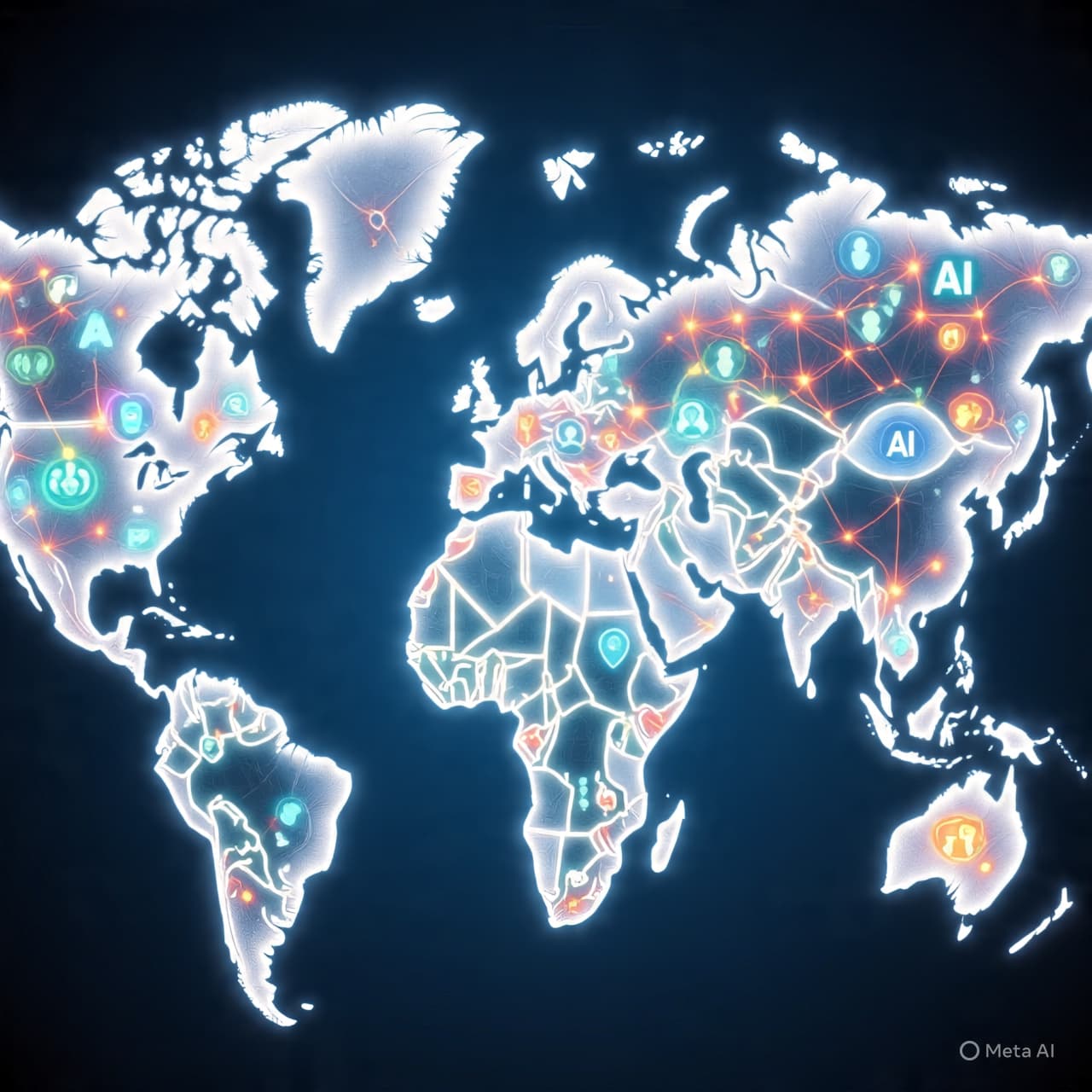
Second, geopolitical pressure around AI leadership has intensified. Western tech firms face rising competition from Chinese players in non-Western markets, and strategic concerns loom about influence and technology standards across borders. The contest now includes questions of access, affordability, and national economic positioning — a reminder that technology races often become policy races as well.
Third, infrastructure has become a battlefield in its own right. Analysts observe that the competition is no longer just about model size or accuracy but about who controls the compute, servers, and hardware foundations enabling future breakthroughs. This mirrors past technology waves where platforms and pipes dictated winners as much as the products riding atop them.
Fourth, capital markets and investment flows have started to reflect future belief as much as present performance. AI firms attract vast funding, valuations rewrite expectations, and investors increasingly treat AI as a core economic pillar rather than a niche sector. Such confidence — and allocation of financial weight — marks a transition from speculative interest to strategic commitment.
Fifth, the narrative around jobs and society is reshaping. Early fears of mass displacement are giving way to more nuanced analyses suggesting transformation rather than outright elimination of roles, alongside recognition of human oversight’s continuing importance. This shift in language reflects a broader understanding of AI’s place within work and life.
Finally, new alliances and market collaborations are beginning to surface. Cross-industry partnerships — from cloud infrastructure to niche AI startups — are forming in ways that suggest ecosystems, not silos, will determine who leads the next chapter. This connective tissue of innovation, finance, regulation, and market dynamics gives shape to the new phase of competition.
Taken together, these signals point to an AI race that has left behind its earliest contours of rapid tool releases and hype cycles. Instead, it enters a phase defined by integration into society, the forging of strategic advantage, and a deeper awareness of the stakes involved — economic, political, and cultural.
As with all technological revolutions, the unfolding chapters will bring new questions about value, equity, governance, and purpose. Today’s indicators suggest a shift not toward a monolithic future, but toward a multiplex evolution — where speed, scale, stewardship, and human context interweave.
In the weeks and months to come, watching how these dynamics develop will be as important as watching the tools themselves. The phase we have entered is not just about what AI can do, but about who gets to shape it, and how it becomes woven into the fabric of daily life.
AI Image Disclaimer (rotated wording): Visuals are created with AI tools and are not real photographs; they serve as conceptual depictions.
Sources (credible mainstream / niche media):
Axios Financial Times Forbes Gartner The AI Track China Daily Stanford AI Index included for context
Published by Banx Network. This article is part of the Banx decentralized media programme, powered by the BXE token on the XRP Ledger.