
Key Highlights
- South Africa integrates new wind projects into its national grid.
- Wind energy is projected to contribute 15% of the country's energy mix by 2030.
- Local economies are revitalized through new job opportunities in renewable energy.
The hills of the Western Cape possess a particular kind of restlessness, a place where the Atlantic air arrives with a salt-thickened urgency, rushing over the fynbos and the ancient, weathered peaks. It is a landscape defined by movement—the shifting of clouds, the swaying of the proteas, and the invisible, weightless pressure of the gale. For generations, this wind was merely a companion to the lonely traveler, a force to be endured; yet today, it has become a silent architect of a new energy landscape.
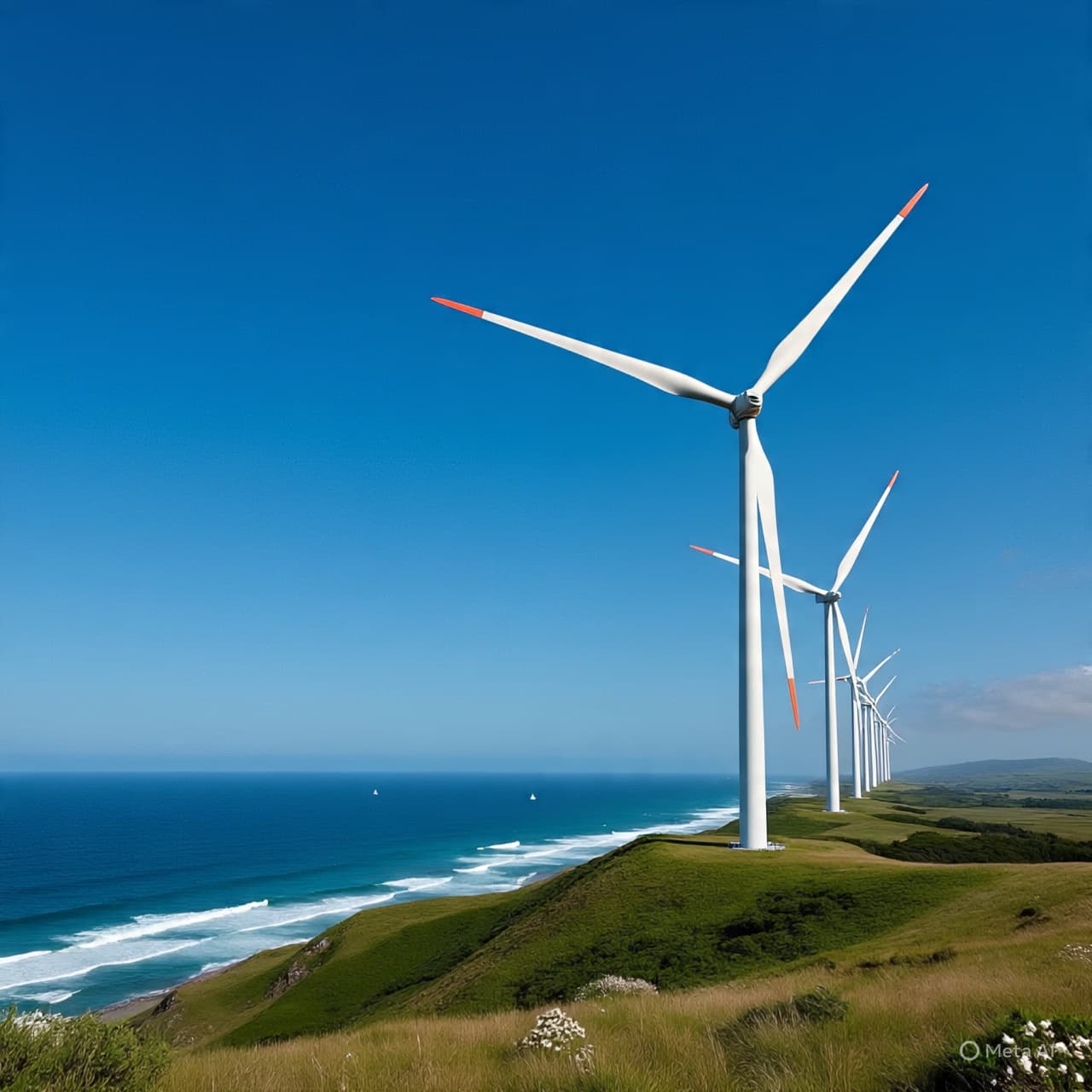
As one crests the rise near Hopefield or Jeffrey’s Bay, the horizon is no longer just a meeting of earth and sky, but a slow, rhythmic dance of white steel. The wind turbines stand as modern sentinels, their long blades carving the air with a grace that belies their immense power. There is a profound stillness in their motion, a repetitive, circular prayer that translates the chaotic energy of the storm into the steady, cooling hum of the grid.
South Africa’s commitment to its Renewable Energy Independent Power Producer Procurement Programme has seen a significant acceleration in the deployment of these wind farms. This transition is born of necessity, a way to alleviate the strain on an aging electrical heart while honoring the natural abundance of the coast. The wind, once a discarded resource, is now being harvested with a mathematical precision that mirrors the ancient cycles of the seasons.
There is a reflective beauty in the way these structures inhabit the land. They do not roar like the coal-fired giants of the interior; they whisper. Between the bases of the towers, the earth remains largely undisturbed, allowing sheep to graze and the wild flora to bloom in the shadows of the turning wings. It is a model of coexistence, a recognition that the machinery of our survival can exist in harmony with the ground it stands upon.
Researchers and engineers monitor these sites with a quiet intensity, tracking the "wind shear" and the atmospheric density to optimize every rotation. They are the new stewards of the air, using data to predict the arrival of the cold fronts and the subsequent surge in power. It is a science of the ethereal, finding the solid potential within the most fleeting of elements.
The economic ripple of this green harvest is felt in the small coastal towns that once relied solely on fishing or tourism. New skills are being learned, and a new generation of technicians is rising to maintain these giants of the sky. It is a narrative of revitalization, where the permanence of the wind offers a stability that the old industries can no longer provide.
There is a certain irony in the fact that the solution to our modern complexities lies in the most basic of natural forces. To watch the sunset behind a line of turbines is to see a civilization finding its way back to the elements. The blades continue their work long into the night, catching the invisible currents of the dark, proving that the light of the future can be found within the breath of the world.
As the morning fog rolls in from the sea, softening the sharp lines of the towers, the turbines continue their patient vigil. They have successfully translated the wildness of the Southern Cape into a reservoir of potential. It is a reminder that sometimes the most sophisticated path forward is the one that moves in step with the world as it is.
The South African Department of Mineral Resources and Energy has recently integrated several new large-scale wind projects into the national grid, contributing an additional 1.2 gigawatts of capacity. These projects, largely situated in the Eastern and Western Cape, are part of a broader strategy to reduce carbon dependency and stabilize the national power supply. Current projections indicate that wind energy will account for nearly 15% of the country’s total energy mix by the end of the decade.
Published by Banx Network. This article is part of the Banx decentralized media programme, powered by the BXE token on the XRP Ledger.



