
Key Highlights
- Grief Tech:AI creates interactive avatars of deceased loved ones.
- Cultural Tradition:Memory Avatars reflect Japan's ancestral honoring practices.
- Market Growth:40% increase in digital legacy firms noted by the Ministry of Internal Affairs.
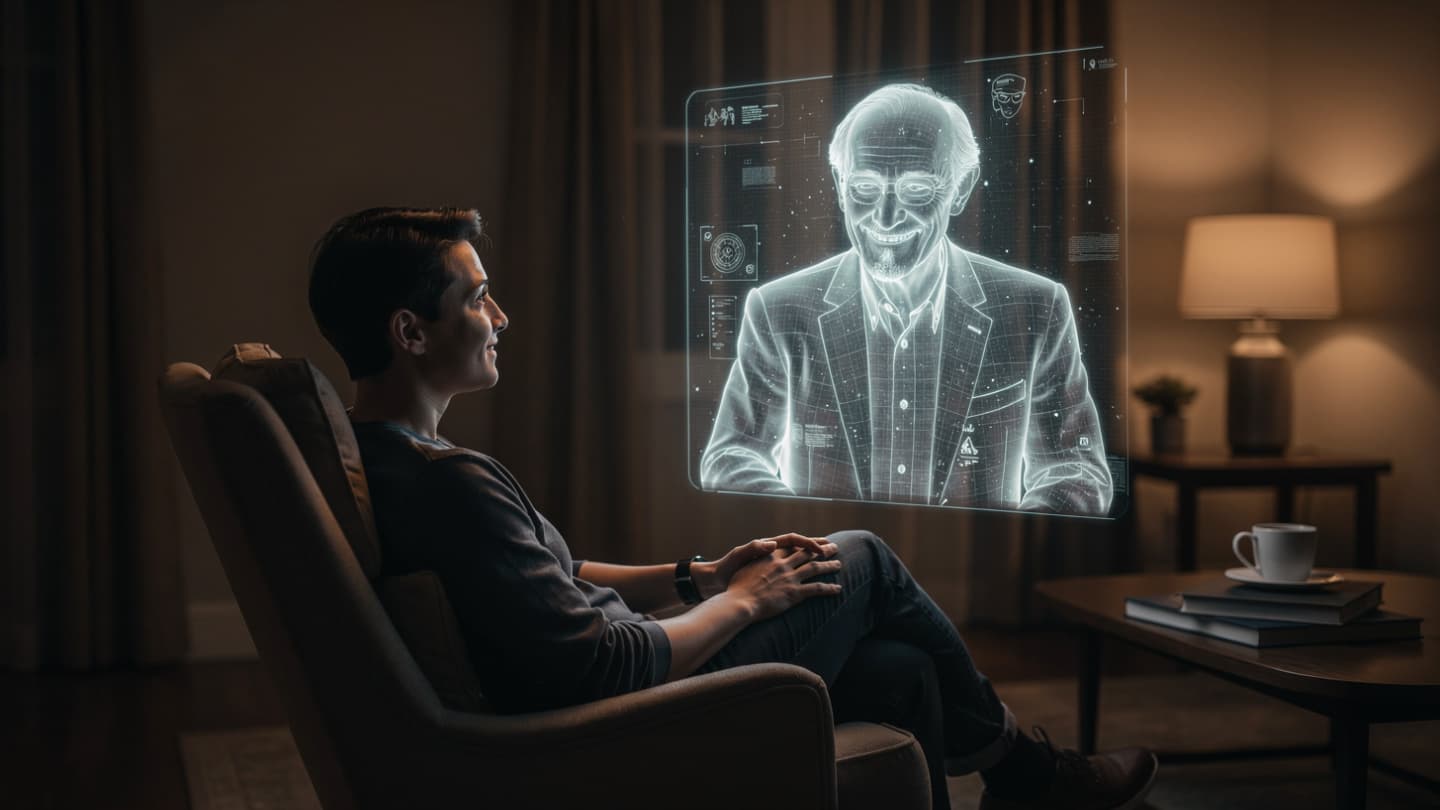
In the quiet suburbs of Chiba and the high-rise apartments of Minato, a new and deeply intimate kind of technology is beginning to bridge the gap between the world of the living and the silence of the departed. Known as 'Grief Tech,' this innovative use of advanced AI allows for the creation of interactive avatars of deceased loved ones, transitioning from science fiction into a poignant reality for hundreds of Japanese families. By utilizing a lifetime of text messages, voice recordings, and video footage, these digital echoes enable the bereaved to hold one last conversation, seek advice, or simply hear a familiar laugh once more.
Witnessing a mother speaking to the digital likeness of her late son reveals the human heart's yearning for connection, even after loss. These interactions embody a profound grace, transforming the finality of death into a state of 'digital presence.' The AI does not merely repeat recorded lines; it employs a personalized Large Language Model (LLM) to respond with the characteristic wit, cadence, and unique vocabulary of the individual it represents. This technological embrace aims to soften the sharp edges of mourning, providing a rhythmic continuity where there was once only an empty chair.
The development of these 'Memory Avatars' is deeply rooted in Japanese cultural traditions that honor ancestors. Just as the Butsudan, or home altar, has served for centuries as a focal point for communicating with the spirits of the past, these digital interfaces offer a modern vessel for the same ancestral dialogue. This reflects a society that perceives the boundary between life and death as a porous, sacred space—where the wisdom of those who came before remains a vital part of the family’s ongoing narrative.
In the laboratories of Tokyo’s leading tech firms, developers are carefully mapping the ethical boundaries of this new frontier. They discuss 'consent-based legacy,' allowing individuals to curate the data they wish to leave behind, essentially scripting their own digital afterlife. There is meticulous care in ensuring that the AI serves as a tool for healing rather than a substitute for reality. The goal is to provide a 'soft landing' for the grieving, facilitating the processing of unspoken emotions before finally letting go.
Outside the glowing screens, a debate continues over the nature of identity and the sanctity of memory. Critics argue that we may be delaying the necessary work of grief by clinging to an electric ghost, while supporters view it as a compassionate evolution of traditional mementos like photographs or letters. This tension embodies the heartbeat of the movement—a constant pull between the desire to remember and the need to move forward. As technology becomes more seamless, the question of what it means to 'be' grows increasingly complex, challenging our definitions of presence and absence.
As the sun sets over the urban landscape, the soft light of these digital companions stands as a steady sentinel in the dark. This reflection reveals that technology, despite its cold logic, can sometimes fulfill the most delicate and irrational of human needs: the need to say goodbye one more time. Japan is teaching the world that the future is not solely about faster chips or larger networks, but about finding ways for the silicon mirror to reflect the enduring light of the human soul.
The Ministry of Internal Affairs and Communications has reported a 40% increase in the registration of 'Personal Digital Legacy' firms in fiscal 2025. These companies offer services ranging from basic chatbot recreation to full-scale photorealistic 3D holographic avatars. While the Japan Psychological Association has called for strict guidelines to prevent 'prolonged grief disorder,' the demand for these services remains high among the aging population. Public sentiment is divided, with 52% of respondents in a recent NHK poll expressing interest in creating a digital legacy for their descendants.
Published by Banx Network. This article is part of the Banx decentralized media programme, powered by the BXE token on the XRP Ledger.



