
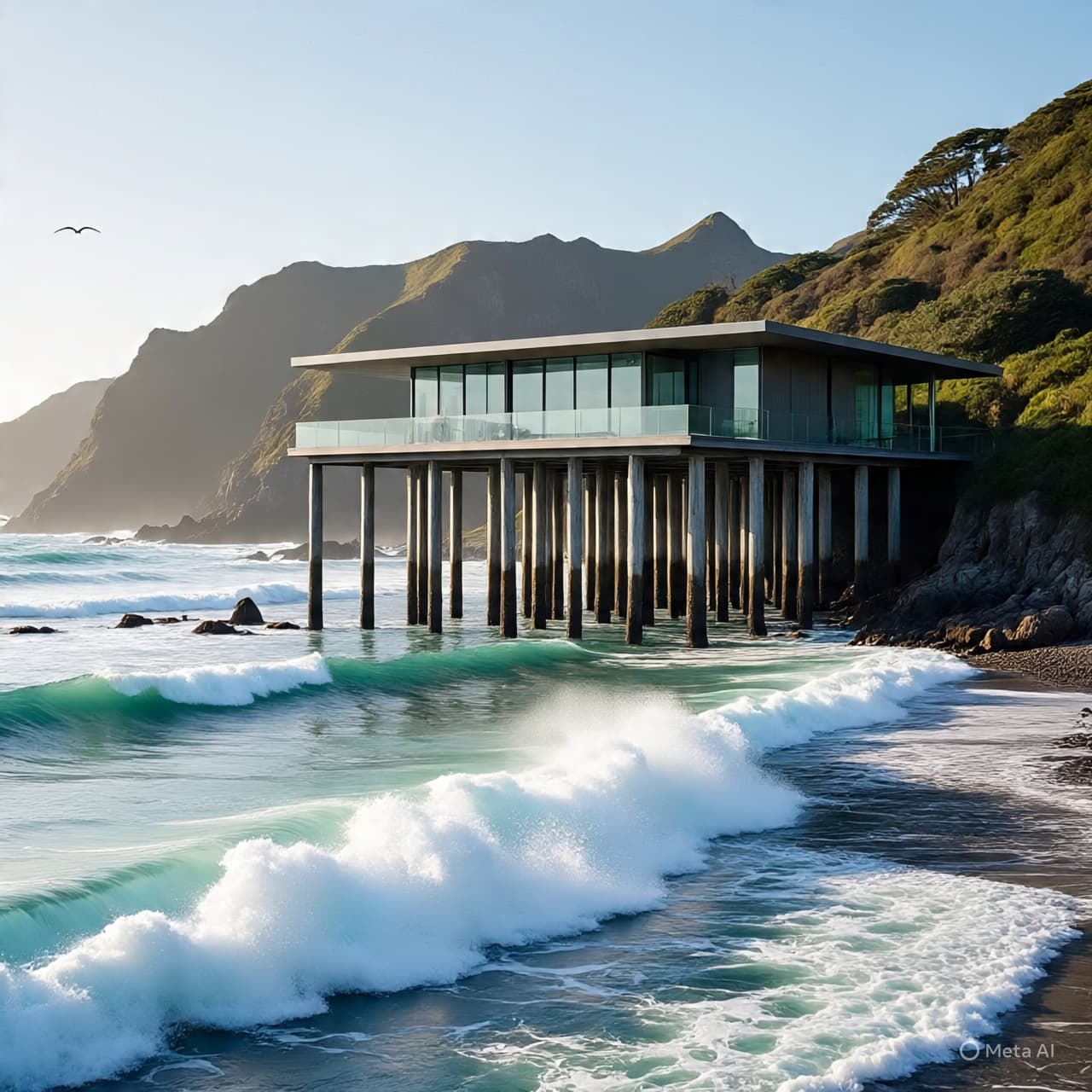
Key Highlights
- Major insurers in New Zealand are issuing warnings about risks from sea surges and coastal erosion.
- The shift in property valuation reflects a growing awareness of climate change impacts.
- Coastal communities are adapting to new realities as they navigate development decisions.
The sea has always been a source of solace for those who dwell at the jagged edges of New Zealand, a rhythmic presence that defines the boundaries of the known world. Yet, there is a subtle shift in how that blue horizon is perceived, a growing awareness that the water which once offered peace is beginning to reclaim the space it previously conceded. The air at the coast feels heavy with this new understanding, a blend of traditional maritime beauty and a modern, numerical anxiety.
As insurers begin to flag the risks associated with sea surges for new developments, the conversation moves from the theoretical to the tangible. It is a quiet process of reassessment, where the value of a home is no longer measured solely by its view of the sunset, but by its distance from the reach of the next great tide. The ledgers and the landscape are slowly merging, creating a new map of where it is considered wise to build and where it is better to leave the land to the elements.
There is a certain gravity in seeing the abstract data of climate change translated into the practical language of policy and protection. It suggests a world where we are learning to listen more closely to the warnings of the natural world, acknowledging that the coast is a fluid frontier. This recalibration is not a loud event, but a series of small, significant decisions made in offices and living rooms across the country, each one a response to the ocean's restless breath.
To walk along a beach today is to see the shoreline not just as a place of recreation, but as a site of negotiation. The dunes and the seawalls stand as the physical manifestations of our attempt to draw a line in the sand, even as the sea continues its patient, ancient work of reshaping the earth. The insurance flags are like the markers placed before a storm, silent signals that the relationship between the land and the water is entering a more complex phase.
In the coastal townships, there is a sense of watchful waiting. The homes that have stood for generations now face a future where the ground beneath them is subject to a different kind of scrutiny. It is a time of transition, where the dream of a life by the sea is being tempered by the reality of a changing climate. The water remains as beautiful as ever, yet its beauty is now colored by a sense of profound and inevitable motion.
The focus on new developments highlights a desire for foresight, an attempt to ensure that the mistakes of the past are not repeated in the face of rising levels. There is a dignity in this proactive stance, a way of moving forward that respects the power of the Pacific while seeking to protect the communities that call its shores home. The dialogue between the insurer and the environment is a necessary one, a reflection of our collective need for stability in an era of flux.
As the tide pulls back, leaving behind the damp imprint of its reach, one is reminded of the temporary nature of all human structures. We are guests of the coast, and the sea is a host that occasionally chooses to expand its territory. The insurance warnings serve as a humble admission of this fact, a prompt to build with a greater sense of reverence for the forces that we cannot control.
Major insurers in New Zealand have begun issuing formal warnings regarding the risks of sea surges and coastal erosion for new residential developments. These advisories come as part of a broader industry shift toward risk-based pricing and a heightened focus on climate resilience in property markets. Industry leaders note that these measures are essential to ensure long-term financial stability for homeowners in vulnerable geographic regions.
Published by Banx Network. This article is part of the Banx decentralized media programme, powered by the BXE token on the XRP Ledger.



