
Key Highlights
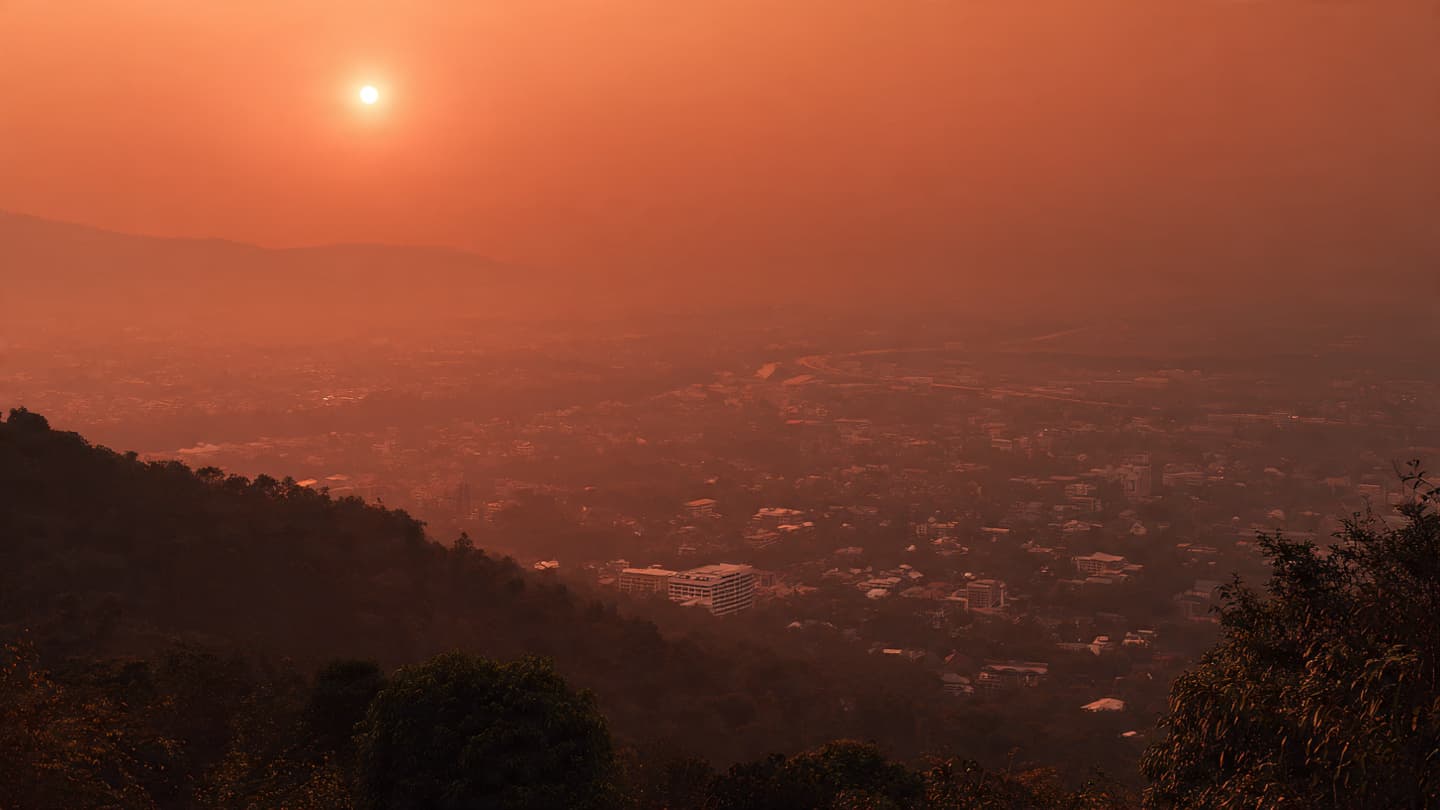
- Doi Suthep's silhouette is obscured by smoke from nearby wildfires.
- Residents are facing health concerns due to poor air quality.
- Firefighters are actively battling the flames threatening the area.
The silhouette of Doi Suthep, usually a steadfast anchor of green against the northern sky, has begun to soften and recede behind a veil of relentless gray. This transformation is not the gentle fog of a cool morning, but a dense, heavy presence—an atmospheric weight that settles into the lungs and clings to the stone walls of the old city. The smoke, originating from wildfires in the surrounding areas, has created a profound stillness in the valley, demanding a different kind of observation from those who dwell beneath the mountain’s shadow.
One notices the change first in the quality of the light, which has lost its vibrant edge and taken on a monochromatic, sepia tone. The sun, when it appears, is a bruised and crimson disk, struggling to pierce through the layers of suspended particulate that drift down from the burning ridges. This visual testament to the fragility of our environment serves as a reminder of the invisible boundaries between the wild slopes and the urban sprawl. The mountain, once a source of cooling breezes and spiritual solace, now breathes out a heat that carries the scent of charred timber and ancient, drying leaves.
As air quality deteriorates, residents have begun to monitor the rising numbers on their screens, indicating hazardous conditions. Masks have become a common sight, a collective defense against an element that is increasingly untrustworthy. People navigate the hazy corridors of the city as if underwater, their movements slowed by the density of the air and the knowledge that the fires are still climbing the limestone cliffs. It is a shared, silent wait for the wind to change or the clouds to finally break, bringing relief from the oppressive haze.
The forests that drape the sacred peak have long been a sanctuary for the spirit, but in these shorter days, they have become a theater of struggle. Firefighters move through the undergrowth like shadows, their efforts often obscured by the very smoke they seek to quell. There is a quiet heroism in this labor, a persistent battle against a force that is both primal and unpredictable. We see their silhouettes against the orange glow at night—a distant, flickering reality that feels both intimately close and impossibly far from the comfort of the city streets.
In the residential quarters, conversations have turned toward the health of the elders and the safety of the children, spoken in voices that sound slightly muffled by the grit in the air. There is a sense of closure, of windows tightly shut and air purifiers humming in every corner, creating small, artificial islands of clarity. It is a retreat from the world outside, a necessary insulation from a climate that has momentarily turned hostile. Residents long for the first heavy rains of the monsoon to wash away the ash and return the mountain to its rightful clarity.
The visibility has diminished to the point where the city’s landmarks feel like memories rather than physical structures. The pagodas and the gates appear and disappear according to the thickness of the drift, creating a dreamlike landscape where the familiar is constantly being renegotiated. This lack of perspective forces a narrowing of focus, a concentration on the immediate and the domestic. We are grounded by the haze, our horizons restricted to the few meters of sidewalk ahead and the warmth of the indoor light.
Time seems to stagnate when the sky is this uniform, as the usual markers of the day—the rising and setting of a clear sun—are absent. The heat remains trapped beneath the ceiling of smoke, a persistent, dry warmth that leeches the energy from the city’s pulse. We are all participants in this atmospheric drama, witnesses to a cycle that feels increasingly strained and out of balance. It is a period of reflection on our stewardship of the land and the consequences of the fire that we both use and fear.
As the fires persist near the summit, the collective hope for a reprieve remains a steady, quiet undercurrent in every interaction. The mountain will endure, its slopes eventually regenerating and its air clearing, but the experience of these days leaves a lasting mark on the memory. It is a lesson in patience and the realization that even the most enduring monuments are subject to the whims of the elements. We wait for the return of the green, for the day when we can once again breathe freely beneath the sacred peak.
Published by Banx Network. This article is part of the Banx decentralized media programme, powered by the BXE token on the XRP Ledger.



