Morning in Milan often arrives on rails—the quiet hum of trams tracing familiar routes between stone façades and café-lined streets. The city moves in measured arcs, steel wheels gliding over tracks laid generations ago. But sometimes the rhythm breaks, and the ordinary geometry of transit gives way to something abrupt and irreversible.
Two people were killed when a tram derailed and crashed into a building in Milan, according to local authorities. The accident occurred along a central route, where the vehicle left its tracks before striking the structure at street level. Emergency services responded swiftly, securing the area and assisting the injured as investigators began to assess what had gone wrong.
Operated by the city’s public transit authority, Azienda Trasporti Milanesi, Milan’s tram network is one of the oldest in Europe, its yellow carriages a defining feature of the urban landscape. On most days, they move through traffic with practiced familiarity, threading between cyclists, pedestrians, and cars. The derailment has prompted scrutiny of infrastructure conditions, vehicle mechanics, and track alignment.
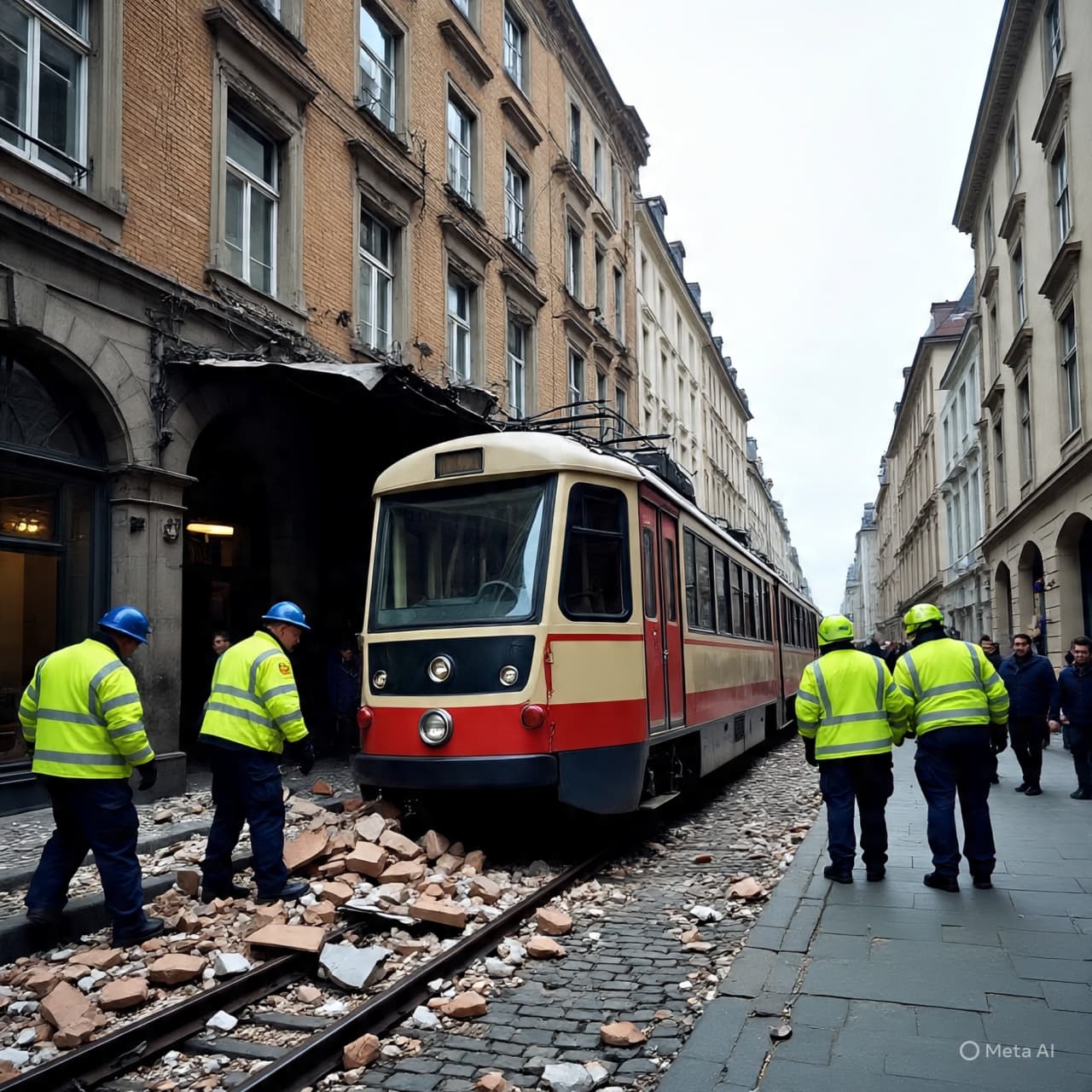
Witnesses described a sudden jolt before the tram veered off course, its metal frame grinding against pavement and masonry. Images from the scene showed shattered windows and damaged storefronts, with debris scattered across the street. Firefighters worked to stabilize the vehicle and ensure there was no further risk to surrounding buildings.
Authorities have not yet confirmed the cause of the derailment. Preliminary inquiries are expected to examine the state of the rails, braking systems, and possible external factors such as obstacles or signaling issues. Public prosecutors in Italy often open formal investigations in fatal transport accidents to determine liability and ensure procedural transparency.
For Milan, where trams are both infrastructure and icon, the crash has unsettled a sense of daily continuity. The network carries thousands of passengers each day across neighborhoods old and new, its routes woven into routines of work and school. Disruptions ripple outward quickly, rerouting commuters and reshaping traffic patterns even as grief settles over the immediate loss.
City officials expressed condolences to the families of the victims and pledged a thorough investigation. Service on affected lines has been suspended while safety checks are conducted. In the days ahead, the clang of bells and the glide of steel will likely resume, but the memory of the impact will remain—an interruption in a city accustomed to motion, where rails usually promise arrival rather than stillness.
AI Image Disclaimer
Illustrations were created using AI tools and are not real photographs.
Sources
Reuters
Associated Press
Corriere della Sera
La Repubblica
Azienda Trasporti Milanesi
Published by Banx Network. This article is part of the Banx decentralized media programme, powered by the BXE token on the XRP Ledger.