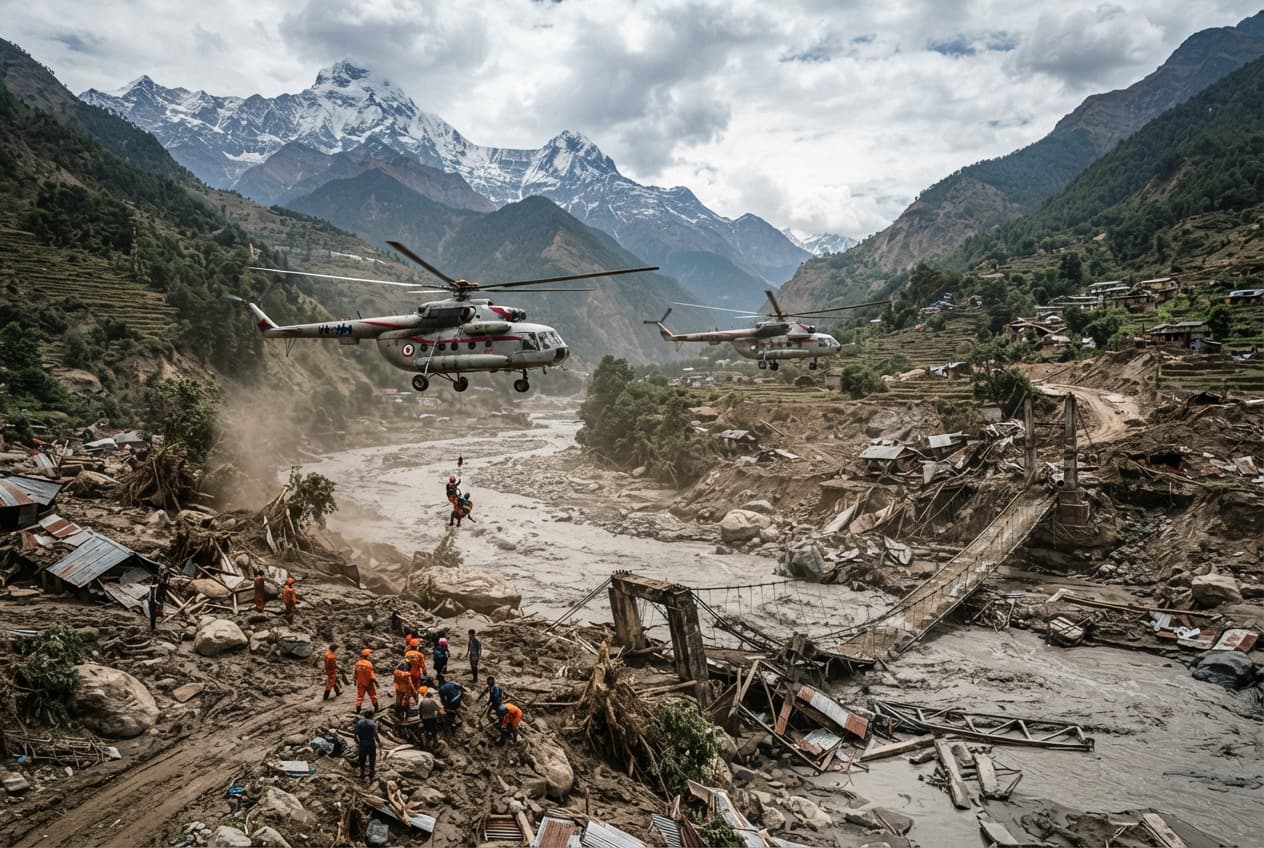
The rivers that descend from the mountainous spine of the Solomon Islands’ larger provinces are usually predictable streams, winding their way through dense jungle toward the coast. They are the sources of life for remote villages, providing water for drinking, washing, and the irrigation of small garden plots. However, when a sudden tropical depression stalls over the interior highlands, these gentle waters can transform into immense forces of nature within minutes. A remote settlement recently bore the full brunt of this transformation as a flash flood swept down the valley, erasing homes and altering lives.
For the residents of the interior, the first warning of danger was not the rain falling on their thatched roofs, but a deep, low rumble echoing from the upper hills. The speed of a mountain flash flood leaves no time for complex preparations; survival becomes a matter of immediate movement toward higher ground. Within moments, a wall of brown water filled with mud, uprooted trees, and boulders tore through the center of the village, breaching the fragile defenses of the community.
The physical structures of these remote villages, often constructed from local timber, sago palm thatch, and bamboo, offer little resistance to the momentum of a saturated river. Entire homes were lifted from their foundations, disappearing down the current alongside family possessions accumulated over decades. The sight of these familiar shelters crumbling under the weight of the water represents a sudden, profound rupture in the fabric of the community.
As the water level peaked and began its rapid retreat, it left behind a landscape that was barely recognizable to those who had fled it. The village square, previously a space of clean grass and packed earth, was transformed into a wasteland of thick silt and tangled debris. The immediate focus shifted toward assessing the safety of all community members, a frantic accounting undertaken in the damp aftermath of the storm.
The isolation of these interior settlements complicates the arrival of emergency relief, as roads are nonexistent and rivers remain too volatile for boat travel. Information about the extent of the damage must travel by foot or basic radio networks, slowing the national response to the crisis. This logistical friction highlights the persistent vulnerability of populations living far from the administrative centers.
In the temporary camps established on the higher ridges, families are sharing what food and blankets survived the inundation. There is a quiet solidarity in their response, a collective resilience that has allowed these communities to endure the unpredictable nature of the Pacific climate for generations. Yet, the loss of their homes introduces an immediate anxiety regarding long-term shelter and food security.
Agricultural experts note that these flash floods destroy the riverbank gardens that provide the primary source of nutrition for the village. The destruction of root crops like taro and yam means that the community will require sustained food aid while new fields are cleared and planted. The environmental event thus triggers a prolonged economic challenge that will unfold over months.
As the sun broke through the remaining clouds, the true scale of the devastation became visible along the river corridor, revealing the altered path of the watercourse. The long process of rebuilding must now be considered, forcing a discussion about whether to return to the riverbank or establish a new settlement further up the ridge. The memory of the current's power will undoubtedly influence that decision for years to come.
A sudden flash flood swept through a remote village in the Solomon Islands interior, destroying multiple residential structures and displacing dozens of inhabitants. Disaster relief teams are working to establish communication links with the isolated region to coordinate the delivery of emergency supplies and medical assessments. Initial reports indicate that the river levels have returned to their channels, allowing localized recovery efforts to begin.
Published by Banx Network. This article is part of the Banx decentralized media programme, powered by the BXE token on the XRP Ledger.