The Atlantic often arrives gently along Guyana's northern coast. Fishing boats leave harbor before sunrise, rivers meet the sea with quiet certainty, and ferries trace familiar routes that connect distant communities separated by forests, waterways, and open water. For many families, these crossings are not extraordinary journeys but part of everyday life, woven into the rhythm of work, home, and reunion.
That familiar rhythm was shattered when the passenger ferry MV Barima capsized off the coast of Guyana during a nighttime voyage. Authorities have confirmed that ten bodies have been recovered, while dozens of passengers remain missing. Search teams continue to comb the waters after the vessel overturned with 133 people believed to have been on board, making it one of the country's most devastating maritime disasters in recent decades.
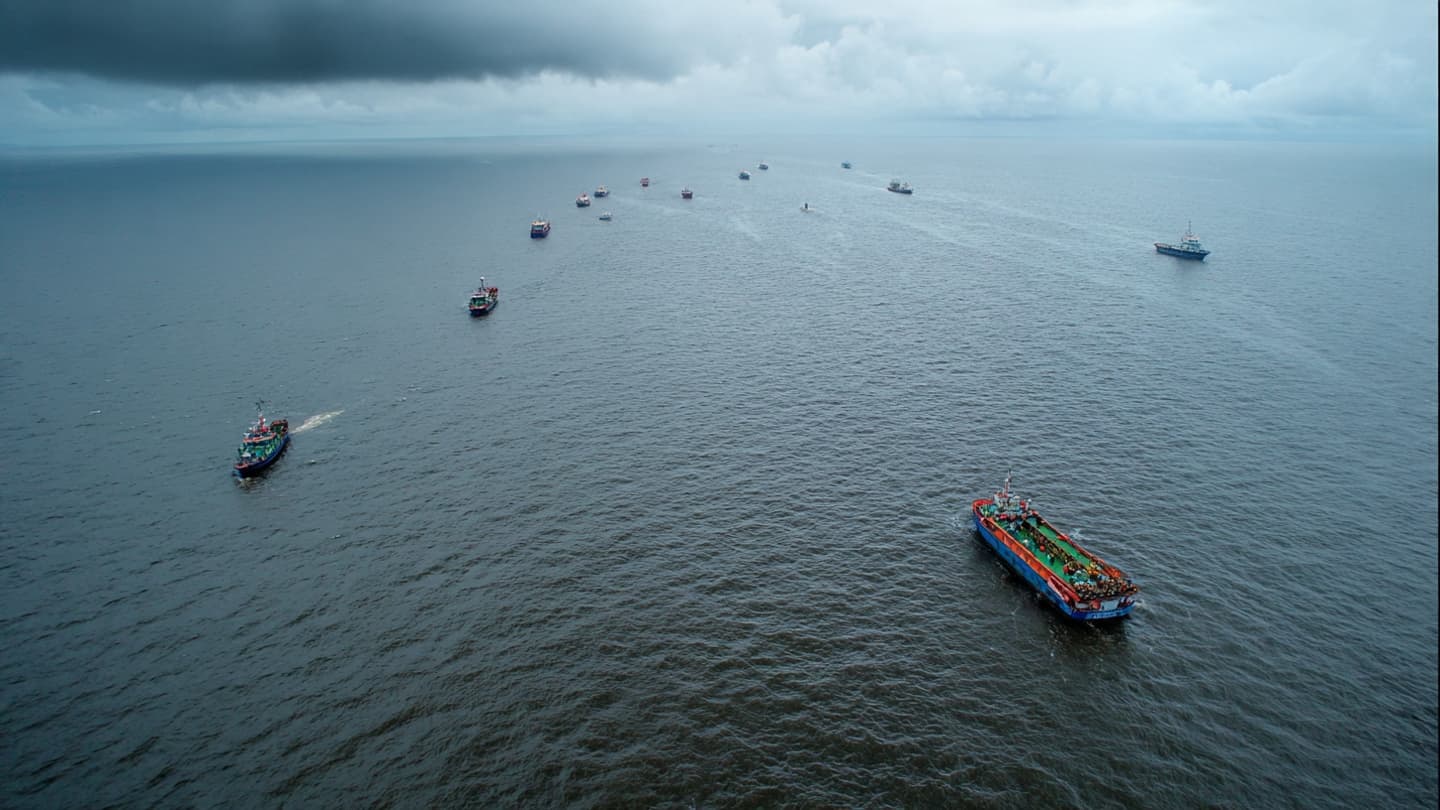
The ferry had departed Georgetown and was bound for the remote community of Port Kaituma, a route that serves many residents living far from Guyana's road network. By late Saturday night, distress calls signaled that the journey had turned into an emergency. Rescue crews, joined by commercial vessels, private aircraft, divers, and local volunteers, rushed toward the search area as darkness and ocean currents complicated every effort.
Sixty-seven people, including children, were rescued during the initial operation, but no additional survivors were found after Sunday afternoon. As hope gradually gave way to difficult reality, recovery teams expanded their search across more than one thousand square kilometers of open water, knowing that each passing hour narrowed the possibility of finding more people alive.
The tragedy has also revealed troubling questions beyond the sinking itself. Officials said the ferry's passenger manifest did not accurately reflect everyone on board, making it difficult for rescuers to determine precisely how many people remained missing. Authorities also reported that the captain and another crew member tested positive for marijuana following their rescue and are now in police custody while investigators examine the circumstances surrounding the disaster.
For Guyana, ferries remain more than transportation. Rivers and coastal waterways connect communities where highways cannot easily reach, carrying workers, students, families, and supplies across vast stretches of the country. Every voyage represents trust in a system that quietly supports daily life, making this disaster deeply personal for many people far beyond those directly affected.
Prime Minister Mark Phillips has ordered a full investigation into the incident, promising accountability if negligence, misconduct, or institutional failures contributed to the sinking. Government officials have pledged support for victims' families while continuing search-and-recovery efforts alongside humanitarian assistance for survivors.
As the Atlantic continues its steady movement against Guyana's shoreline, the search vessels remain on the water, tracing careful paths across waves that reveal little of what lies beneath. For the families waiting on shore, each passing hour carries both sorrow and hope, however fragile. The sea keeps its silence, but the nation now looks toward understanding what happened and ensuring that future crossings are guided by lessons learned from this heartbreaking loss.
AI Image Disclaimer These illustrations were created using AI to provide conceptual representations of the reported events and are not actual photographs.
Sources Reuters Associated Press Guyana Government Guyana Defence Force The Guardian
Published by Banx Network. This article is part of the Banx decentralized media programme, powered by the BXE token on the XRP Ledger.