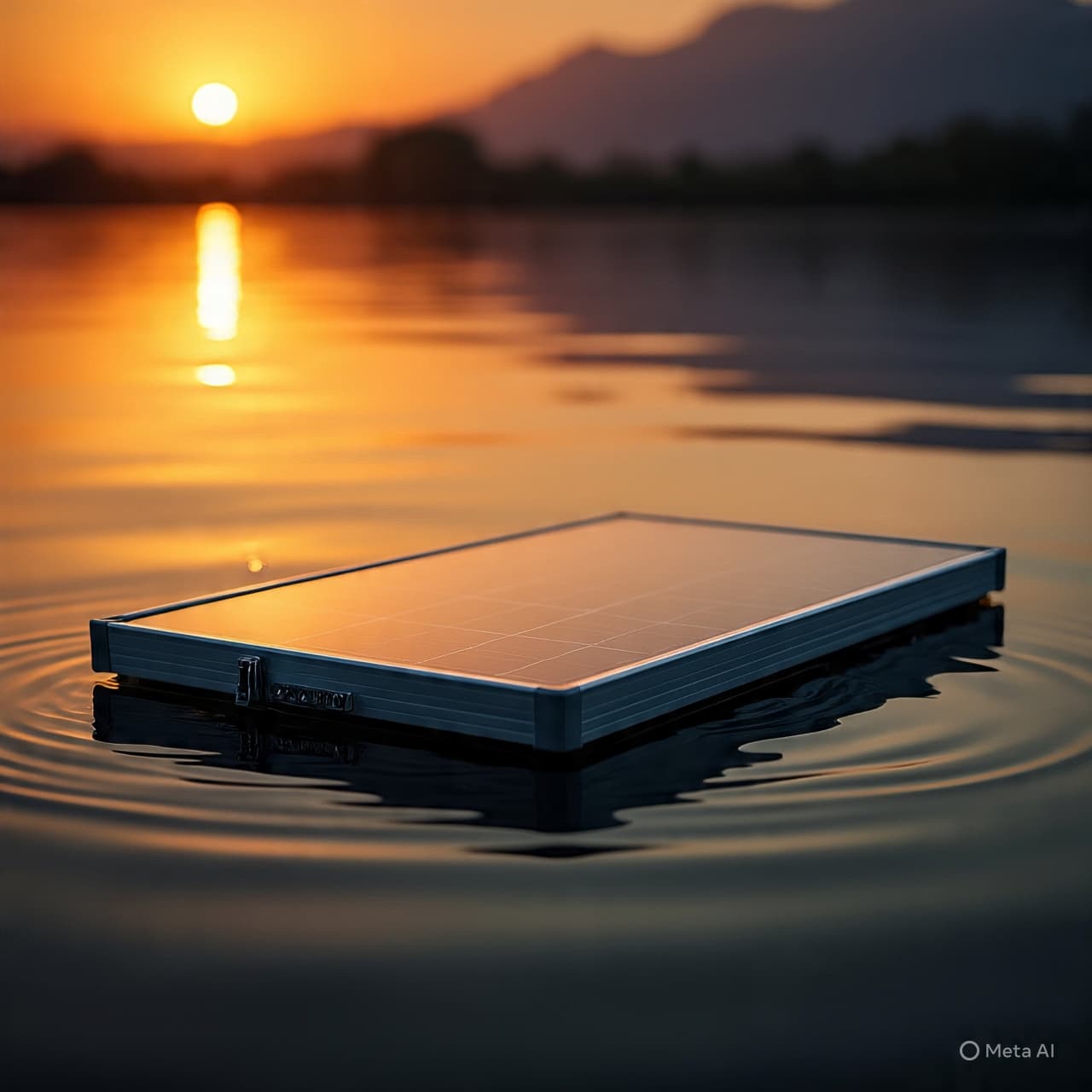
The reservoirs of the Ebro River basin are places of deep, artificial stillness, where the weight of the water is held back by the towering concrete of the dams. These are landscapes of utility, yet they possess a quiet, industrial majesty, their surfaces reflecting the vast, unclouded Spanis sky. For decades, their primary role was to store the rain and generate power through the rush of the turbines, but a new layer of purpose is now being laid upon their blue expanse.
Spain has begun the deployment of massive, floating solar arrays across its inland waters. These "islands of light" represent a clever marriage of two essential resources. By placing the panels on the water, the nation utilizes space that would otherwise remain idle, while the cooling effect of the reservoir increases the efficiency of the silicon cells. It is a narrative of harmony, where the element of water supports the harvest of the sun.
There is a particular beauty in the geometry of a floating solar field. The panels are arranged in neat, repetitive rows that rise and fall with the gentle movement of the reservoir’s surface. From a distance, they appear like a shimmering, silver skin, a second horizon that captures the brilliance of the southern sun without disturbing the life that resides in the depths below.
Environmental researchers note that these arrays also provide a secondary benefit: they reduce the evaporation of the water beneath them. In a land where drought is an increasingly frequent visitor, every drop saved is a victory for the future. The panels act as a protective lid, shielding the reservoir from the sun’s thirst while simultaneously turning that same light into the lifeblood of the grid.
In the engineering offices of Madrid and Zaragoza, the focus is on "hybridization"—the integration of solar power with existing hydroelectric infrastructure. When the sun is high, the floating panels take the lead; when the clouds roll in, the dams can release their stored energy. It is a dance of elements, ensuring a steady, reliable flow of power regardless of the whims of the weather.
The success of these projects is a testament to Spain’s commitment to its National Integrated Energy and Climate Plan. By diversifying the landscape of its renewable energy, the country is reducing its reliance on external sources and building a more resilient, decentralized power system. It is a science of the collective, where the reservoirs of the past are becoming the power plants of the future.
Observers point to the ecological care taken during the installation. The arrays are designed to allow light to pass through to the water below, ensuring that the underwater ecosystems are not disrupted. It is a reminder that the transition to green energy must be as mindful of the local environment as it is of the global climate.
As the sun sets over the Ebro, the floating panels catch the final, horizontal rays of the day, glowing with a soft, iridescent intensity. They have successfully translated the heat of the afternoon into the electricity that will light the homes of the valley. It is a narrative of ingenuity and light, proving that the solution to our most pressing challenges can often be found in the quiet reflection of the water.
The Spanish Ministry for the Ecological Transition has approved the installation of the nation’s first large-scale floating solar park at the Sierra Brava reservoir. The project, with a capacity of 50 megawatts, is part of a broader plan to utilize state-owned reservoirs for renewable energy production. It is estimated that covering 10% of Spain’s reservoirs could generate enough electricity to power over 20 million homes.
Published by Banx Network. This article is part of the Banx decentralized media programme, powered by the BXE token on the XRP Ledger.