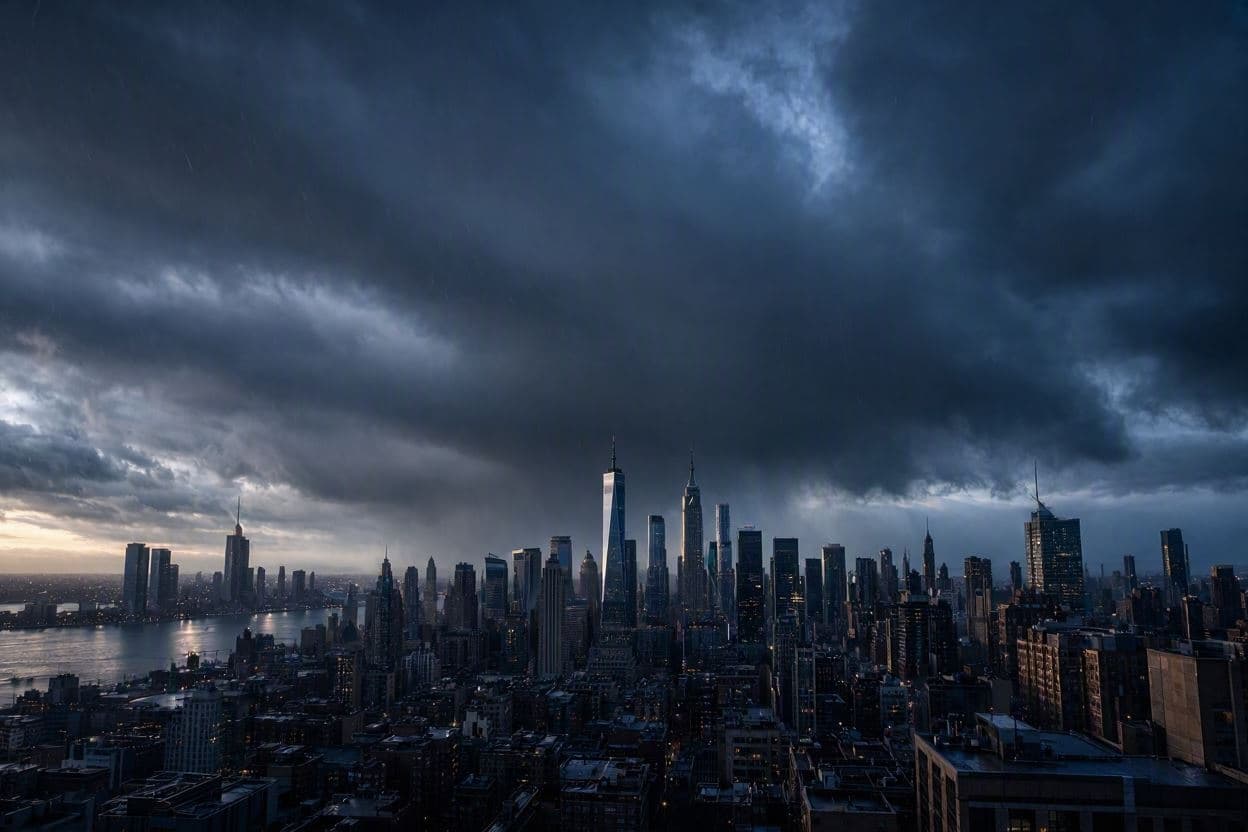
The horizon held a bruised, heavy quality that hinted at the coming transformation, a stillness that preceded the sudden, relentless descent of water upon the landscape. In the heart of the Midwest, the earth is a tapestry of ordered fields and steady, rolling plains, but as the skies opened, the geography became fluid, losing its defined boundaries to the rising surge. There is an ancient, humbling power in such moments—a reminder that the land we carve into gridlines is, at its essence, a path for the elements. As the rains intensified, the familiar architecture of town and farm seemed to dissolve into a shifting, monochromatic world of gray.
It began with the rhythm of a steady pour, a sound that initially signaled a quenching of the dry, waiting soil. Yet, as the hours lengthened and the drainage basins reached their limits, the character of the rainfall transitioned from a restorative force to an overwhelming deluge. Water, ever patient and persistent, began its slow, inevitable crawl across the low-lying areas, turning roads into riverbeds and front yards into miniature lakes. The grace of the countryside, once so meticulously managed, was now subject to the chaotic, unbidden architecture of the flood.
In the small communities caught in the path of the rising water, the response was one of quiet, instinctive adjustment. The usual hustle of the workday gave way to the shared imperative of protection, as neighbors worked to divert the encroaching tide from doorways and foundations. There is a profound sense of human vulnerability in these moments—a shared realization that despite our technologies and our infrastructure, we remain guests on a landscape that can, in an instant, reassert its untamed nature. The atmosphere in these towns was marked by a tense, watchful silence, save for the pervasive, relentless sound of the water.
The flooding did not discriminate, sweeping through rural arteries and urban centers alike, leaving behind a trail of redirected paths and submerged secrets. Vehicles, once symbols of our mobility, became static obstacles, their wheels partially claimed by the mud and silt that the water carried in its wake. There is a stark, almost haunting beauty in the sight of an empty road rendered impassable, the lines of asphalt disappearing beneath a mirror-like surface that reflects the overcast sky above. It is a visual representation of the pause, a forced stillness that demands our collective focus.
As the current moved, it carried with it the debris of the ordinary—branches, detritus, and the remnants of what once resided on the dry banks. The visual narrative of the landscape changed hour by hour, a shifting tableau that kept residents in a state of suspended animation. Local officials and emergency crews worked with a steady, clinical focus, navigating the inundated streets to ensure that the human toll remained minimized. Their presence was a calm, grounded anchor in the midst of the surging, unpredictable environment, a human response to an elemental challenge.
Reflecting on the event, one is forced to consider the cycle of the Midwest seasons, where the extremes of heat and moisture define the rhythm of the year. There is a stoicism required to inhabit this place, a willingness to accept the occasional intrusion of the wild into the sphere of the domestic. The flooding, while destructive and disruptive, is a chapter in the long, storied relationship between the people of the plains and the waters that shape their territory. It is a relationship defined by resilience, an acknowledgment of the forces that exist beyond our control.
As the waters eventually begin their slow retreat, they leave behind a landscape that feels fundamentally altered, even when the surfaces return to their previous states. The mud, the debris, and the memory of the rising levels will linger, serving as a reminder of the fragility of our foundations. It is in the cleanup, in the communal effort to reclaim the space, that the true character of these communities is revealed. There is a quiet, persistent hope in the act of clearing the silt and restoring the order that was so swiftly disrupted.
The incident serves as a meditation on the permanence of change. In the aftermath of the deluge, the residents look toward the sky with a new, guarded perspective, knowing that the balance of the environment is a constant, shifting negotiation. The flood, while a moment of intense pressure, eventually fades into the annals of local history, its primary legacy a strengthened sense of neighborly ties and a renewed appreciation for the ground beneath our feet. Life returns to its rhythm, yet the land itself bears the subtle, indelible mark of the water’s brief, powerful visit.
The National Weather Service has issued multiple flash flood warnings across several Midwestern states following an intense, stationary storm system that dumped several inches of rain within a short duration. Local authorities have reported significant road closures, water rescues in low-lying areas, and localized power outages as drainage systems reached their capacity. Emergency management teams remain on high alert as rivers continue to crest, and residents are advised to exercise extreme caution in areas where standing water persists. Meteorologists are monitoring the situation as the system slowly moves eastward, with further rainfall expected in the coming hours.
Published by Banx Network. This article is part of the Banx decentralized media programme, powered by the BXE token on the XRP Ledger.