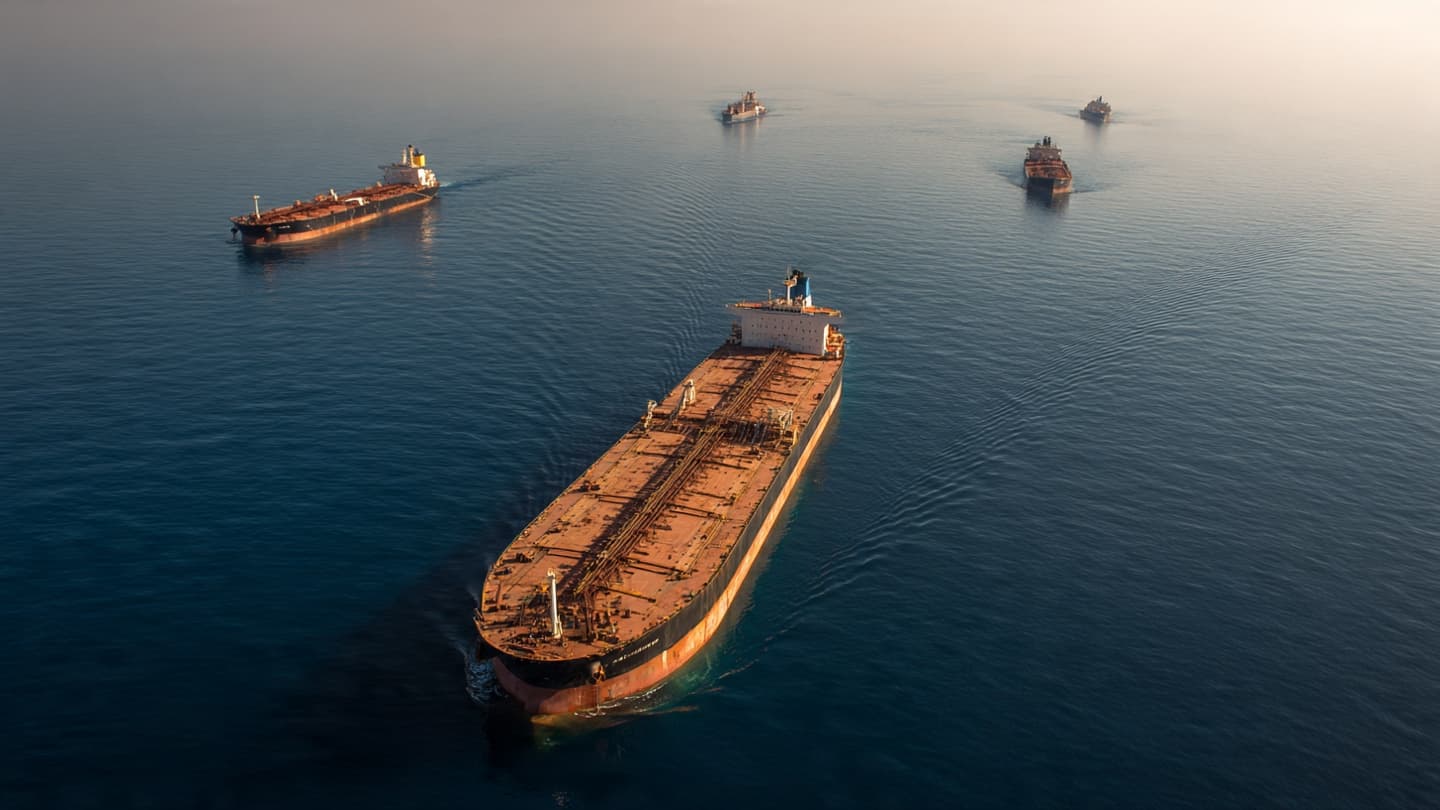
The sea has always carried more than ships. It bears conversations between continents, the steady movement of commerce, and the quiet confidence that distant shores remain connected. Along the waters surrounding the Arabian Peninsula, tankers and cargo vessels usually follow familiar routes, tracing paths that have sustained economies for generations. Yet when uncertainty reaches these waterways, even calm waves begin to reflect the weight of larger events.
That sense of uncertainty has deepened after Yemen's Houthi movement, aligned with Iran, announced what it described as a maritime embargo targeting Saudi Arabia. The declaration raised fresh concerns about navigation through strategic shipping lanes, where commercial vessels transporting crude oil, refined fuels, and other goods regularly pass. Although the practical scope of the announcement remains uncertain, governments, shipping companies, and energy markets are closely monitoring the evolving situation.
The Red Sea and surrounding maritime corridors occupy a unique place in global trade. Together with nearby waterways, they form one of the world's most important passages for energy exports and commercial shipping. Any perceived increase in security risks can influence freight costs, insurance premiums, and operational planning long before actual disruptions occur. In global commerce, confidence often travels alongside cargo.
The Houthis have repeatedly demonstrated their ability to target vessels using missiles, drones, and maritime attack systems during previous periods of regional conflict. Their latest announcement follows months of heightened tensions involving Iran, the United States, Israel, and other regional actors, adding another layer of complexity to an already fragile security environment. Saudi authorities have not indicated that normal maritime operations have ceased, but they continue coordinating with partners to monitor potential threats.
Energy markets reacted cautiously as analysts assessed the possible implications. Saudi Arabia remains one of the world's largest oil exporters, and any sustained threat to shipping routes could influence global supply expectations. Even without immediate interruptions, uncertainty alone can contribute to fluctuations in crude prices as traders evaluate geopolitical risks alongside broader economic conditions.
For coastal communities bordering these waters, the sea remains part of everyday life. Fishing boats depart with the morning tide, commercial ports continue receiving cargo, and harbor workers carry out routines that have changed little over decades. Yet beyond the visible rhythm of daily activity, international developments quietly shape decisions about security, trade, and investment that reach far beyond the shoreline.
Diplomatic efforts to reduce regional tensions continue despite the increasingly complex environment. International organizations and several governments have urged restraint while emphasizing the importance of protecting freedom of navigation through internationally significant waterways. Maintaining secure maritime trade has long been viewed as essential not only for regional stability but also for the wider global economy.
Security experts note that maritime declarations often carry strategic as well as military significance. They may seek to influence political negotiations, alter commercial calculations, or demonstrate regional influence without necessarily resulting in immediate large-scale disruption. The coming weeks are likely to determine whether the announcement remains largely symbolic or develops into a more sustained operational challenge.
As another evening settles across the Red Sea, ships continue tracing familiar routes beneath broad skies where commerce and geography have long been intertwined. The waters remain open, yet they now carry renewed attention from governments, businesses, and communities around the world. In places where every voyage connects distant economies, even the quietest shift in the current can remind us how closely the world's fortunes continue to travel together.
AI Image Disclaimer These AI-generated illustrations are intended to visually represent the subject matter and should not be interpreted as authentic photographs of the reported events.
Sources Reuters Associated Press BBC News Al Jazeera International Energy Agency (IEA)
Published by Banx Network. This article is part of the Banx decentralized media programme, powered by the BXE token on the XRP Ledger.