
Key Highlights
- Significant landslip occurred on the rail line between Glasgow and Mallaig.
- Network Rail has deployed engineers to stabilize the embankment.
- Bus replacement services are in effect for affected passengers.
A significant landslip has disrupted rail services between Glasgow and Mallaig, following a week of relentless rainfall that saturated the Scottish Highlands. The landslip, confirmed by Network Rail, has resulted in several hundred tons of debris covering the tracks, prompting immediate engineering responses to stabilize the embankment and clear the area for safe travel.
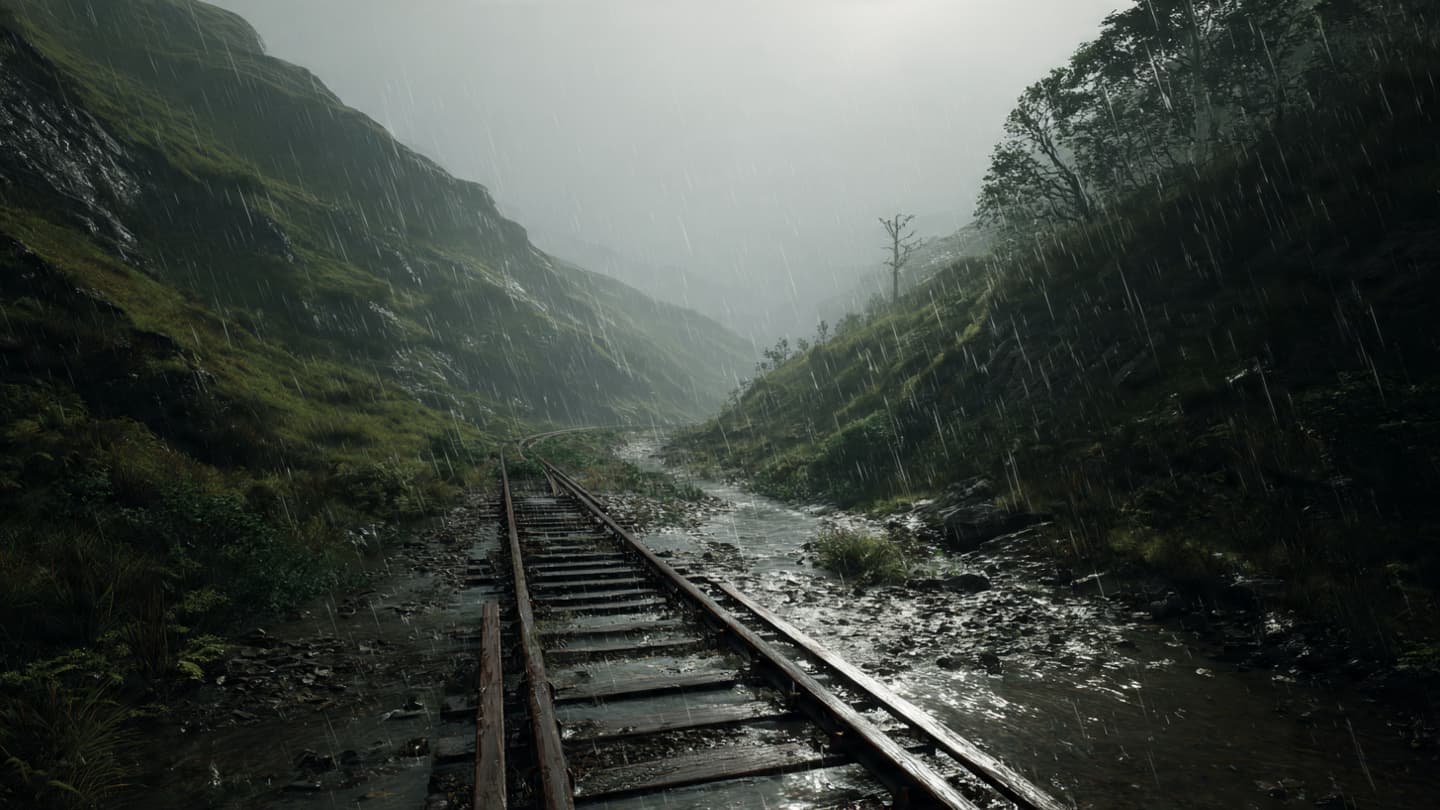
The relationship between the Scottish Highlands and rain is one of delicate balance. The region is known for its lush landscapes, where rain nourishes the earth, transforming the hills into vibrant green expanses. However, this relationship can quickly turn precarious, as evidenced by the recent landslip that has temporarily halted rail services. The heavy rains blurred the lines between land and sky, leading to a geological shift that has left travelers stranded and the rail infrastructure compromised.
As the rain continued to fall, the earth began to shift, revealing the vulnerabilities of the landscape. The iron rails, usually bustling with the sounds of trains, fell silent as nature reclaimed its territory. The landslip serves as a stark reminder of the power of the elements and the fragility of human-made structures in the face of natural forces. Travelers were left to gaze out at a transformed landscape, one that had suddenly changed shape, forcing them to confront the unpredictability of their journeys.
In response to the disruption, engineers in high-visibility jackets arrived on the scene, their presence a stark contrast against the muddy backdrop of the landslide. Their task was daunting: to clear the debris and stabilize the slopes to prevent further incidents. The machinery, while powerful, moved with a delicate precision, as each bucket of earth removed was a step toward restoring the rail line. The process is slow and methodical, reflecting the patience required to navigate the aftermath of such natural events.
As the engineers worked, the sound of rain on slate roofs in nearby villages provided a somber soundtrack to the ongoing efforts. The local community understands the rhythm of life dictated by the weather, accepting that nature sometimes imposes its will on human schedules. The disruption has not only affected transportation but has also prompted a moment of reflection on the interconnectedness of the environment and human activity.
Wildlife began to reclaim the edges of the debris, with birds circling the newly exposed earth, searching for food. The silence that enveloped the area during the cleanup was a rare moment of tranquility, contrasting sharply with the usual hustle and bustle of travel. This pause in connectivity serves as a reminder of the fragility of our transit systems and the need for resilience in the face of nature's challenges.
As the heavy machinery continued to work through the night, the floodlights illuminated the scene, casting long shadows against the wet rock faces. The workers, moving with practiced grace, transformed a site of disaster into a testament to human persistence and ingenuity. Slowly, the iron tracks were revealed again, a symbol of hope for the resumption of travel.
Eventually, the clouds parted, revealing a sky painted in hues of purple and gold, signaling a temporary peace after the storm. While the earth remains damp and heavy, the immediate threat has subsided, allowing for the assessment of the damage and the planning of repairs. Network Rail has indicated that the line will remain closed for several days as safety inspections are conducted, and bus replacement services are in place to assist affected passengers.
The events of the past week serve as a powerful reminder of the forces at play in the natural world and the resilience required to navigate the challenges they present. As the recovery efforts continue, the community remains hopeful for a swift return to normalcy, with the iron path once again open for journeys across the stunning Scottish landscape.
Published by Banx Network. This article is part of the Banx decentralized media programme, powered by the BXE token on the XRP Ledger.



