
Key Highlights
- New Research:Scientists have dated coral structures in the South Pacific.
- 19th Century Origins:Findings indicate many buildings were constructed in the 1800s.
- Innovative Techniques:Uranium-thorium dating provides precise historical timelines.
[Scientific Breakthrough in Coral Architecture]
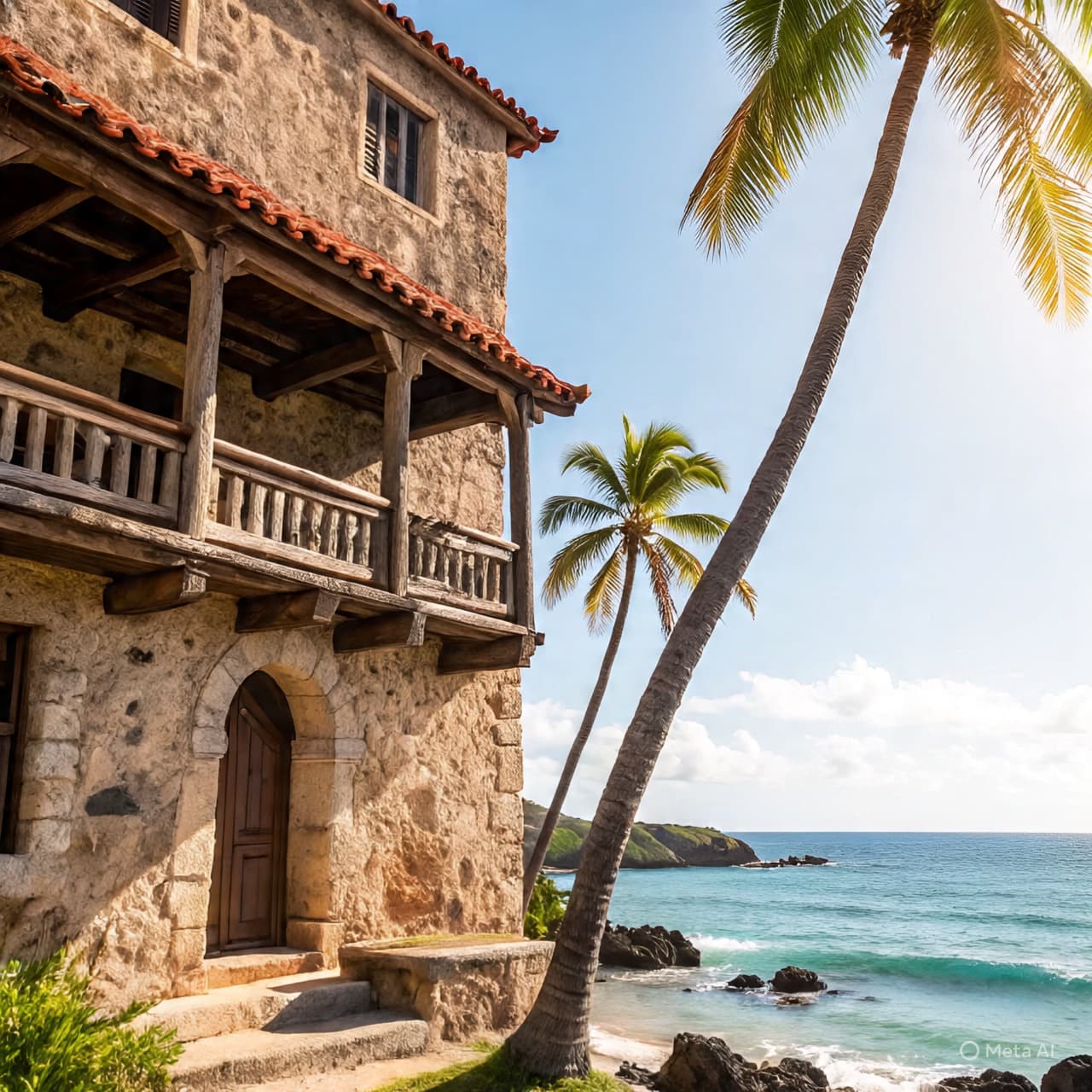
Along the shorelines of the South Pacific, where the tide moves in long, unhurried breaths, buildings seem to rise from the sea itself. Their walls carry the pale textures of coral, shaped first in water and then placed by hand into forms meant to endure on land. Under the shifting light of tropical afternoons, these structures appear almost timeless—held somewhere between memory and material.
For years, the age of these coral structures lingered in uncertainty. However, recent scientific work has begun to clarify their historical context. Researchers have applied uranium-thorium dating—a technique more commonly associated with ancient reefs and geological formations—to the coral blocks used in these buildings. This innovative approach allows scientists to measure not just the life of the coral in the ocean but also the moment it transitioned into architecture.
The findings suggest that many of these coral structures, scattered across islands in the South Pacific, were constructed within clearer and narrower timeframes than previously understood. Rather than spanning long, indistinct periods, the buildings appear to belong largely to the 19th century, a time when local communities were navigating new influences, including the arrival of European missionaries and changing patterns of settlement.
The uranium-thorium dating method carries a quiet elegance. Coral, while living beneath the sea, incorporates trace amounts of uranium into its skeleton. Over time, that uranium decays into thorium at a known rate, creating a natural clock embedded within the material. By reading this clock, scientists can determine when the coral stopped growing—effectively identifying when it was removed from the reef and used in construction.
This approach offers something that traditional archaeological methods often cannot: immediacy. Artifacts found within or near buildings can suggest a timeframe, but they do not always align perfectly with the moment of construction. Coral, by contrast, speaks directly to that moment. It records a transition from living organism to building block, from ocean to habitation.
Across islands such as those in French Polynesia, these structures take many forms—churches, homes, communal spaces—each reflecting a blend of local resourcefulness and external design. Coral was abundant, durable, and accessible, making it a natural choice. Yet its use also carried meaning, embedding the rhythms of the sea into the built environment.
The revised timelines begin to shift how these buildings are understood. They are no longer seen as layered accumulations of materials reused across generations but as more immediate responses to a particular historical moment. Communities, adapting to new social and cultural currents, constructed spaces that were both practical and symbolic, rooted in place even as they responded to change.
There is also a broader implication, extending beyond the Pacific. The success of uranium-thorium dating in this context suggests that similar coral-built structures in other parts of the world—across island regions and coastal zones—may hold equally precise histories waiting to be uncovered. What has long appeared as approximate could, with careful study, become exact.
And yet, the buildings themselves remain unchanged. They stand quietly along paths and shorelines, their surfaces weathered by wind and salt, their forms familiar to those who pass by them each day. What has shifted is not their presence but the clarity with which they are seen.
In the end, the facts settle into focus. Scientists have successfully dated coral-built structures in the South Pacific using uranium-thorium techniques, revealing that many were constructed in the 19th century and refining previous assumptions about their origins. The work continues, extending outward from one structure to the next, each measurement adding another line to a history that has always been there, waiting to be read.
Published by Banx Network. This article is part of the Banx decentralized media programme, powered by the BXE token on the XRP Ledger.



