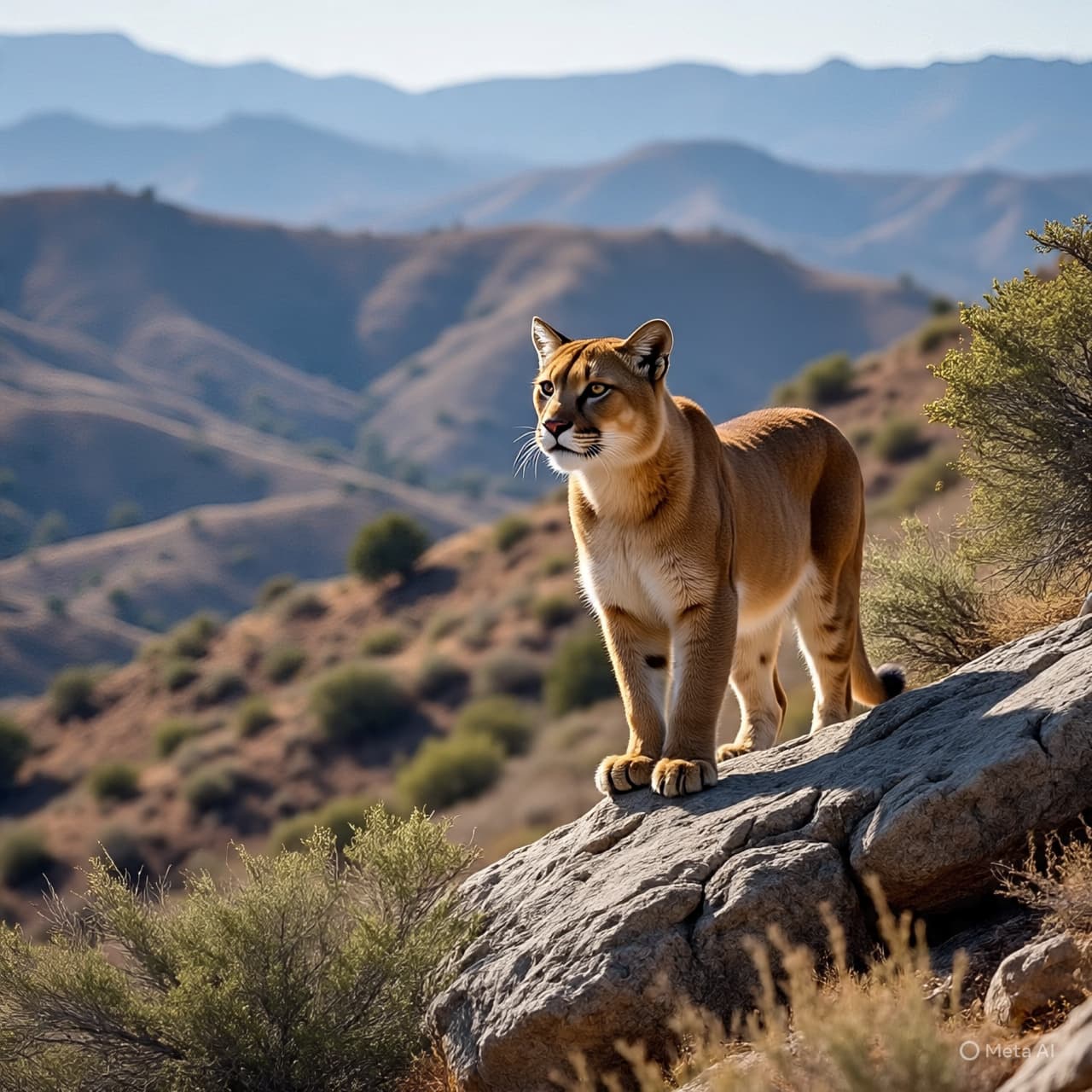
There are moments when a landscape seems to pause, as if listening to itself. In the rugged mountains of Southern California, that stillness often belongs to the mountain lion — a creature both feared and admired, slipping through chaparral and canyon shadows. Yet even symbols of wilderness can face pressures too great to outrun, and today, experts say these lions may stand on the edge of something far more fragile than their presence suggests.
Conservation scientists have recommended that Southern California’s mountain lion populations receive threatened status, citing troubling declines driven by shrinking habitat, vehicle strikes, genetic isolation, and encroaching development. Once wide-ranging ambassadors of the wild, many now find their territories narrowed by freeways, gated communities, and human sprawl that fractures the very spaces they rely on.
Researchers tracking these lions have documented a pattern of concern: males forced into smaller territories, young dispersers cut off by dangerous roadways, and genetic diversity thinning as isolated populations lose safe corridors to mix with others. Some lions have become local icons — reminders of how much beauty survives in a landscape that often underestimates its own wildness — yet their fame underscores the rarity of their resilience.
Biologists warn that without stronger protections, the pressures may soon overwhelm them. Threatened status would allow for stricter reviews of development projects, expanded wildlife crossings, and greater safeguards for the fragile habitat islands where these animals persist. Local communities, long accustomed to seeing lions as powerful presences, may now need to see them as vulnerable ones — not for lack of strength, but because the human footprint has grown heavier.
By the proposal’s conclusion, officials emphasized that this is not a declaration of defeat but a call for action. The future of these lions depends on cooperation between scientists, agencies, and residents who share the same mountains. For now, the recommendation stands as both warning and opportunity: a chance to preserve the presence of an animal that has shaped the region’s identity as much as the mountains themselves.
Published by Banx Network. This article is part of the Banx decentralized media programme, powered by the BXE token on the XRP Ledger.


.jpg&w=3840&q=75 "September 2026 Was the Second-Warmest on Record, With Global Temperatures Above 1.5°C for a Second Month")